

By Precious Chatterje-Doody, The Open University; The Conversation
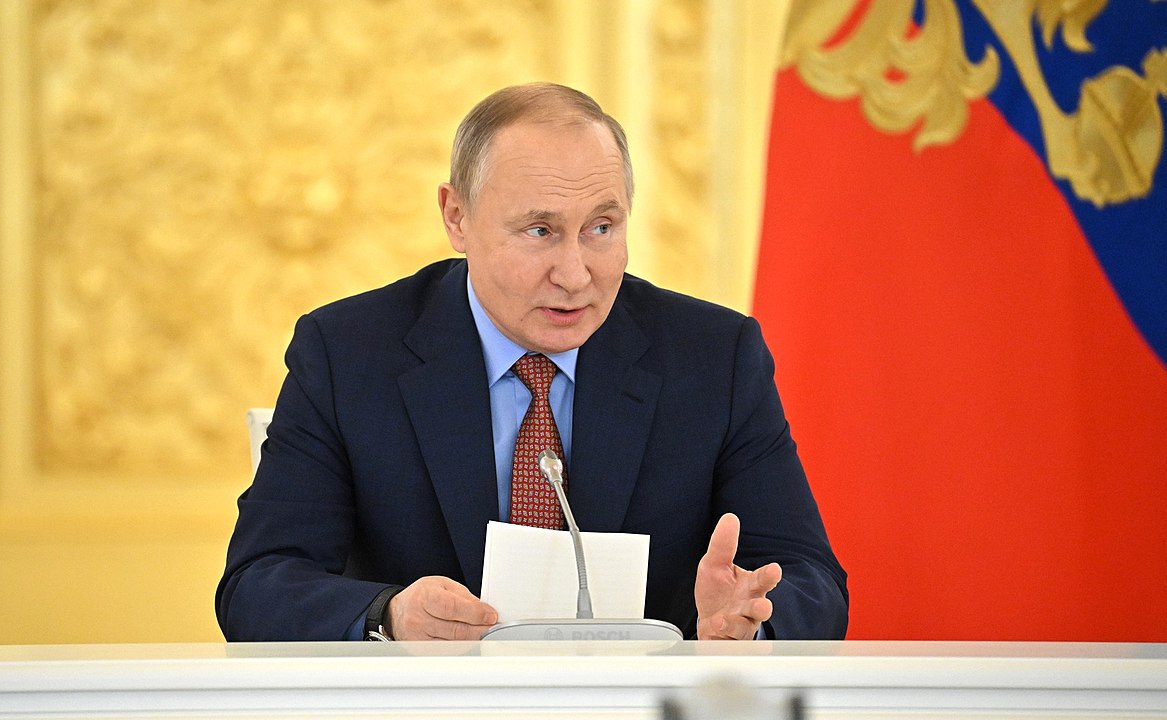
FILE: President of Russia Vladimir Putin at the meeting with members of the Delovaya Rossiya National Public Organisation. (Photo By Kremlin.ru, CC BY 4.0)
The White House’s recent exposure of Russian attempts to influence this year’s US presidential election will come as little surprise to anyone who followed disinformation tactics during the last US election.
During the 2020 campaign, the Kremlin used its state-sponsored media outlets, the international television channel RT and the news website and radio station Sputnik, to pump out a raft of content calling the legitimacy of the US democratic process into question. Networks of Russia-sponsored bots and trolls were also found to have been pushing divisive disinformation and conspiracy theories in online networks.
This time around, the US has seized a network of Russian-run internet domains, and sanctioned ten people including Margarita Simonyan, editor-in-chief of RT (formerly Russia Today), for “activities that aim to deteriorate public trust in our institutions”. Sanctions include freezing any property or assets in the US, and potentially restrictions on any US citizen or company that works with them.
The US has also charged two Moscow-based managers of RT, Kostiantyn Kalashnikov and Elena Afanasyeva, under money laundering law with paying US content creators to push out “pro-Russia propaganda and disinformation” in the US.
US attorney general Merrick Garland said Russia was looking to create its “preferred outcome” in the upcoming presidential election, and undermine US support for Ukraine in the war.
The practices alleged by the US Department of Justice (DOJ) closely match what my co-authors and I have identified in our new book, Russia, Disinformation and the Liberal Order, as having become standard practice in Russian attempts to influence international audiences.
Here are five key features of Russian information manipulation we identified, and which can help understand the latest election-meddling scandal.
1. Using local influencers
The DOJ charges that RT employees paid a Tennessee-based firm nearly US$10 million (£7.5 million) to produce social media content that aligns with Russian interests without disclosing that the funding ultimately came from the Russian state.
Several of the influencers connected to the Tennessee firm have since said they had editorial control over their content, and denied knowledge of any links to Russia. But this fits patterns identified in our research.
First, RT has long worked with the populist right-wing media space, and often mimics the style and practices of US right-wing populist media. It frequently links to their pieces on its website and has promoted right-wing media personalities and distributed their shows, as well as featuring them on its own platforms.
Building on this, RT has often given a platform, financing and free rein to media personalities from the states they are targeting, whose genuinely held beliefs suit Russia’s own interests. After all, research confirms that people are more likely to believe claims they have heard time and time again, whether or not those claims are true.
2. Fake news outlets
As part of this case, the US has seized a network of internet domains alleged to have been used to promote false information targeted at specific subsets of the US population. Masquerading as local sites, their content tends to tap into the specific social concerns and controversies that resonate with particular target groups, as well as amplifying core Russian talking points.
We have seen this in the past, when the Kremlin-backed Internet Research Agency set up a fake left-wing news site and conned unwitting freelancers into contributing content for Russian information operations. RT’s past activities show it has no qualms with deliberately camouflaging its links to other media operations and groups.
We know from our research that these sites not only habitually cross-reference each other, they also frequently cross-reference other self-styled counter-mainstream sites to boost their credibility with particular online demographics.
3. Adding fuel to the fire
Another common tactic for keeping content believable is linking it to the fears and concerns that are already important in any society. For example, Russia did not bring the culture war to the US, but it has skilfully tapped into American society’s anxieties around the topic. Russian media operations have brought these to the fore without engaging with them in any meaningful way.
Similarly, when Russian sites masquerade as local sources, they prioritise themes that are familiar to their target audiences. Usually, though, divisive topics are embellished with a patchwork of real and fabricated information. Audiences find it hard to pick them apart, and their starting assumptions mean they often aren’t motivated to try.
4. Flipping the script
Moscow has repeatedly denied any involvement in influence campaigns, just as it did in 2018 when the UK accused the Russian state of a series of Novichok poisonings in Salisbury. Back then, Russian politicians and media boosted a complex web of conspiracy theories that mirrored the accusations back at the UK and US security services.
We have seen the “flipped script” response from Russia’s representatives again this time around. Moscow’s ambassador to Washington, Anatoly Antonov, dismissed US allegations as a product of “Russophobia” – the same term used by the Russian embassy following the Salisbury poisonings.
And Russia’s foreign ministry spokeswoman, Maria Zakharova, has repeated her favourite theme of recent years, accusing the US of becoming a “totalitarian neoliberal dictatorship”. This might seem laughable from the representative of a state that has criminalised criticism of its invasion of Ukraine. However, bare-faced lies and humorous dismissals often go together in Russia’s information operations.
5. Humour
The Russian state routinely uses humour strategically, and RT has emerged as something of a pioneer in using humour to legitimise Russia’s actions or neutralise critiques.
However, the network doesn’t only use humour to report on international politics. Its trademark approach is to knowingly include itself as part of the joke. Several RT advertising campaigns have used foreign criticisms as a selling point.
The same spirit was clear in the sarcastic response of Simonyan to the latest allegations. In comments posted to Telegram and gleefully reproduced by RT, the editor-in-chief dismissed the charges as US scaremongering “about the almighty RT”. Her words are a perfect example of how RT revels in its status as a “populist pariah”.
Russia continues to refine the way it tries to influence agendas outside its borders, and there’s no suggestion this will stop any time soon.
Precious Chatterje-Doody, Senior Lecturer in Politics and International Studies, The Open University
This article is republished from The Conversation under a Creative Commons license. Read the original article.




















