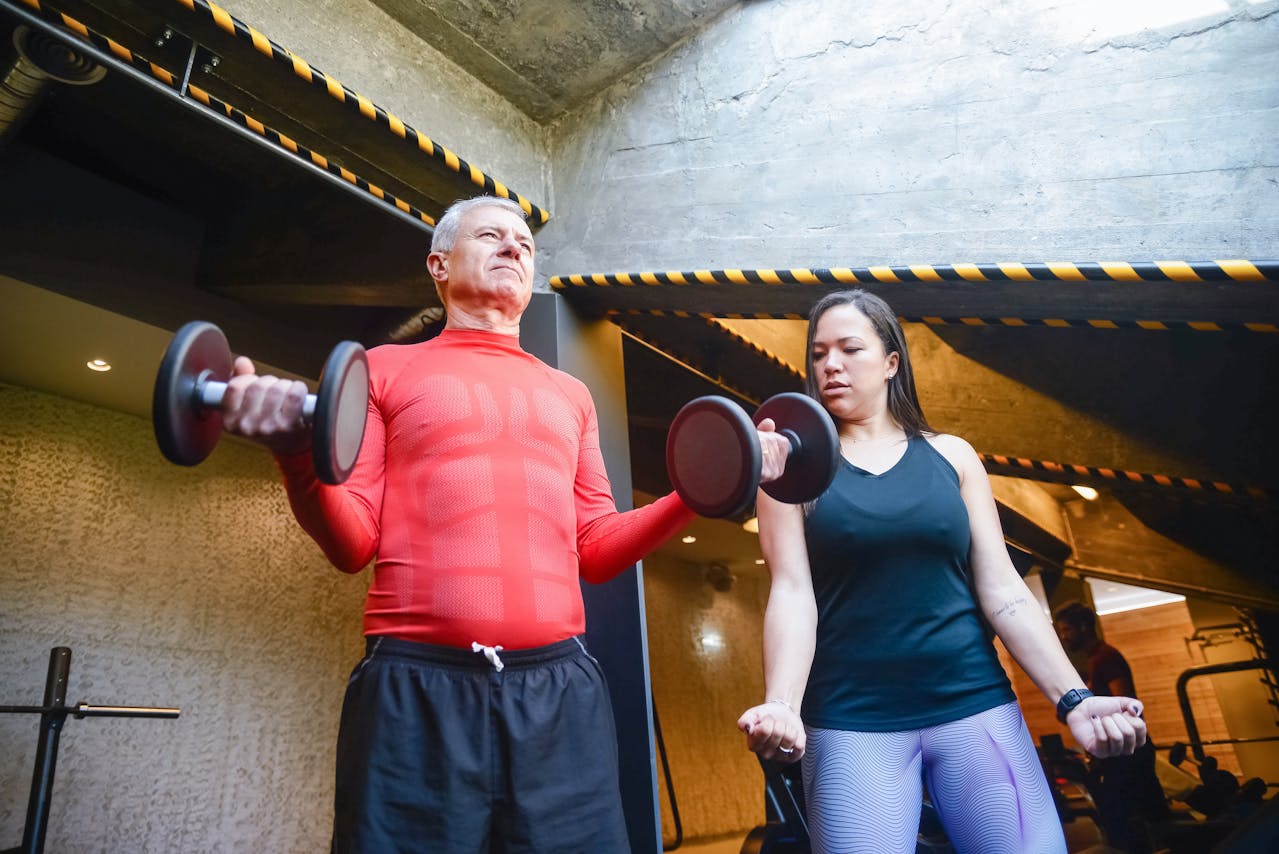
Weightlifting has many benefits. (Pexels Photo)
By Julie Broderick, Trinity College Dublin and Fiona Kennedy, Trinity College Dublin, The Conversation
A recent study has shown that lifting heavy weights three times weekly leads to sustained improvements in strength in older adults. This is good news because being strong as you age can help you maintain independence for longer, make you more resistant to injuries and falls and is great for overall wellbeing.
But if you’re someone who isn’t very active or you have never tried lifting weights before, you might find it daunting to know where to begin. Here are a few things to know if you’re keen to start building your strength.
Before you begin
If you’ve avoided weightlifting because you’re afraid of injury, just know that generally, the benefits of exercise far outweigh the risks. Not to mention that resistance training generally has a lower injury rate than many common team sports (such as football). But if you have a medical condition – such as a heart problem, or a bone and joint issue – you should speak to your doctor before starting a new regime, to ensure safety as you exercise.
Another thing to bear in mind before you begin is that it may take you longer to recover after workouts. This is because the structure and function of your muscles change as you get older. Be sure to give yourself days off between sessions.
Older adults are also at greater risk of dehydration due to changes in the way the body regulates temperature later in life. This may be magnified during a workout, so make sure you’re drinking plenty of water.
It’s also a good idea to do a five- to ten-minute warmup to prepare for exercise – such as brisk walking or jogging, and light resistance activities (such as body weight squats or weighted ball activities).
Working out
You don’t need fancy equipment to start building your strength. Bottles of water can be a good substitute for hand weights – or you can just use your body weight to begin with. You can also adjust the exercise depending on your ability. Focus on how you move rather than the speed of your movement.
The exercises you do also don’t need to be complicated. Here are a few exercises you can do which will build your overall strength:
Sit to stands: This functional exercise consists of standing up from a chair and sitting back down. This exercise is particularly good at building your major leg muscles.
Beginners can hold onto the arm rests when doing the exercise. People who are more advanced may want to add weights or change the chair’s height so they’re starting closer to the ground.
Squats: Stand with feet shoulder-width apart. Keeping your back straight, push your hips back and lower yourself – as if you’re going to sit in a chair. Then stand back up. This exercise also targets your major leg muscles.
Beginners can hold onto a stable surface when squatting or decrease the depth they squat to. To increase the difficulty, try to squat lower or add weights.
Wall press-ups: Stand about three feet away facing a wall. With feet shoulder-width apart, place hands on the wall at shoulder height. With a straight back, lower your body toward the wall, then push back up by straightening your elbows. This exercise will strengthen the chest, shoulder and upper arm muscles.
To make the exercise easier, move your feet closer to the wall. To up the difficulty, move your feet further from the wall – or try doing the push-ups on the floor.
Calf raises: Standing straight, rise onto your tip toes then slowly lower back down. This exercise mainly works the calf muscles, which are needed for walking and running.
Beginners can hold onto a wall or stable surface to help them balance during the exercise. To make it harder, hold onto some small weights.
Biceps curls: Stand or sit with feet hip-width apart. With weights in your hands, bend your elbows and bring the weights towards your shoulders before slowly lowering back down. This familiar exercise builds upper arm strength.
Those just starting out should use light hand weights – even water bottles or soup cans will do. Increase the amount of weight you lift as you get stronger.
Try performing each of these exercises for between 8-12 repetitions. This is one set. Build up to three sets if you can.
Try to perform these exercises two to three times a week – being sure to include rest days in between to avoid fatigue and soreness.
If you’re lifting a weight, try lifting 40-60% of your maximum. When the reps or weights feel easier than they used to, it’s time to either increase the weight you’re lifting or add more reps so you continue to get stronger.
Keep going
Alongside resistance training, it’s recommended you do 150 minutes of aerobic exercise a week – such as brisk walking or cycling as well as carrying out balance training. It’s also a good idea to be as active as you can in your daily life – doing activities such as gardening or carrying your shopping.
It’s never too late to make a start at improving your strength. Just remember that it takes time to build strength, so to help you stick to your exercise regime try setting achievable goals. Exercising with a group or in a gym is also a nice way to keep motivated while building social connections.
Julie Broderick, Assistant Professor, Physiotherapy, Trinity College Dublin and Fiona Kennedy, PhD Researcher, School of Medicine, Trinity College Dublin
This article is republished from The Conversation under a Creative Commons license. Read the original article.