

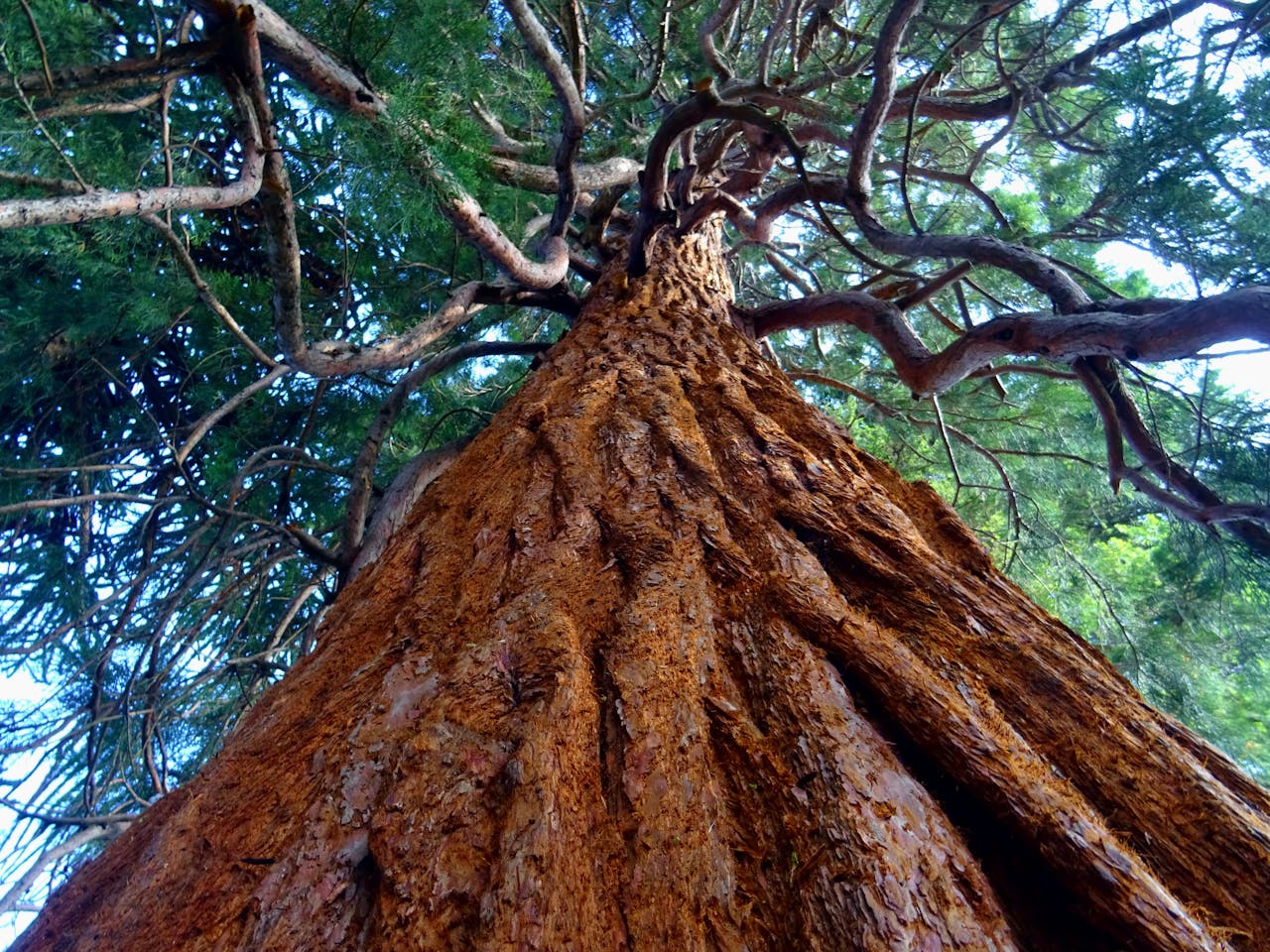
Some trees have thin smooth bark that falls off every year in great sheets and strips. (Pexels Photo)
Why do trees have bark? Julien, age 6, Melbourne.
This is a great question, Julien.
We are so familiar with bark on trees, that most of us just take it for granted. But bark is one of the most complex parts of a tree and has many different jobs to do. Without bark we would not have trees as we know them.
Here’s what bark does – and why it is so special.
Bark helps trees move stuff around the plant
Bark on many trees is made of two different things.
The first thing is called phloem and it is pretty complicated stuff. Its main job is to transport chemicals like sugars and hormones up, down and around the tree. In fact, phloem can move just about anything the plant needs around the tree. That’s a very good reason why trees have bark.
The second thing is called cork and in many trees, phloem and cork are mixed together. Cork helps protect the tree from harmful insects and fungi.
It also helps keep certain parts of the tree from getting too hot or too cold. Like us, trees function best at just the right temperatures. So this protection is an important reason why trees have bark.
Some trees have thin smooth bark that falls off every year in great sheets and strips.
Other trees have thicker, furry or crinkly bark that is shed in bits and pieces over months or many years.
As the tree gets bigger, the bark has to be regularly replaced. It is a bit like the skin on a snake.
Bark can help a tree survive and thrive
Bark makes an excellent home for other living things, such as insects, spiders and fungi.
Some of these even help the tree survive and thrive. Bark is a good and safe place for these tree helpers to call home.
The bark can also stop the trunk of the tree from losing too much water and drying out. It can also stop too much water getting in when it rains or floods.
These are all are good reasons for trees to have bark.
Many Australian native trees have thick bark that protects the tree trunks during bushfires. The thick, hard bark on some trees can also help the tree survive the fire and sprout quickly after a bushfire.
While bark is not as strong as the wood on the inside of a tree, it still adds some strength to tree trunks.
Being more flexible than wood, bark can also move and bend in the wind with minimal damage, except in the most severe storms.
Some trees, such as yellow gum (also known as Eucalyptus leucoxylon) have a sort of “skirt” of thicker bark around their base. This “skirt” protects the lower trunks from damage, especially in fires.
Bark can be useful to people too
Some trees, like the cork oak (also known as Quercus suber) have a cork layer that can be more than 15-20cm thick. This thick layer protects these oak trees from fires too, but the cork is also harvested. People can use it to make wine bottle corks or cork building materials for homes, without harming the tree.
Some people also like to make art out of bark. Maybe if you see some bark on the ground you can take it home and look at it with a magnifying glass. You might see some interesting patterns! When you’re finished, maybe you could make a decoration or artwork out of the bark.
Hello, curious kids! Do you have a question you’d like an expert to answer?
Ask an adult to send your question to curiouskids@theconversation.
edu.au
Gregory Moore, Senior Research Associate, School of Ecosystem and Forest Sciences, The University of Melbourne
This article is republished from The Conversation under a Creative Commons license. Read the original article.




















