

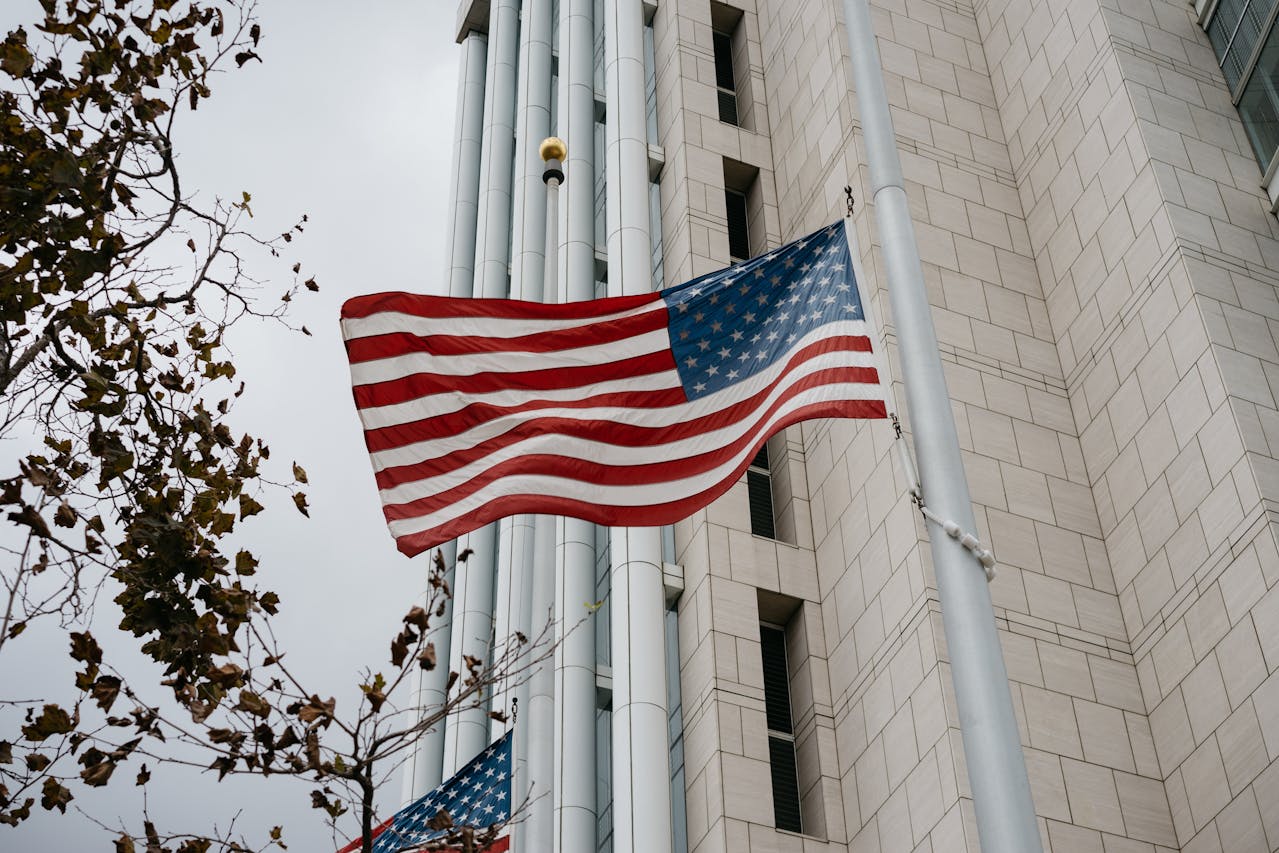
In the U.S., Pew reports that 66% are dissatisfied with how democracy is working, 83% feel overlooked by officials, and 49% feel overlooked by political parties. (Pexels Photo)
Americans, it seems, can both value the idea of democracy and not support it in practice.
Since 2016, academics and journalists have expressed concerns that formerly secure democracies are becoming less democratic. Different measures of democracy, such as scores produced by the Economist Intelligence Unit, Freedom House and the Varieties of Democracy Institute, have suggested as much based on data over the past decade.
The surveys have sounded alarms about the future of democratic governance in places such as the U.S., which the International Institute for Democracy and Electoral Assistance listed as “backsliding” since 2019.
A number of countries that were once considered stable democracies – such as Hungary, India and Nicaragua – have seen their leaders and representatives undermine government institutions in common ways: by encouraging division and polarization, spreading misleading or biased messages, pursuing strategies to unfairly dominate in elections, promoting loyalists and marginalizing opponents, and attacking efforts to hold leaders accountable.
This pattern across democracies raises questions about whether what’s called democratic backsliding is happening globally and which democracies are at risk of failing.
A report released recently by the Pew Research Center that describes the results of public opinion surveys on democracy and political representation in 24 countries, including the U.S., has added to those concerns.
A substantial portion of respondents feel unrepresented by their governments, and 59% are dissatisfied with how their democracy is functioning. Three-quarters of respondents indicate that elected officials do not care what people like them think, and 42% say that no political party in their country represents their views.
In the U.S., Pew reports that 66% are dissatisfied with how democracy is working, 83% feel overlooked by officials, and 49% feel overlooked by political parties. Such pessimistic trends are not new; a Gallup Poll in 2021 and a Pew survey from 2022 both reported that Americans’ trust in government is low.
One of the most unsettling statistics from the recent survey is that 32% of Americans think that “rule by a strong leader or the military would be a good way of governing their country.” This particular finding has been taken as evidence for the idea that a growing number of Americans support replacing democracy with an authoritarian government.
Are Americans losing faith in democracy?
Not quite. Instead, respondents may be losing faith in current institutions’ ability to deliver what they expect out of democracy.
Democracy’s different definitions
Most Americans support democracy as a concept.
Pew found that about 75% of respondents in the U.S. think that representative democracy is a good way of governing. A 2023 study also showed that Americans tend to see themselves as being more committed to democracy, while viewing members of the other party as being more likely to subvert democracy.
But people hold different ideas about what “democracy” is and what it should look like.
When asked to define democracy, those who emphasize electoral and liberal aspects – such as free elections and civil liberties – are more likely to indicate support for democracy. Research shows that commitment to these values is strongly related to democracy support.
In contrast, those who define democracy in terms of its ability to deliver economic security, such as taxing the rich and helping the unemployed, show weaker support for it. This suggests that when people in more democratic countries think that democracy is supposed to alleviate income disparities, they tend to be less satisfied with how democracy is working.
Respondents’ evaluations of whether their country is democratic – or whether democracy is functioning as intended – can therefore be influenced by whether they are economically well off and whether they feel their values are represented in society. Those who are benefiting more from the current political situation are more likely to support it.
Citizens’ desires for a strong leader may largely reflect economic dissatisfaction that overlaps with social and political shifts, such as changes in demographic diversity, family structures and religiousness. Competition with other groups over power and resources presents threats that make people more concerned about their future well-being than about how democracy is functioning.
Many may think that democracy is broken because it neither provides what they expect nor reflects the values they hold. Being laid off and experiencing rising food prices, or disapproving of prevailing positions on socially divisive issues such as abortion, can lead a person to think that supporting mainstream politicians and the usual practice of electing officials is not enough to guarantee that their interests are represented.
Using dissatisfaction to undermine democracy
The Pew survey does not directly indicate that American citizens do not support democracy. But it does reveal an important vulnerability.
The results suggest that a substantial portion of citizens might support a leader working outside of democracy’s institutions – by breaking laws and avoiding accountability for it – because they have lost faith in those institutions’ ability to deliver their version of good governance.
Dissatisfaction with government performance and concerns about socioeconomic well-being can lead citizens to support someone who is willing to flout constitutional rules to restore what they consider to be a broken democracy.
When facing changes that they deem a threat to their economic and social security, voters may gravitate toward someone who can “fix” the problem.
This has the potential to erode the very freedoms that respondents profess to care about. Populist leaders can use dissatisfaction and people’s feelings of being left behind or excluded to build support and justify antidemocratic stances.
Recognizing this is important for understanding how citizens can intrinsically value democracy – and undermine it at the same time. Although people may think they share similar definitions of it, democracy is a complex concept.
Concluding that citizens do not support democracy based on the survey does not address what those citizens think democracy is.
Matthew Wilson, Associate Professor of Political Science, University of South Carolina
This article is republished from The Conversation under a Creative Commons license. Read the original article.




















