Canada News
Indigenous infrastructure gap estimated at more than $425B


Prime Minister Justin Trudeau makes an announcement on housing in Membertou First Nation on Cape Breton Island, N.S. on Feb. 22, 2024. (Darren Calabrese/The Canadian Press via RCI)
· CBC News
As the Trudeau government prepares to release this year’s federal budget, Indigenous organizations estimate it would take more than $425 billion to close the infrastructure gap in their communities by the government’s 2030 goal.
While the bulk of that staggering sum comes from the Assembly of First Nations’ nearly $350-billion assessment of the infrastructure gap facing an on-reserve population of 400,000, the assembly is not alone in this exercise.
The national organization for 70,000 Inuit in Canada says it would cost $75.1 billion to close the gap in Inuit Nunangat, the traditional northern Inuit homeland encompassing 51 communities and four regions.
Meanwhile, the national council for Métis associations in British Columbia, Alberta, Saskatchewan and Ontario is seeking $2.7 billion for housing, infrastructure, governance and property management from this year’s federal budget.
Following the Liberal government’s release of a new plan to “solve” Canada’s housing crunch, Indigenous organizations are watching closely in the hopes their needs aren’t forgotten when the spending plan lands Tuesday afternoon.
“There is a lot of work that needs to be done to address long-standing inequities in infrastructure in Inuit Nunangat,” said Josh Gladstone, director of policy advancement at Inuit Tapiriit Kanatami (ITK).
“These inequities need to be repaired, and we’re hoping that the federal government commits to that.”
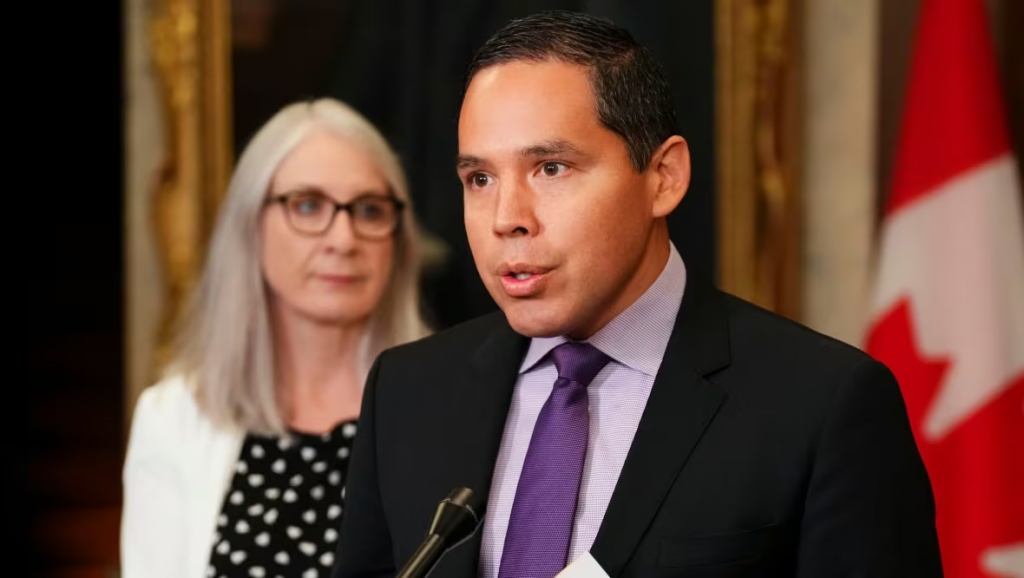
ITK estimates closing the gap in Inuit regions will require $55.3 billion over 10 years and roughly $800 million annually for operations and maintenance for the next 25 years, according to its 2024 budget submission.
This estimate notably doesn’t cover housing, Gladstone said, but rather the type of public infrastructure needed to build and support housing — roads, ports, harbours, airports, water and waste disposal resources and so on.
“These are critical pieces of Inuit infrastructure needs,” said Gladstone, who added the distinct geographical situation facing Inuit makes for unique challenges.
Consider gravel, he said.
There are few roads into Inuit Nunangat, which covers expansive regions in Northwest Territories, Labrador, Quebec and all of Nunavut, so goods are mostly flown or shipped in.
That means something as simple but essential as gravel, or the means to move it or make it, is difficult to get in many communities, punctuating the remoteness factor contributing to big infrastructure costs in other areas, Gladstone said.
“What we’re really hoping to see is a renewed investment,” he said, following federal commitments of $517.8 million for Inuit infrastructure in 2021 and $845 million for Inuit housing in 2022.
‘Our communities are far behind’
Meanwhile, the question of the infrastructure gap facing Métis communities is less straightforward.
Many Métis communities lack a recognized land base, having long lived in what the Supreme Court of Canada has called a “jurisdictional wasteland” between Crown governments.
The Métis National Council pointed CBC Indigenous to its 2024 budget submission, seeking $2.7 billion for housing and infrastructure-related needs. The national council does not include some prominent groups, namely the Manitoba Métis Federation (MMF) and the Métis Settlements General Council (MSGC) in Alberta.
It’s unclear what the infrastructure needs may be among Métis in Manitoba. In a statement, MMF President David Chartrand said for nearly 150 years the Red River Métis were largely ignored by the federal government. He said some progress has been made — pointing for example to the recent construction of several early learning and child care centres in underserved Métis villages — but not nearly enough to close the existing gaps.
“It has taken over 150 years to get here, but it will take many more to achieve truly equal outcomes,” he said.
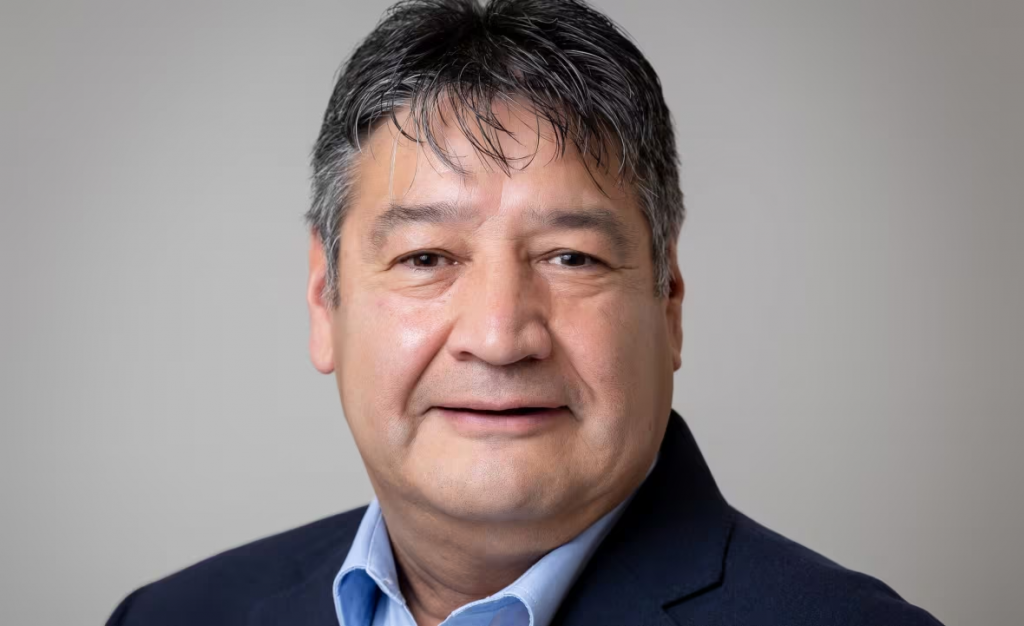
In Alberta, MSGC represents eight settlements comprising more than 500,000 hectares. These settlements are northern, rural communities which like other Indigenous communities have extensive infrastructure needs for water, waste water, roads, housing, waste management and so on, said MSGC President Dave Lamouche.
“Relative to other municipalities around us, our communities are far behind when it comes to these critical investments for safety, liveability, health and wellness,” Lamouche said in a statement.
The council is in the process of assessing the needs across the eight settlements to provide to the government of Canada, Lamouche said.
Promise of more investments
Late last week, Prime Minister Justin Trudeau announced a plan to build 3.87 million new homes by 2031 countrywide.
The plan includes the promise of new investments for Indigenous housing and cites last year’s commitment of $4.3 billion for an Urban, Rural and Northern Indigenous Housing Strategy.
With new initiatives rolling out, the Assembly of First Nations has warned the infrastructure gap on reserves will grow to a forecasted $527.9 billion by 2040 without immediate action.
Last week, Indigenous Services Minister Patty Hajdu reacted to the AFN’s report by painting the 2030 goal as an ambitious first for the government but one that will require buy-in from provincial and territorial governments and the private sector to meet.
This article is republished from RCI.