
Environment & Nature
Fighting every wildfire ensures the big fires are more extreme, and may harm forests’ ability to adapt to climate change

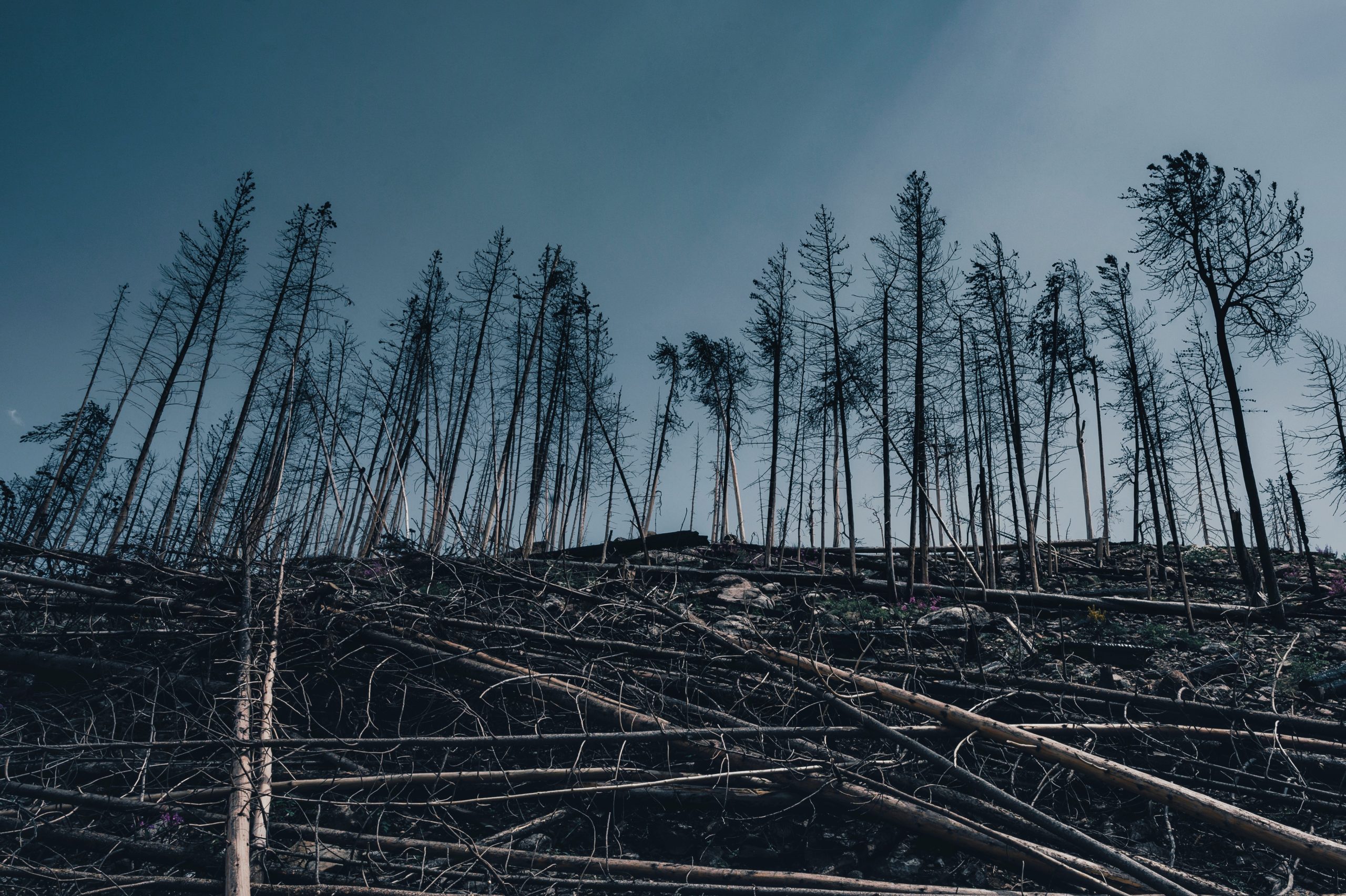
As the climate becomes hotter and drier, more area is burning in wildfires. If suppression removes fire, it should help slow this increase, right? (Pexels Photo)
In the U.S., wildland firefighters are able to stop about 98% of all wildfires before the fires have burned even 100 acres. That may seem comforting, but decades of quickly suppressing fires has had unintended consequences.
Fires are a natural part of many landscapes globally. When forests aren’t allowed to burn, they become more dense, and dead branches, leaves and other biomass accumulate, leaving more fuel for the next fire. This buildup leads to more extreme fires that are even harder to put out. That’s why land managers set controlled burns and thin forests to clear out the undergrowth.
However, fuel accumulation isn’t the only consequence of fire suppression.
Fire suppression also disproportionately reduces certain types of fire. In a new study, my colleagues and I show how this effect, known as the suppression bias, compounds the impacts of fuel accumulation and climate change.
What happened to all the low-intensity fires?
Most wildfires are low-intensity. They ignite when conditions aren’t too dry or windy, and they can often be quickly extinguished.
The 2% of fires that escape suppression are those that are more extreme and much harder to fight. They account for about 98% of the burned area in a typical year.
In other words, trying to put out all wildfires doesn’t reduce the total amount of fire equally – instead, it limits low-intensity fires while extreme fires still burn. This effect is worsened by climate change.
Too much suppression makes fires more severe
In our study, we used a fire modeling simulation to explore the effects of the fire suppression bias and see how they compared to the effects of global warming and fuel accumulation alone.
Fuel accumulation and global warming both inherently make fires more severe. But over thousands of simulated fires, we found that allowing forests to burn only under the very worst conditions increased fire severity by the same amount as more than a century’s worth of fuel accumulation or 21st-century climate change.
The suppression bias also changes the way plants and animals interact with fire.
By removing low-intensity fires, humans may be changing the course of evolution. Without exposure to low-intensity fires, species can lose traits crucial for surviving and recovering from such events.
After extreme fires, landscapes have fewer seed sources and less shade. New seedlings have a harder time becoming established, and for those that do, the hotter and drier conditions reduce their chance of survival.
In contrast, low-intensity fires free up space and resources for new growth, while still retaining living trees and other biological legacies that support seedlings in their vulnerable initial years.
By quickly putting out low-intensity fires and allowing only extreme fires to burn, conventional suppression reduces the opportunities for climate-adapted plants to establish and help ecosystems adjust to changes like global warming.
Suppression makes burned area increase faster
As the climate becomes hotter and drier, more area is burning in wildfires. If suppression removes fire, it should help slow this increase, right?
In fact, we found it does just the opposite.
We found that while conventional suppression led to less total area burning, the yearly burned area increased more than three times faster under conventional suppression than under less aggressive suppression efforts. The amount of area burned doubled every 14 years with conventional fire suppression under simulated climate change, instead of every 44 years when low- and moderate-intensity fires were allowed to burn. That raises concerns for how quickly people and ecosystems will have to adapt to extreme fires in the future.
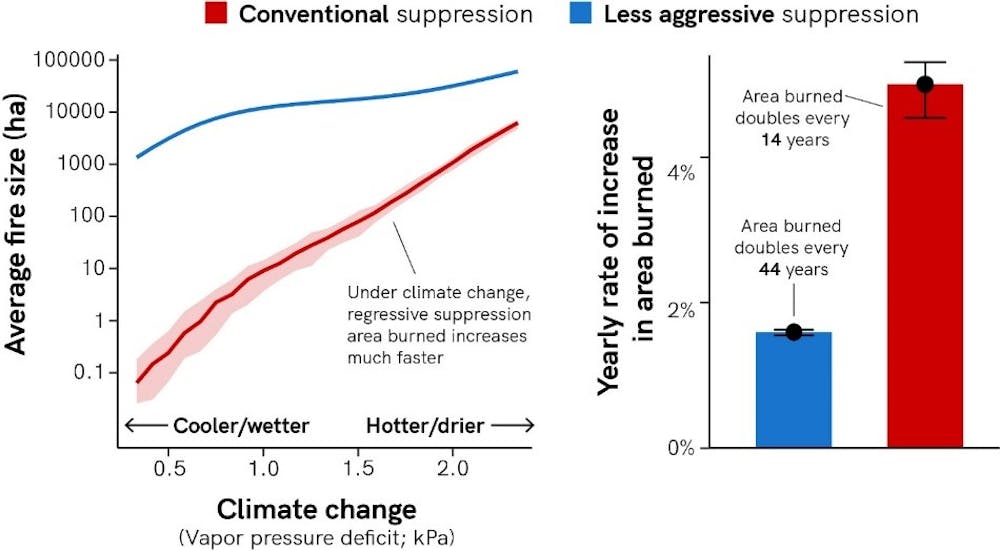
With conventional fire suppression, the average fire size will increase faster as the planet warms than it would under a less aggressive approach. (Mark Kreider)
The fact that the amount of area burned is increasing is undoubtedly driven by climate change. But our study shows that the rate of this increase may also be a result of conventional fire management.
The near total suppression of fires over the last century means that even a little additional fire in a more fire-prone future can create big changes. As climate change continues to fuel more fires, the relative increase in area burned will be much bigger.
This puts more stress on communities as they adapt to increased extreme wildfires, from dealing with more wildfire smoke to even changing where people can live.
A way forward
To address the wildfire crisis, fire managers can be less aggressive in suppressing low- and moderate-intensity fires when it is safe to do so. They can also increase the use of prescribed fire and cultural burning to clear away brush and other fuel for fires.
These low-intensity fires will not only reduce the risk of future extreme fires, but they also will create conditions that favor the establishment of species better suited to the changing climate, thereby helping ecosystems adapt to global warming.
Coexisting with wildfire requires developing technologies and approaches that enable the safe management of wildfires under moderate burning conditions. Our study shows that this may be just as necessary as other interventions, such as reducing the number of fires unintentionally started by human activities and mitigating climate change.
Mark Kreider, Ph.D. Candidate in Forest and Conservation Science, University of Montana
This article is republished from The Conversation under a Creative Commons license. Read the original article.




















