News
Vladimir Putin’s gold strategy explains why sanctions against Russia have failed

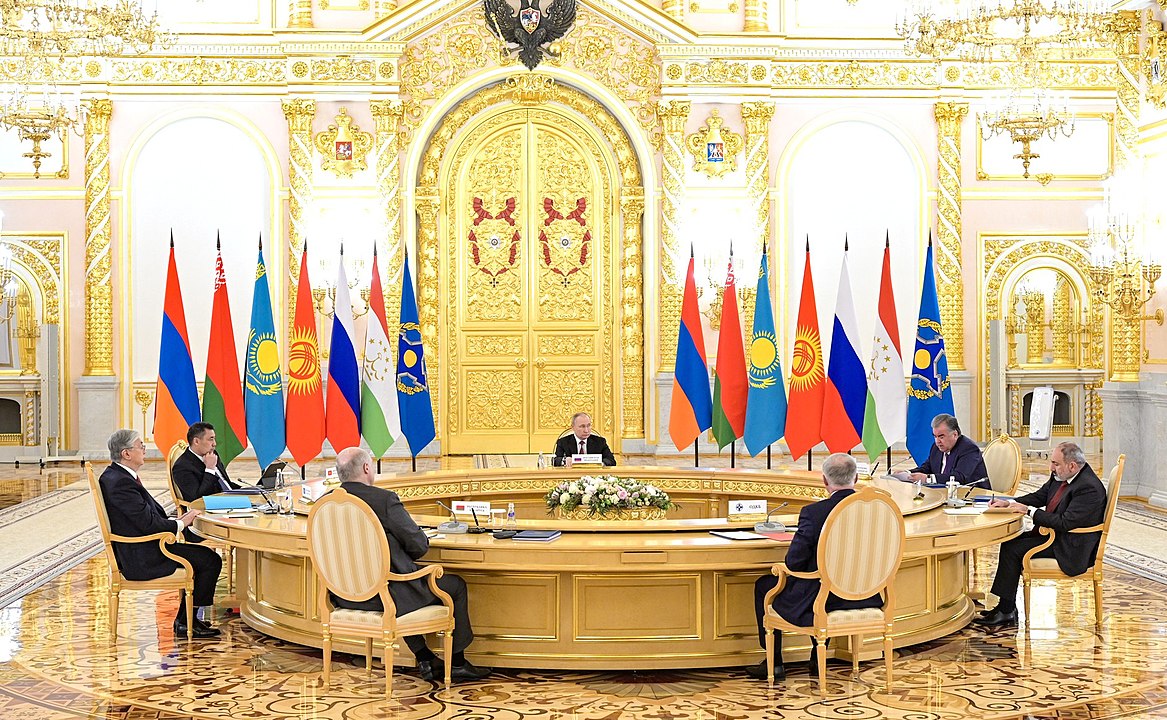
FILE: Putin hosted a meeting of the Russian-led military alliance, the Collective Security Treaty Organization (CSTO), in Moscow on 16 May 2022. (Photo By Kremlin.ru/Wikimedia Commons, CC BY 4.0)
There are more than 16,000 sanctions imposed against Russia. Yet the Russian economy and war machine grew by 3.6 per cent in 2023 and is projected to grow another 2.6 per cent in 2024.
Nearly six per cent of Russia’s gross domestic product goes towards military spending. At a time when Ukrainian President Volodymyr Zelenskyy is scrambling to acquire arms, funds and recruits, Vladimir Putin seems confident in his ambitions for the future.
How have 16,000 strategic sanctions issued by some of the most powerful economies in the world failed to derail Putin?
As I recently watched the news break on CBC about Russia’s robust economy, an advertisement from the World Gold Council popped onto the screen. And there was the answer, hiding in plain sight: Gold.
The role of gold
Sanctions against Russia needed to be strategic, targeting the environment it operates in.
Economic sanctions targeted shipping and trade into Russia, but the gold market is a massive environment left largely untouched. After Russia invaded Ukraine two years ago, the United Kingdom, a major gold broker with one of the world’s largest gold reserves, cut all Russian imports of gold into the U.K.
According to the World Gold Council, Russia is now the second largest producer of gold at 324.7 tonnes in 2023, behind China at 374 million tonnes. Russia is expected to increase production of gold by four per cent a year until 2026.
Since 2013, Russia has been preparing for western sanctions and managed to isolate its economy from transactions requiring American dollars.
In early 2022, Russia pegged its currency, the ruble, to gold, and 5,000 rubles will now buy an ounce of pure gold. The plan was to shift the currency away from a pegged value and into the gold standard itself so the ruble would become a credible gold substitute at a fixed rate.
Usually the rationale for holding on to gold reserves is to use them to settle foreign transactions at home and abroad. Gold holders can trade it on one of several bullion exchanges; it can be swapped for currencies to settle transactions and then swapped back into bullion.
Usually countries want gold as a safety backing to insulate against broader global financial shocks. Many central banks are purchasing gold at breakneck pace, with about 1,073 tonnes purchased in 2022. A single tonne is about US$65 million, which means $110.6 billion in gold went into central banks globally in 2023.
Gold prices fluctuate
China is the world’s leading producer of gold, and also the world’s second largest buyer of it. China imported US$67.6 billion in gold in 2022, whereas Switzerland took top place by importing US$94.9 billion.
China’s appetite for gold has a great deal to do with stabilizing its own currency. In 2022, if someone purchased a new condo in Shanghai, often the developer would throw in a few gold bars to sweeten the deal.
The World Gold Council argues that gold is the safest place to invest in times of conflict. But if that were true, there would have been a permanent bull market for gold dating back to Tutankhamen, making the price today infinite.
Its price rises and falls like anything else. Which is why Putin’s goal of turning the ruble into pure gold is not genius, it is desperate.
The U.K., the United States and Canada will not touch Russian gold. But others will. The United Arab Emirates (U.A.E.) imported 96.4 tonnes (US$6.2 billion) of Russian gold in 2022 following the British sanctions. That’s up 15 times from the 2021 imports of only 1.3 tonnes (US$84.5 million).
It’s no mystery why so many private jets left Russia for Dubai following the war and ensuing sanctions.
The other big client of Russian gold is Switzerland.
In 2022, Switzerland imported 75 tonnes of Russian gold (US$4.87 billion). In 2023, it imported about US$8.22 billion in gold from the U.A.E., which doesn’t produce its own but buys enormous sums from Russia, and US$3.92 billion from Uzbekistan, Russia’s next-door neighbour.
Billions upon billions of dollars of Russian gold is being freely traded at top dollar while avoiding every one of those 16,000 sanctions.
That’s why global sanctions against Russia haven’t derailed a thing. In order for Putin’s plan for economic resilience through gold to work, however, gold needs to increase in value. His long-term goal is that gold, not the U.S. dollar, will be the global trading currency.
Consumer activism
Here’s where average citizens come in, and how they can help determine what’s to come.
Right now, if you’re a Costco member, you can order an ounce of Swiss gold for CA$3,045 (limit two per member, and no refunds). This is not a speculative investment. Physical gold will not quadruple in value by Christmas.
Instead, buying gold is a guard against inflation and currency devaluation in times of uncertainty. It’s the doomsday currency, which is why the World Gold Council advertises gold on cable news networks in exactly that vein.
If North American consumers, central banks and investors are panicked enough to buy gold en masse, the price will go up, and Putin’s plan works.
In the last quarter of 2023, American consumers purchased more than US$100 million in gold bars through Costco alone.
Is there actual Russian gold in those bars? Between Switzerland’s 2022 gold purchases from Russia and the 2023 purchases from the U.A.E., it’s likely there is.
If people are worried about the ethics of purchasing Russian gold, they can always buy the single-source Canadian Maple Leaf gold coin. It comes from Québec, and as demand for coins like this increases, so too does the price of gold overall.
Still, bars and coins cannot compete with the power of demand from the central banks, and currently it’s high.
Tarnishing gold
To thwart Putin’s plan, the lustre needs to be removed from gold. Increasing gold supply could lower the price. Australia, Canada and the U.S. have important roles to play as leading gold producers.
Rising interest rates also tend to lower gold prices. A mass sell-off of government holdings in gold could also cause a tailspin for the ruble, but likely for the U.S. and Canadian dollars as well.
No single policy can thwart Putin’s goals — it requires disrupting the supply of gold beyond Russia, and that might well mean involving the U.A.E.
But with 16,000 sanctions on the books against Russia, one more smart sanction against the Emirates might be the golden egg Zelenskyy needs right now.
Robert Huish, Associate Professor in International Development Studies, Dalhousie University
This article is republished from The Conversation under a Creative Commons license. Read the original article.