
News
What can we expect from six more years of Vladimir Putin? An increasingly weak and dysfunctional Russia

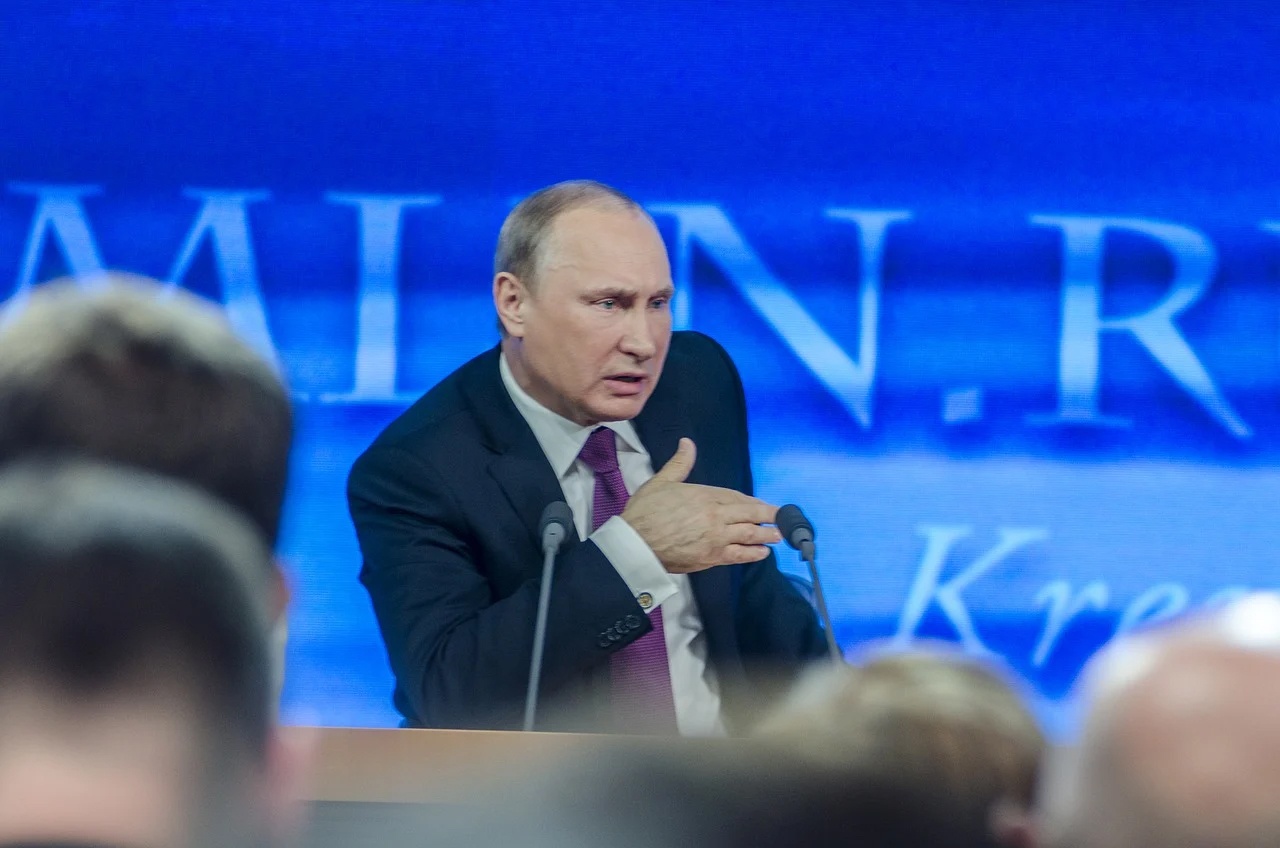
Putin has traditionally promised these kinds of changes around presidential elections. (Pixabay photo)
There is very little drama in Russia’s upcoming presidential election this weekend. We all know Vladimir Putin will win. The only real question is whether he will receive more than 75% of the vote.
It could be tempting to see these results as a sign of the strength of the Russian system. Recent gains by the Russian army in Ukraine seem to further support this.
But my own research – soon to be published in a forthcoming book – shows the election results and Russia’s military gains in Ukraine hide a much more problematic reality for the country.
Russia’s system of government is not only undemocratic, rights abusing and unpredictable. It is also increasingly dysfunctional, trapped in a cycle of poor quality and weak governance that cannot be solved by one man, no matter how much power he has.
The constitutional dark arts
The weakness stems from the hyper-centralisation of power in Russia around the president.
This centralisation is the product of an increasingly common logic that I call the “constitutional dark arts”. This logic generally holds that democracy and rights protection are best guaranteed in a constitutional system that centralises authority in one elected leader. This line of thinking is present in many populist, authoritarian countries, such as Hungary and Turkey.
The foundation of this kind of system in Russia is the 1993 Constitution. It was drafted by then-President Boris Yeltsin and his supporters (many in the West) as an expedient for dismantling communism and implementing radical economic reforms. As such, it contains a number of rights provisions and democratic guarantees, alongside provisions that centralise vast power in an elected Russian president.
Yeltsin (and his Western supporters) described this system as democratic because it made the president answerable to the people. They also argued that rights provisions would allow courts to limit any abuses by the centralised state.
These reformers hoped Yeltsin could use this concentrated power to build democracy in Russia. Thirty years later, however, we can see how this use of the “constitutional dark arts” backfired spectacularly.
Since 2000, Putin has ruthlessly deployed this centralised authority to eliminate any checks on power. He has also transformed elections, the media and the courts from sources of accountability into mechanisms to project the image of strong presidential power.
The upcoming presidential election is just the most recent example.
Poor quality governance in Russia
Although this centralised system has allowed Putin to dominate politics, it fosters weak and poor governance, particularly outside Moscow. At least two factors are at play.
First, centralised decision-making in Russia is often made using incomplete or false information. Russia’s full-scale invasion of Ukraine in 2022 is an example. It was based on intelligence that the operation would be over quickly and Ukrainians would likely welcome Russian forces.
Second, centralised directives are delegated to under-resourced, incompetent and weak institutions. Russia’s response to the COVID-19 pandemic was disastrous, in large part due to the poorly resourced regional authorities who were overwhelmed by a crisis of this scale.
This dysfunction has been a central message of the political movement led by the opposition leader Alexei Navalny. Before his death last month, Navalny and his team harshly criticised the corruption and weakness of the Russian regime and its inability to fix roads, provide health care and adequately pay teachers or doctors.
This message was potent, making Navalny the first opposition politician to build a broad coalition that spanned Russia’s 11 time zones.
This broad coalition frightened the Kremlin to such an extent that it led to Navalny’s poisoning in August 2020. Although it remains to be seen how his political movement responds to his death, this central criticism of the government remains one of its most potent messages.
Although it’s impossible to get independent polling on domestic issues during the Ukraine war, it does appear Putin and his administration are concerned about this weakness. In his February 29 address to parliament, Putin tacitly acknowledged these problems, promising new national projects to improve infrastructure, support families and enhance the quality of life.
These kind of promises, however, are unlikely to be implemented. Putin has traditionally promised these kinds of changes around presidential elections. But, when it comes to implementing them, Russia’s regional sub-units are often given no resources to do so.
With so much money now going to the war, it is unlikely the latest set of promises will be any different.
An increasingly dysfunctional Russia
With Putin soon to start his fifth presidential term, this centralisation and personalisation of power is only going to increase.
Externally, this centralisation is likely to produce an increasingly unpredictable Russia, led by a man making decisions on the basis of an increasingly paranoid world view and incorrect or manipulated information. As former German Chancellor Angela Merkel once described Putin, he is really “living in another world”.
This is likely to lead to more foreign policy adventurism and aggression. It will likely foster harsher repression of any dissenting voices inside Russia, as well.
We are also likely to see an increasingly dysfunctional Russia, one in which roads, housing, schools, health care and other infrastructure will continue to deteriorate, particularly outside of Moscow.
This extends to the military, which remains weak despite its recent battlefield gains. For instance, Russia’s overly centralised command structure has decimated the officer class and led to stunning losses of equipment. Although Russia has managed to muddle through by relying on its vast human and industrial resources, these systemic problems are taking a serious toll on its fighting capacity.
Despite escalating repression, these problems pose an opportunity for a democratic challenger, particularly when Putin is inevitably replaced by another leader.
Russia’s dysfunctional government is also an important reminder for Western media, policymakers and commentators. While it should not serve as a reason for complacency, highlighting Russia’s poor governance is an important tool in combating the Kremlin’s carefully curated image of power and control.
William Partlett, Associate professor of public law, The University of Melbourne
This article is republished from The Conversation under a Creative Commons license. Read the original article.




















