News
How lessons from the First World War could help Ukraine in the war

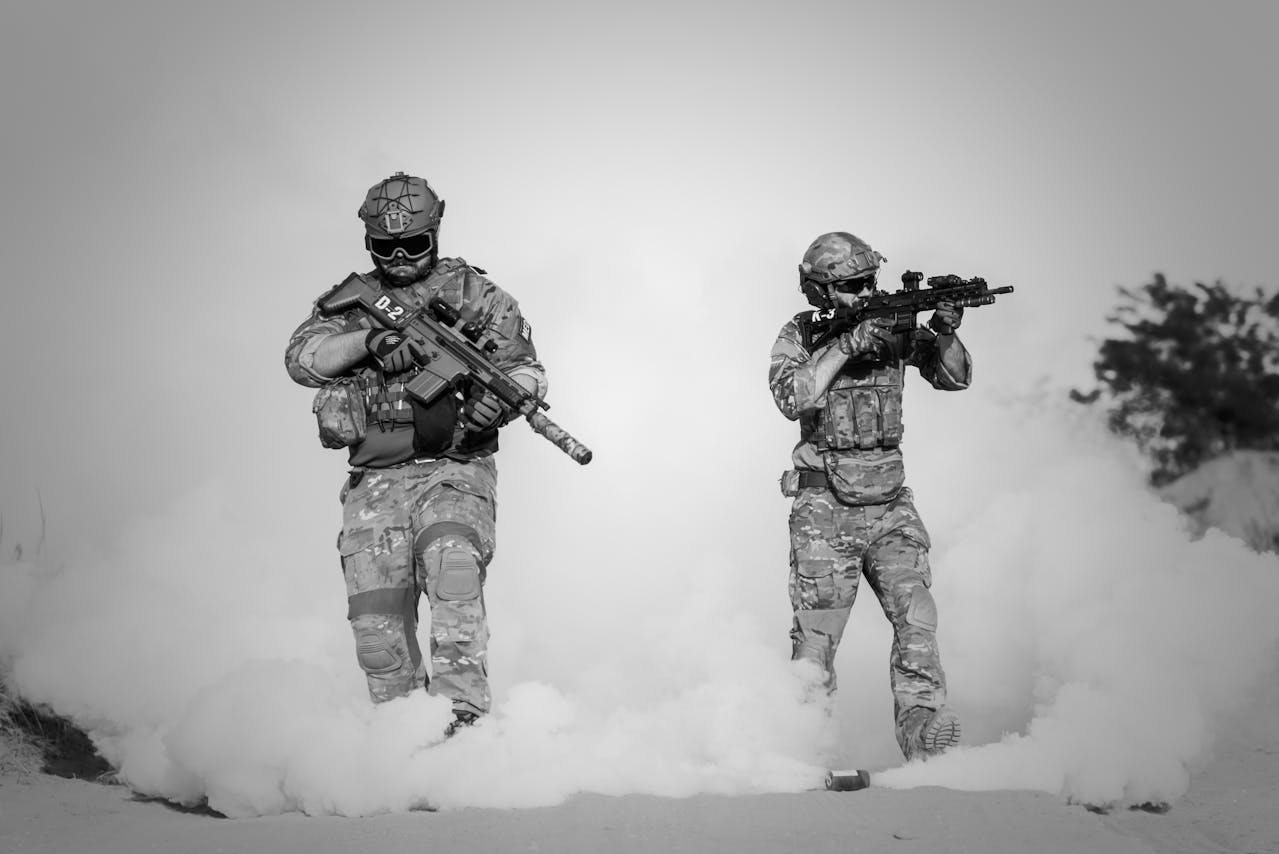
Having dedicated a significant portion of its economy to war production, Russia will become more capable of replacing its wartime losses. (Pexels Photo)
As Russia’s invasion of Ukraine enters its third year, the war’s tactics increasingly seem to match scenes from the First World War: soldiers huddle in trenches along stagnant front lines and navigate intense barrages.
Beyond trench warfare, however, the Ukraine conflict resembles the strategic, operational and tactical situation faced by Allied commanders immediately prior to the 100 Days Offensive, and its lessons remain applicable to contemporary wartime political and military leaders.
The successes produced by the 100 Days Offensive that began in the late summer of 1918 were primarily influenced by the Allies’ reliance on a strategy of maximum effort, flexible campaigns and advances in tactics.
The 100 Days Offensive
Having suffered significant losses in the preceding months, and facing the possibility of growing German strength following the defeat of Russia, Allied leaders prioritized launching a decisive offensive before their own exhaustion forced them to settle for peace.
These strategic considerations led Allied commanders to shift the balance of their forces to seize opportunities along the front. Beginning with a surprise attack on Amiens, the Allies often rapidly shifted the centre of their offensive efforts. These moves forced the German High Command to commit additional resources along the front, weakening its defences.
While the Allies’ hurried tempo led to higher casualties, maintaining momentum was critical to eventually piercing the Hindenburg Line, the Germans’ most significant prepared defensive position.
Allied tactics forced combat into the open. While aircraft had been introduced prior to 1918, the Allies were able to rely on near-total control of the air. This allowed Allied forces to more effectively target their artillery fire and rely on better reconnaissance.
Moreover, the Allies were also able to introduce significant numbers of tanks to the battlefield. This development allowed Allied forces to gain localized fire support at key stages of the offensive and contributed to their string of victories.
Wartime challenges
The legacy of the 100 Days Offensive offers several strategic, operational and tactical lessons that remain highly applicable to the Ukrainian War. These include the importance of political timelines, the role of mobility in combat and the necessity of air power and infantry innovation.
Having dedicated a significant portion of its economy to war production, Russia will become more capable of replacing its wartime losses. This shift has occurred just as the United States and Europe have struggled to fulfill orders for ammunition and other equipment for Ukraine due to domestic political complications.
Moreover, Ukraine faces growing debt due to the war and lacks large numbers of available service personnel, mirroring the state of the Anglo and French militaries in 1918 and raising doubts as to how long Ukraine can continue to engage in high-intensity combat.
Russia’s strength has also been bolstered by its capacity to enact further rounds of conscription and ongoing public support for the war. In contrast, conscription remains a highly contentious topic in Ukraine, which may harm its future readiness.
Lessons for Ukraine
However, the Allies’ experience in 1918 is instructive. Even a weakened Anglo-Franco-American coalition remained capable of winning dramatic victories over a powerful adversary, so long as its political leaders remained fully committed to the war.
The operational challenges facing Ukraine and Russia are also akin to those faced by the Allies during the war. Russian forces have constructed miles of prepared defences on its occupied territories, much of which Ukraine has yet to overcome. These defences have contributed to the static position of both militaries and will likely force Ukraine or Russia to shift their forces along the front in bids to make a breakthrough.
While Russia has continued to send waves of unprepared units into intense combat, Kyiv must be careful to conserve its combat power for future offensives.
Further, Ukraine should also maintain its commitment to misdirection, as it did earlier in the war by reportedly focusing on Kherson before attacking Kharkiv, to prevent Russian forces from consolidating their lines. This tactic would follow the Allies’ attempt to spread German forces thin and prevent their reinforcement of the Hindenburg line.
Lastly, the role of air power and innovative infantry tactics remain as critical to contemporary offensives as they were during 1918. Though neither Ukraine nor Russia has been able to establish complete control over the air, Ukraine’s use of drones has allowed its forces to direct pinpoint artillery fire against Russian positions.
Additionally, the relative independence of the American Expeditionary Forces and the Canadian Corps allowed new tactics to be tested in combat, bolstering their contribution to the offensive. This model will continue to be beneficial to Ukraine’s push to allow more junior officers to act on their own during combat.
Over the course of the 100 Days Offensive, the Allies managed to overcome three years of unrelenting trench warfare, along with a prolonged last-ditch German offensive, before bringing the war to an end. This series of events was precipitated by a growing strategic emphasis on waging a decisive campaign, adopting new operational doctrines, and relying on new tactical approaches, all of which remain applicable to the current war.
However, perhaps the lasting lesson of the 100 Days Offensive is that the campaign led to victory despite its failure to fully eject German forces from France. Looking towards the third year of the war in Ukraine, it is important to recognize that victory wears many disguises beyond golden laurels.
John Long Burnham, Policy Research Assistant, China Institute, University of Alberta
This article is republished from The Conversation under a Creative Commons license. Read the original article.