Headline
In re-electing its government, Taiwan has kept the status quo, but the victory hides a transformed political landscape

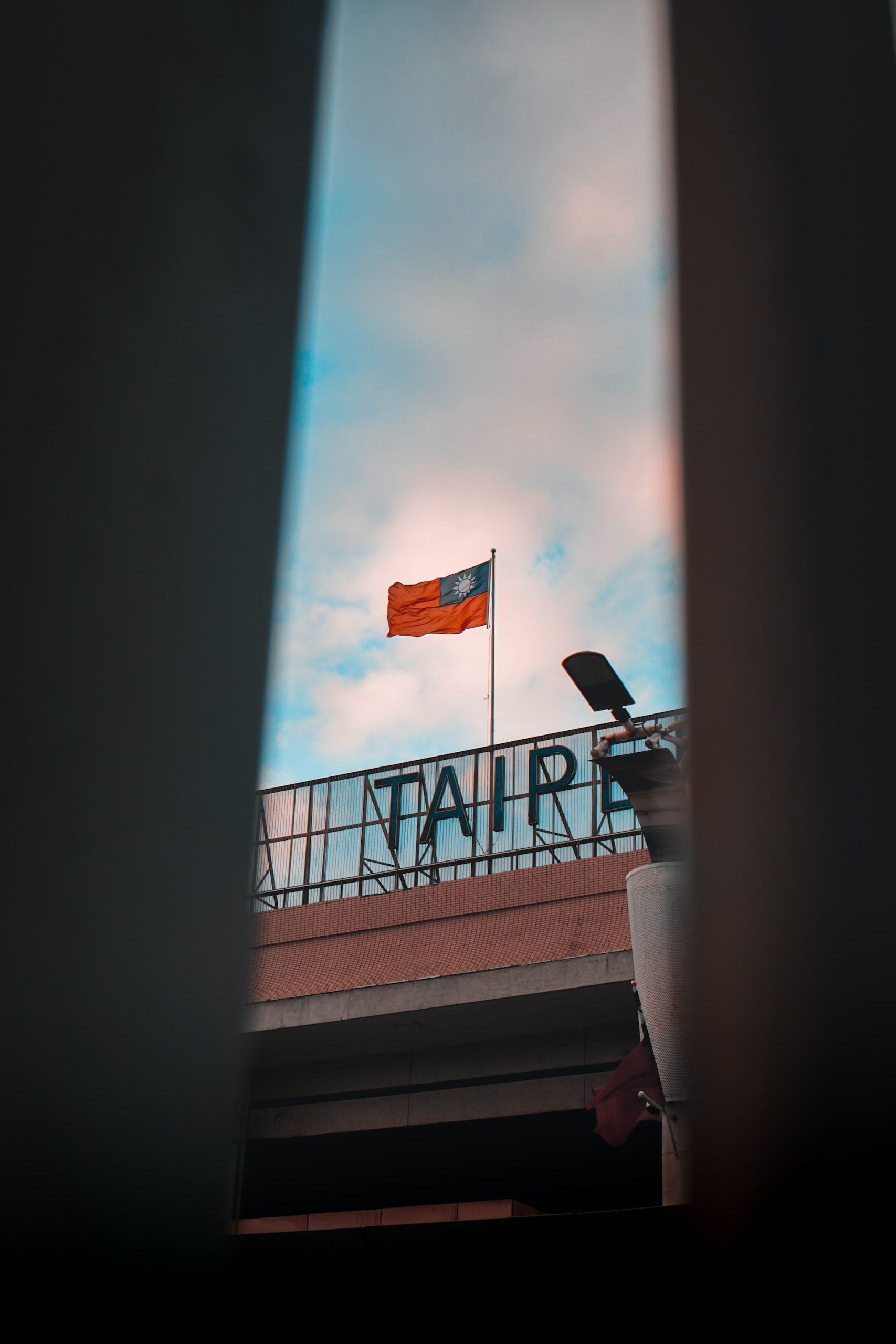
These results signify a shift in Taiwan’s political landscape. The long-standing two-party system appears to be transitioning into a messy three-party dynamic. (File Photo: Lisanto 李奕良/Unsplash)
After months of intense campaigning, the Democratic Progressive Party (DPP) emerged victorious in the 2024 Taiwan presidential election, securing an historic third consecutive term. However, the party’s dominance has gone from absolute to relative; it secured only 40% of the presidential votes, and fell short of retaining the majority of legislative seats.
Meanwhile, the Kuomintang (KMT) failed to retake the presidency as well as the majority of legislative seats. The remaining seats are held by Taiwan People’s Party (TPP).
The Taiwan People’s Party, despite occupying third place in the Legislative Yuan with eight seats, achieved a remarkable 26% in the presidential race, punching above its weight considering its limited resources and recent formation.
These results signify a shift in Taiwan’s political landscape. The long-standing two-party system appears to be transitioning into a messy three-party dynamic.
Why is there a third-party rise?
While the Democratic Progressive Party’s third consecutive presidential term may seem like a victory, cracks in the foundation of Taiwan’s political landscape are widening.
The roots of this instability stretch back to 2020, where anti-establishment sentiment simmered beneath the surface, even as the China factor dominated headlines. This time, the discontent is boiling over.
The Democratic Progressive government, once riding a wave of youthful support, now faces accusations of power abuse and, crucially, a failure to address the very issues that propelled them to power in 2016; skyrocketing housing prices, stagnant wages, and widening inequality. These woes fuelled the rise of the Taiwan People’s Party.
The Kuomintang, the other pillar of the old order, struggles to offer solutions. Their proposed subsidised interest rates risk further inflating the housing bubble, alienating the young generation they desperately need to win.
Meanwhile, the Taiwan People’s Party proposes alternatives – public
housing, rent subsidies, and even property tax hikes – aimed at making housing truly affordable.
For decades, power has swayed between the Kuomintang and Democratic Progressive Party, yet voter satisfaction with
Taiwanese democracy languishes below 50%.
This stark statistic betrays a profound representation crisis, an outcry against the established parties, often due to a perceived failure to tackle core issues.
The Taiwan People’s Party, riding this wave of disillusionment, attracts those who yearn for a political shift, focusing on domestic woes.
It emerges as a beacon of hope for those who have lost faith in the two-party system.
Why did the DPP win again?
Pre-election polls painted a clear picture: more than 60% craved a change, a break from the Democratic Progressive Party’s grip on power.
But the tide of discontent splintered, dividing voters between the established Kuomintang and the rising force of the Taiwan People’s Party.
Youth flocked to the newcomer, while the Kuomintang found favour among older
demographics.
To unseat the government, a united front seemed logical. Yet, cooperation crumbled, replaced by escalating animosity between the opposition parties. This fractured landscape handed the ruling party an advantage: a divided opposition meant their own victory was practically guaranteed.
The Kuomintang, desperate to tip the scales, resorted to strategic voting, aiming to marginalise the Taiwan People’s Party.
Negative campaigns against the Taiwan People’s Party intensified after failed negotiation attempts on November 23. With Taiwan’s traditional media heavily aligned with either the Kuomintang or the government, the Taiwan People’s Party faced an uphill battle for airtime.
Instead of ceding the stage, they went digital. They launched their own YouTube channel, and their supporters spearheaded online and offline campaigns and created alternative news channels. This counteroffensive transformed the fight into a three-pronged clash.
The battle became more than just a contest between the establishment and the anti-establishment. It morphed into a clash between traditional media and
the burgeoning power of social media.
The Taiwan People’s Party’s digital insurgency challenged the long-held dominance of traditional media and carved out a space for their voices to be heard.
While the outcome of the election may be set, the digital battleground shows a new force has emerged in Taiwan’s political landscape.
The future of the cross-strait relations
On the international front, continuity seems to be the watchword.
The established relationship with the US, nurtured by President Tsai Ing-wen, is likely to continue under the guidance of Vice President Bi-khim Hsiao. Her esteemed record as former ambassador to the US inspires confidence in maintaining strong ties.
However, cross-strait relations with China face a potential storm.
With both the President and Vice President openly supporting Taiwan’s independence in the past, China perceives them as a united “independence duo”. This stance may trigger harsh responses, from further curtailing trade via terminating the free trade agreement to heightened military tensions.
The path forward requires navigating a delicate balance of upholding Taiwan’s democratic values while recognising the complex geopolitical realities. The future of Taiwan’s cross-strait relationship hinges on how well this balance is upheld. The governing Democratic Progressive Party will be judged on how they walk the tightrope.
The Taiwan People’s Party’s emergence may seem to add another layer of complexity, with its potentially divergent views on cross-strait policy. The party believes demonstrating goodwill can lower the temperature and avoid harsher measures like trade restrictions or military escalation.
Yet, unlike the Kuomintang’s focus on appeasement, the Taiwan People’s Party advocates for strengthening national defence to deter aggression and ensure peaceful coexistence with China.
Therefore, while the immediate outlook for cross-strait relations may be turbulent, the robust growth of Taiwan’s democracy offers a glimmer of hope for a future where pragmatism holds sway.
Taiwan’s election has presented a paradox: a familiar victory yet a
fundamental shift in the political landscape.
While the immediate future may be uncertain, the rise of the Taiwan People’s Party and the continued US support offer hope for a more open and responsive
democracy.
Kai-Ping Huang, Associate Professor, National Taiwan University
This article is republished from The Conversation under a Creative Commons license. Read the original article.