News
Through its immigration policies, the UK government decides whose families are ‘legitimate’

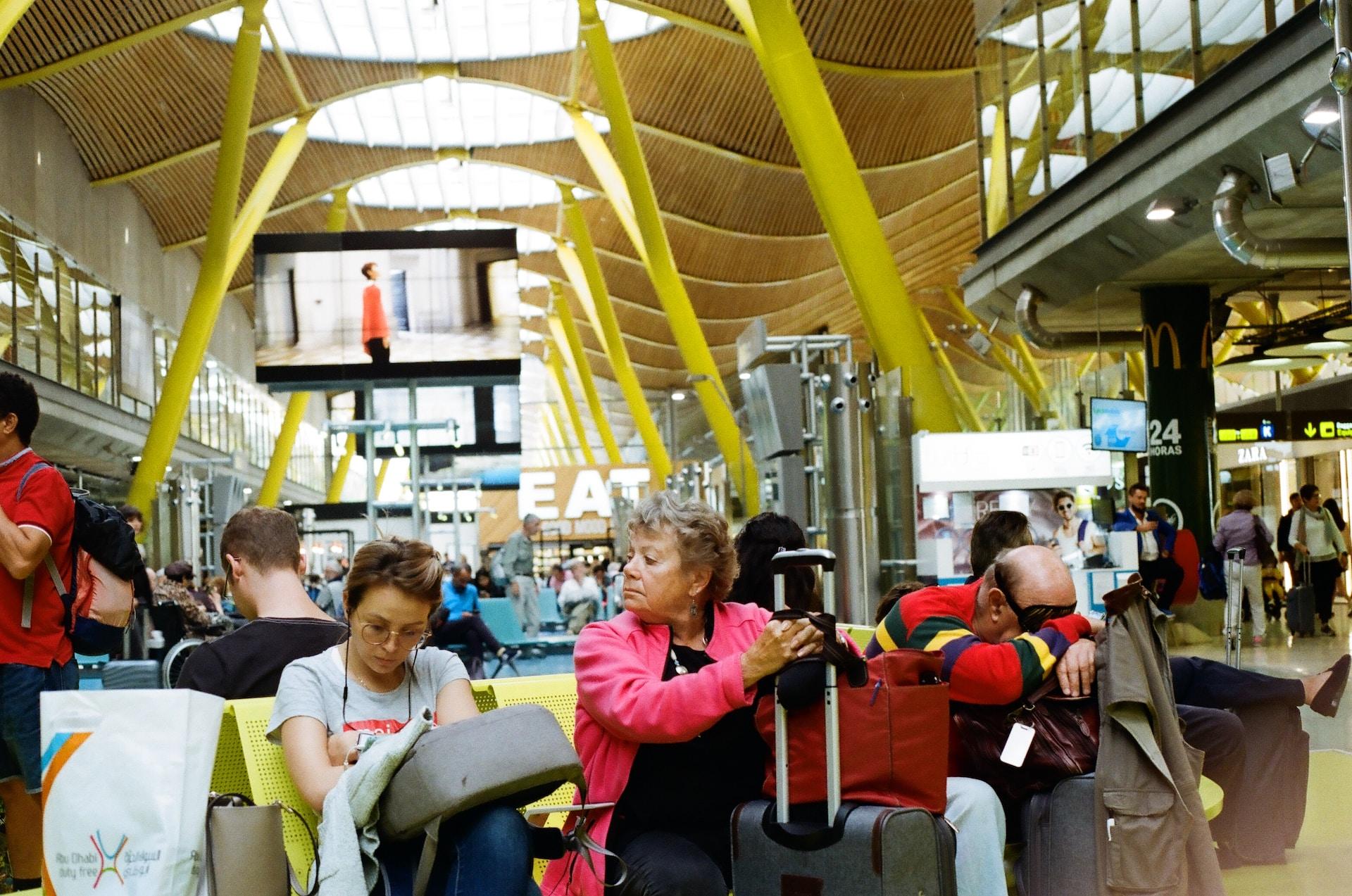
Why is it that government policy can seemingly show such disregard for the families of migrant workers – or indeed for the mixed nationality families of British citizens? (File Photo: Carlos Coronado/Unsplash)
Amid another panic over high net migration to the UK, the government and new home secretary James Cleverly have proposed several changes to visa rules. The proposals apply to economic migrants, rather than other kinds of migrants such as asylum seekers, and have particular consequences for families.
Under the proposals, people on health and care visas will no longer be allowed to bring family members with them to the UK. And British citizens and those with settled status will need to earn at least £38,700 in order for their non-British family members to live with them in the UK. This minimum income requirement is double the previous threshold, which has already had devastating effects on thousands of families.
Following the announcement of these proposals, Stephen Flynn, the leader of the SNP in Westminster, asked the prime minister: “Why does he think that it is acceptable to ask people to come to these shores to care for our family members whilst we show complete disregard for theirs?”
Flynn’s question gets to the heart of this issue. Why is it that government policy can seemingly show such disregard for the families of migrant workers – or indeed for the mixed nationality families of British citizens?
These policies rely on a hierarchy that views some families as more “legitimate” than others. What follows is that some families are treated as more disposable than others.
Illegitimate children and families
The concept of legitimacy has long been used to distinguish between the children of married and unmarried parents. In the UK, as early as the 11th century and right up until the mid-20th century, a child was legally deemed to be legitimate when born to a married couple, and illegitimate when not.
This had very real consequences for so-called illegitimate children and their often poor, unwed mothers. These children were unable to inherit from their fathers and faced stigma and marginalisation in society.
As legal scholar Robert Storrow has written, they were treated “as no one, meaning they had no connection to society or to any enforceable means of support and suffered a host of heavy legal disabilities”.
In the UK, the importance of marriage to parenthood (and with it the concept of legitimacy) has waned. However, the idea that some families are more valuable and worthy than others is alive and well in immigration policy.
Illegitimacy at the border
In its stringent control of family unification for all but high earners, the government’s policy effectively frames migrant and mixed nationality British families as less legitimate than single nationality British families.
These families may be subjected to indefinite separation. And even for high earners, the situation is conditional: should their financial situation change, their right to family life is placed in jeopardy.
The UK’s migration system is based on judgements about economic worth. Policies categorise migrants in relation to their worth to the economy, for example in deciding what counts as “skilled” or “unskilled” labour.
In this context, migrants are welcomed or rejected based on what financial contribution they bring. They are treated as expendable commodities of the global economy, rather than as humans with families, friends and life plans.
It is not just economic migrants who face difficulties in realising family life in the UK. This also affects refugees. Refugee children arriving in the UK without their parents are not allowed to bring any family to join them in the UK at all.
British families
Under the new proposals, British citizens with mixed nationality families are also deemed to be less worthy of family life. Unless they earn more than £38,700, they face family separation as well.
To understand this, we can turn to the work of social theorist Patricia Hill Collins. In an influential essay on family, race and migration in the US, she argues that governments police what “counts” as family in order to construct and protect a particular image of the nation and what it means to belong.
This is what the UK government is doing. The proposals to make family life conditional for mixed nationality families helps project an image of the nation as one where everyone is British – and only British.
Despite having citizenship or settled status, mixed-nationality families are framed as less worthy of family life than other British citizens. This also intersects with race, because mixed nationality families are more likely to include people from minority ethnic backgrounds.
Legitimacy is often thought of as an outdated concept. But at the border, the logic of legitimacy is enshrined in immigration policy. For thousands of people, the right to family life – which is protected by the European convention on human rights – may soon become worryingly conditional.
Katie Tonkiss, Senior Lecturer in Sociology and Policy, Aston University
This article is republished from The Conversation under a Creative Commons license. Read the original article.