
News
Canada-EU summit: Will Canada push for an end to cultural violence against seal hunters?

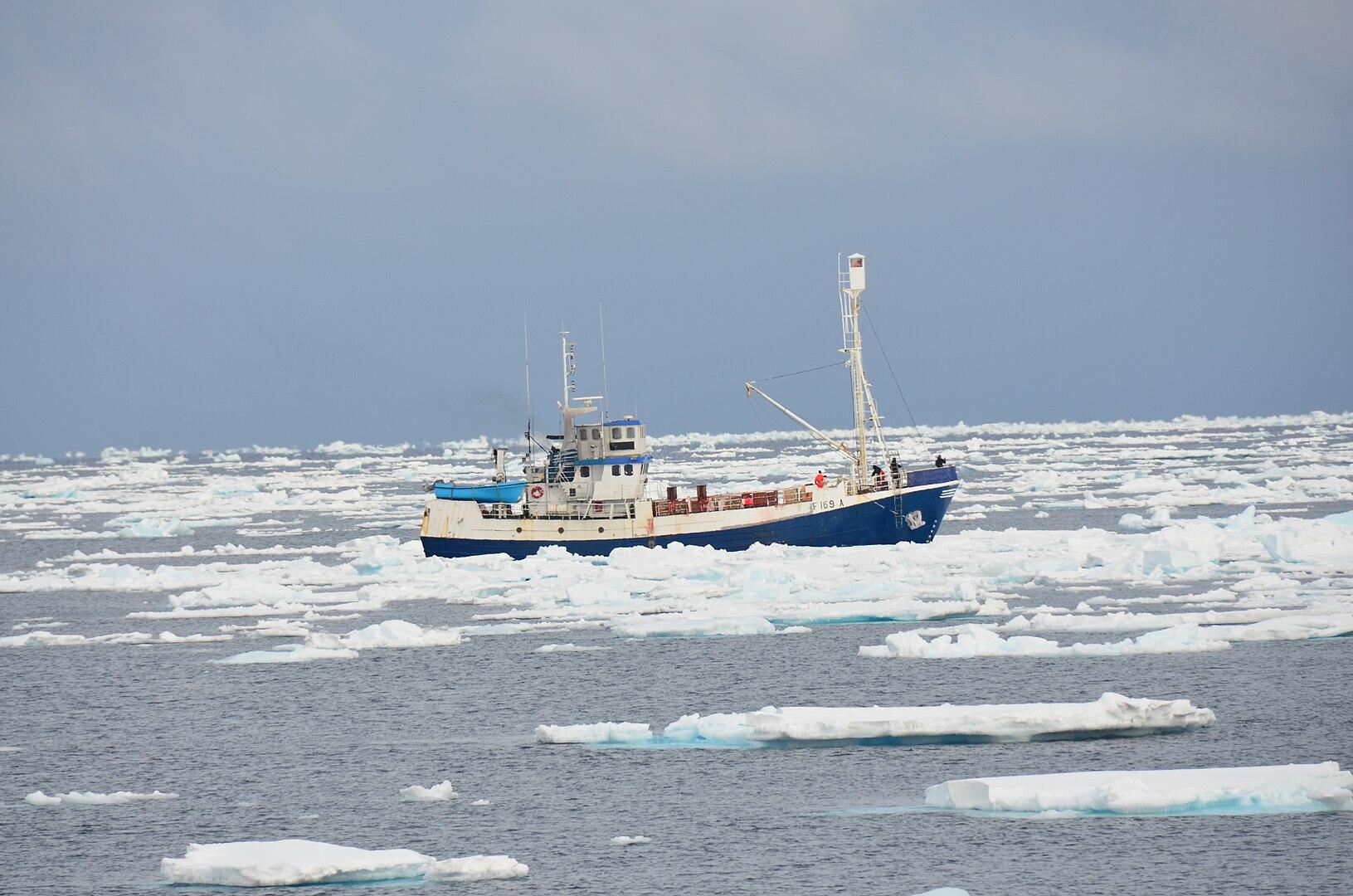
FILE: The Norwegian sealing vessel Havsel in the West Ice in 2017. (Photo By Lysogeny/Wikimedia Commons, CC BY-SA 4.0)
Canada is about to host European Union leaders Charles Michel and Ursula von der Leyen at a summit in Newfoundland and Labrador aimed at emphasizing and strengthening Canadian and EU ties.
But it seems a discussion about the EU’s ban on seal product imports, implemented in 1983 and 2009 respectively due to animal welfare concerns, is not on the agenda.
The EU and leading European nations like Germany are extremely interested in Newfoundland and Labrador, and Canada more broadly, for access to natural resources.
This interest creates an unprecedented diplomatic opportunity for Canada to put the sealing issue back on the table at the summit. Will Canada let this window of opportunity slip through its proverbial fingers?
Why discuss sealing now?
Newfoundland and Labrador is Ground Zero for anti-sealing activism.
Generations of fishers and their families have endured decades of cultural violence from activists and their supporters. They have experienced death threats, threats to kidnap and murder their children, attacks on the ice, racist slurs, xenophobia and stalking and intimidation from protesters and their supporters.
The 2005 documentary My Ancestors Were Rogues and Murderers by Anne Troake, a Newfoundland filmmaker, highlighted the underrepresented experiences of Newfoundland and Labrador sealers.
The documentary uses Troake’s family experiences as the focal point and includes a profanity-strewn message left from an anti-sealing activist:
“Would you like a meat hook stuck in your brain? Lay off the animal rights people. I think it’s … reprehensible. You people out there, you don’t even know whose money you’re living off of. You’re living off of central Canada and western Canada. You can’t even make your own … way in life. If you don’t like it, get the fuck out of our country, you fucking assholes.”
These types of communications are commonly directed to sealers and their families.
Troake, too, faced death threats, ethnic slurs and a brick thrown through her home window after releasing her documentary.
The portrayal of sealers as slaughterers is prominent online and in some media coverage, as exemplified by stories in publications that include The Guardian and The Georgia Straight.
What is cultural violence?
Broadly speaking, culture is a system of meanings and practices maintained over time by a group of people.
According to Norwegian sociologist Johan Galtung, cultural violence means “aspects of culture … can be used to justify or legitimize direct or structural violence.”
Cultural violence is insidious because it “makes direct and structural violence look, even feel, right – or at least not wrong,” he adds.
Galtung, the founder of peace and conflict studies, argues that cultural violence is sometimes portrayed as non-violence, since direct and immediate violence or killings are avoided and it unfolds over a longer time period. But for victims, he argues, this means “the loss of freedom and identity instead of loss of life and limbs.”
Relevance to Canada-EU trade relations
The EU has participated in cultural violence against sealers. Its ban is the result of European politicians accepting, unreservedly, activist narratives that essentially portray sealers as monsters.
The International Fund for Animal Welfare, in fact, celebrates the fact that the EU ban on seal products occurred at its instigation.
Canada and the EU have fought about the seal product ban before. In 2014, Canada lost its appeal to the World Trade Organization (WTO) on the legality of the ban.
The EU argued the ban is “necessary to protect public morals.” But the EU has issues with its own animal welfare track record. In 2018, the European Court of Auditors raised serious concerns over animal abuses in Europe’s farming industry.
In 2023, National Geographic reported the EU exhibited “extreme cruelty” towards frogs. A report by the magazine on the frog leg trade found “millions of wild frogs are killed and exported to the EU each year … leading to inhumane practices and population declines of over-exploited species.”
Sealing industry has evolved
The EU has also failed to account for changes in the sealing industry.
Fisheries and Oceans Canada states that 70 per cent of seals are now hunted with rifles. This is a major shift from the use of clubs.
Additionally, the role of traditional knowledge in fisheries management is changing. Fisheries and Oceans Canada now acknowledges that seals affect cod stocks after decades of dismissing and downplaying local knowledge on the subject.
Furthermore, the EU remains ambiguous on the difference between subsistence and commercial hunting, and it’s failed to acknowledge and accommodate non-Indigenous subsistence hunting traditions and cultural practices in its ban.
A discussion on the EU seal product ban needs to be reopened. The EU’s role in perpetrating cultural violence against working-class sealers and their families needs to be addressed.
The summit in Newfoundland and Labrador is a prime opportunity for it.
Danita Catherine Burke, Research Fellow, Center for War Studies, University of Southern Denmark
This article is republished from The Conversation under a Creative Commons license. Read the original article.




















