
News
Ukraine: Russia’s losses mount – but self-sacrifice in war is part of the country’s mythology

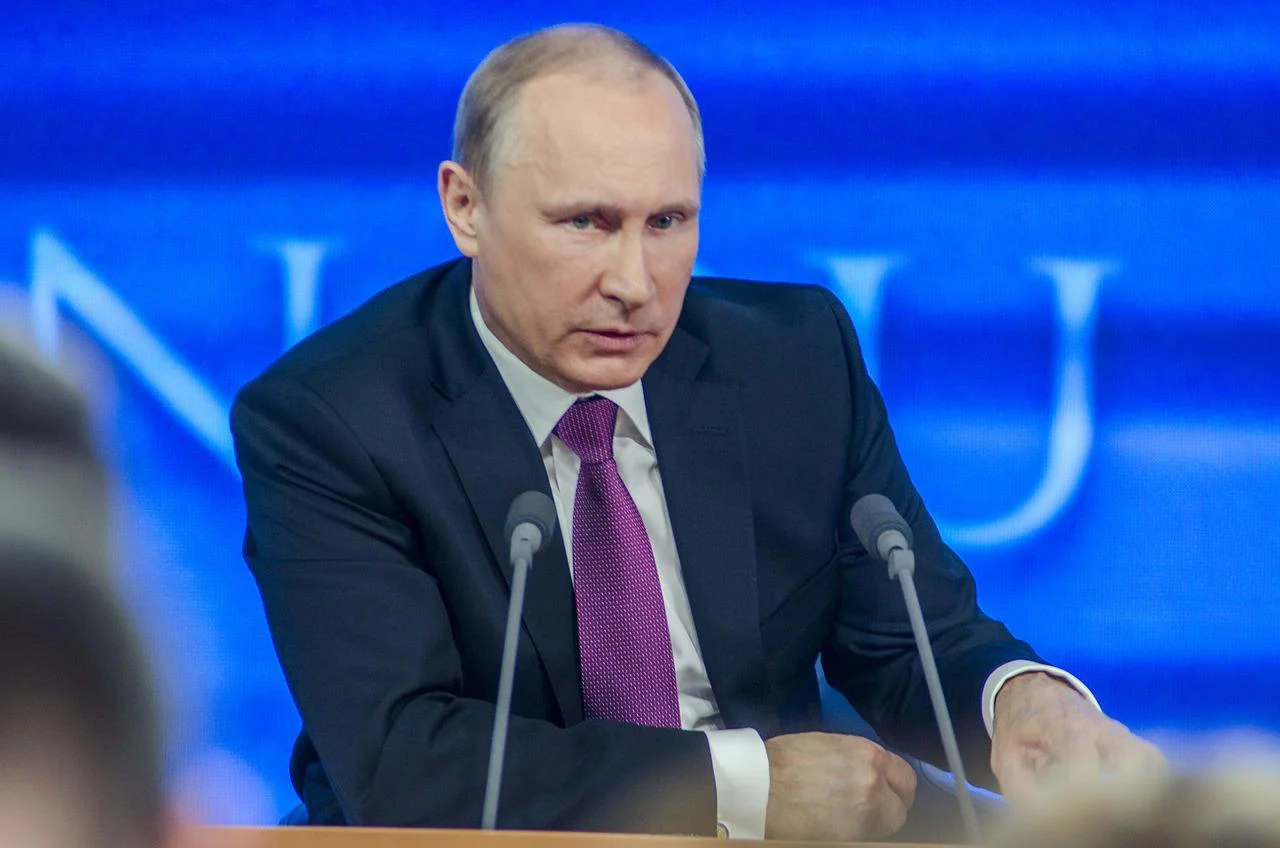
Putin draws on a language of sacrifice which has its cultural and historical roots in Russian Orthodox thinking and Soviet mythology. (Pixabay photo)
A recent intelligence report published by the UK’s Ministry of Defence about Russia’s attempt to capture the town of Avdiivka in the Donetsk region is the latest illustration of just how much the conflict in Ukraine is becoming a war of attrition. Russia’s push to mount a new offensive in the east has resulted in substantive “personnel losses” for its military.
In the west, many assume that every inch of Ukrainian land that is liberated brings Russia closer to military defeat and Europe to peace. But Russia has adapted to both internal and external shocks. As of August, it was estimated that Russia had suffered “as many as 120,000 deaths”. That number will have risen in recent weeks. And as the death toll climbs, the ability to replace troops becomes as important as military equipment and technology.
Even though many young men left Russia rather than be sent to the front, the country still has a large pool of young men from which to recruit and has claimed to have enlisted a large number without resorting to general conscription – although the Kremlin’s figures have been questioned by other sources.
But the question remains as to how many Russian military deaths is too many for Putin to retain the support of the Russian people. And it’s a very difficult question to answer. In Russia, the notion of military sacrifice plays an important role in informing national identity.
Russia’s national story is constituted by loss. It has lived and continues to live a tale of self-induced suffering. Even just considering the past century, military losses during the second world war and in Afghanistan – followed by the loss of a sense of identity after the collapse of the Soviet empire in 1991 – have all come to define Russia’s character today. The sense of the “loss of empire” is what has driven Vladimir Putin’s foreign adventurism in Georgia and Ukraine.
For the motherland
For the British people, the death of 179 solidiers in Iraq was traumatic enough for leaders to change course. But military sacrifice has a different meaning in Russia, one that is diametrically opposed to the value the liberal west places on the individual subject.
For Russia, every dead soldier in Ukraine constitutes a step towards victory and reclaiming the great power image of the country’s Soviet past. While the west’s liberal philosophy promulgates the importance of individual rights, Russia is defined by a system of collectivism. Within its value system, the individual subject confers prestige through their self-sacrifice for the collective wellbeing.
In Soviet iconography, tropes of self-sacrifice and fatal injury tend to be closely tied to nationalist ideas of pride and superiority. They pervaded propaganda posters during the “great patriotic war”.

Take the image For the Motherland! (1942) by Aleksei Kokorekin as an example. It conveyed Soviet resilience through the portrayal of a wounded soldier fighting on bravely and showing no sign of physical weakness despite his injuries.
This juxtaposition between the injured self and national status is telling. Kokorekin’s depiction of Soviet heroism was also indicative of the Soviet mentality on death – where the emphasis on physical suffering became a source of national superiority.
Spirituality of loss
This logic permeated the consciousness of subsequent generations and in how they interpreted military sacrifice. For her 1990 study Tsinkovye mal’chiki (translated as Zinky Boys) by Nobel prize-winning writer Svetlana Aleksievich, the author interviewed army veterans from the campaign in Afghanistan. She recalled how in one interview an artillery soldier described war as “a spiritual experience”, while referencing the self-sacrifice of the Red Army during the great patriotic war.
This experience of spirituality through war not only reflects how Russians seek to replay and become part of the past, but speaks to the religious dimension of Russia’s discourse on self-sacrifice. This theme emerged strongly in comments by Patriarch Kirill, the head of the Russian Orthodox Church, in September 2022, in which he was encouraging Russian men to join up.
…if a person dies in the performance of this duty [war], then they have undoubtedly committed an act equivalent to sacrifice. They will have sacrificed themselves for others. And therefore, we believe that this sacrifice washes away all the sins that a person has committed.
His statement rationalised the self-sacrifice of the Russian soldier on the basis that it served a transcendental duty – a Christ-like sacrifice – which would ultimately absolve them from sin. The patriarch’s comments speak to a particular historical tradition of religious masochism – the practice of self-induced physical trauma – in Russia, which dates back to “the early days of Christian Rus’”.
Military martyrdom
Deciphering this internal logic governing the way many Russians deal with loss is imperative to the west’s understanding of the Ukraine war. Putin draws on a language of sacrifice which has its cultural and historical roots in Russian Orthodox thinking and Soviet mythology.
This language reveals something important about Russian psychology when it comes to dealing with news of large-scale casualties on the battlefield. A soldier’s body is a potent mixture of the political and spiritual in the Russian psyche.
The death of that body is for Russia a step towards achieving the fantasy of national prestige. For some Russians (by no means all), the trauma of military loss does not mean that they should stop fighting in Ukraine. On the contrary, it can represent a pathway to martyrdom.
Ben Soodavar, Researcher, Department of War Studies, King’s College London
This article is republished from The Conversation under a Creative Commons license. Read the original article.




















