
Science
Your microbes live on after you die − a microbiologist explains how your necrobiome recycles your body to nourish new life

You might assume that your microbes die with you – once your body breaks down and your microbes are flushed into the environment, they won’t survive out in the real world. (Pexels Photo)
Each human body contains a complex community of trillions of microorganisms that are important for your health while you’re alive. These microbial symbionts help you digest food, produce essential vitamins, protect you from infection and serve many other critical functions. In turn, the microbes, which are mostly concentrated in your gut, get to live in a relatively stable, warm environment with a steady supply of food.
But what happens to these symbiotic allies after you die?
As an environmental microbiologist who studies the necrobiome – the microbes that live in, on and around a decomposing body – I’ve been curious about our postmortem microbial legacy. You might assume that your microbes die with you – once your body breaks down and your microbes are flushed into the environment, they won’t survive out in the real world.
In our recently published study, my research team and I share evidence that not only do your microbes continue to live on after you die, they actually play an important role in recycling your body so that new life can flourish.
Microbial life after death
When you die, your heart stops circulating the blood that has carried oxygen throughout your body. Cells deprived of oxygen start digesting themselves in a process called autolysis. Enzymes in those cells – which normally digest carbohydrates, proteins and fats for energy or growth in a controlled way – start to work on the membranes, proteins, DNA and other components that make up the cells.
The products of this cellular breakdown make excellent food for your symbiotic bacteria, and without your immune system to keep them in check and a steady supply of food from your digestive system, they turn to this new source of nutrition.
Gut bacteria, especially a class of microbes called Clostridia, spread through your organs and digest you from the inside out in a process called putrefaction. Without oxygen inside the body, your anaerobic bacteria rely on energy-producing processes that don’t require oxygen, such as fermentation. These create the distinctly odorous-gases signature to decomposition.
From an evolutionary standpoint, it makes sense that your microbes would have evolved ways to adapt to a dying body. Like rats on a sinking ship, your bacteria will soon have to abandon their host and survive out in the world long enough to find a new host to colonize. Taking advantage of the carbon and nutrients of your body allows them to increase their numbers. A bigger population means a higher probability that at least a few will survive out in the harsher environment and successfully find a new body.
A microbial invasion
If you’re buried in the ground, your microbes are flushed into the soil along with a soup of decomposition fluids as your body breaks down. They’re entering an entirely new environment and encountering a whole new microbial community in the soil.
The mixing or coalescence of two distinct microbial communities happens frequently in nature. Coalescence happens when the roots of two plants grow together, when wastewater is emptied into a river or even when two people kiss.
The outcome of mixing – which community dominates and which microbes are active – depends on several factors, such as how much environmental change the microbes experience and who was there first. Your microbes are adapted to the stable, warm environment inside your body where they receive a steady supply of food. In contrast, soil is a particularly harsh place to live – it’s a highly variable environment with steep chemical and physical gradients and big swings in temperature, moisture and nutrients. Furthermore, soil already hosts an exceptionally diverse microbial community full of decomposers that are well adapted to that environment and would presumably outcompete any newcomers.
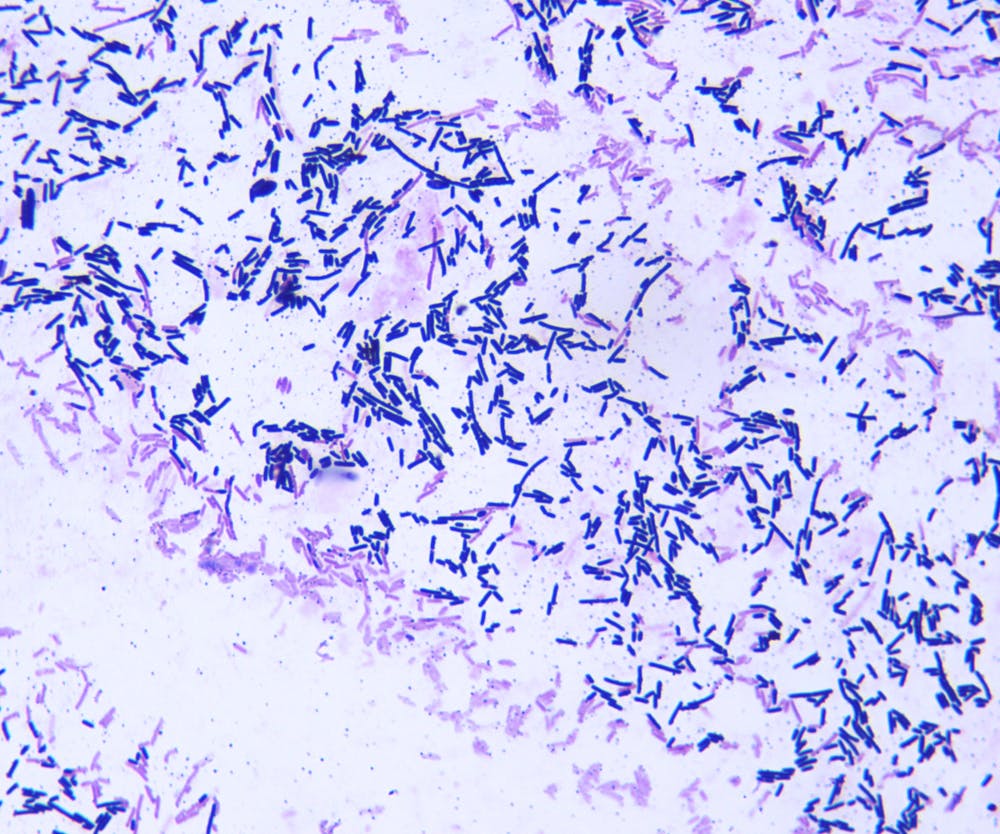
Joseph E. Rubin/Flickr, CC BY-NC
It’s easy to assume that your microbes will die off once they are outside your body. However, my research team’s previous studies have shown that the DNA signatures of host-associated microbes can be detected in the soil below a decomposing body, on the soil surface and in graves for months or years after the soft tissues of the body have decomposed. This raised the question of whether these microbes are still alive and active or if they are merely in a dormant state waiting for the next host.
Our newest study suggests that your microbes are not only living in the soil but also cooperating with native soil microbes to help decompose your body. In the lab, we showed that mixing soil and decomposition fluids filled with host-associated microbes increased decomposition rates beyond that of the soil communities alone.
We also found that host-associated microbes enhanced nitrogen cycling. Nitrogen is an essential nutrient for life, but most of the nitrogen on Earth is tied up as atmospheric gas that organisms can’t use. Decomposers play a critical role recycling organic forms of nitrogen such as proteins into inorganic forms such as ammonium and nitrate that microbes and plants can use.
Our new findings suggest that our microbes are likely playing a part in this recycling process by converting large nitrogen-containing molecules like proteins and nucleic acids into ammonium. Nitrifying microbes in the soil can then convert the ammonium into nitrate.
Next generation of life
The recycling of nutrients from detritus, or nonliving organic matter, is a core process in all ecosystems. In terrestrial ecosystems, decomposition of dead animals, or carrion, fuels biodiversity and is an important link in food webs.
Living animals are a bottleneck for the carbon and nutrient cycles of an ecosystem. They slowly accumulate nutrients and carbon from large areas of the landscape throughout their lives then deposit it all at once in a small, localized spot when they die. One dead animal can support a whole pop-up food web of microbes, soil fauna and arthropods that make their living off carcasses.
Insect and animal scavengers help further redistribute nutrients in the ecosystem. Decomposer microbes convert the concentrated pools of nutrient-rich organic molecules from our bodies into smaller, more bioavailable forms that other organisms can use to support new life. It’s not uncommon to see plant life flourishing near a decomposing animal, visible evidence that nutrients in bodies are being recycled back into the ecosystem.
That our own microbes play an important role in this cycle is one microscopic way we live on after death.
Jennifer DeBruyn, Professor of Environmental Microbiology, University of Tennessee
This article is republished from The Conversation under a Creative Commons license. Read the original article.




















