
Canada News
Tent cities are not just a municipal problem

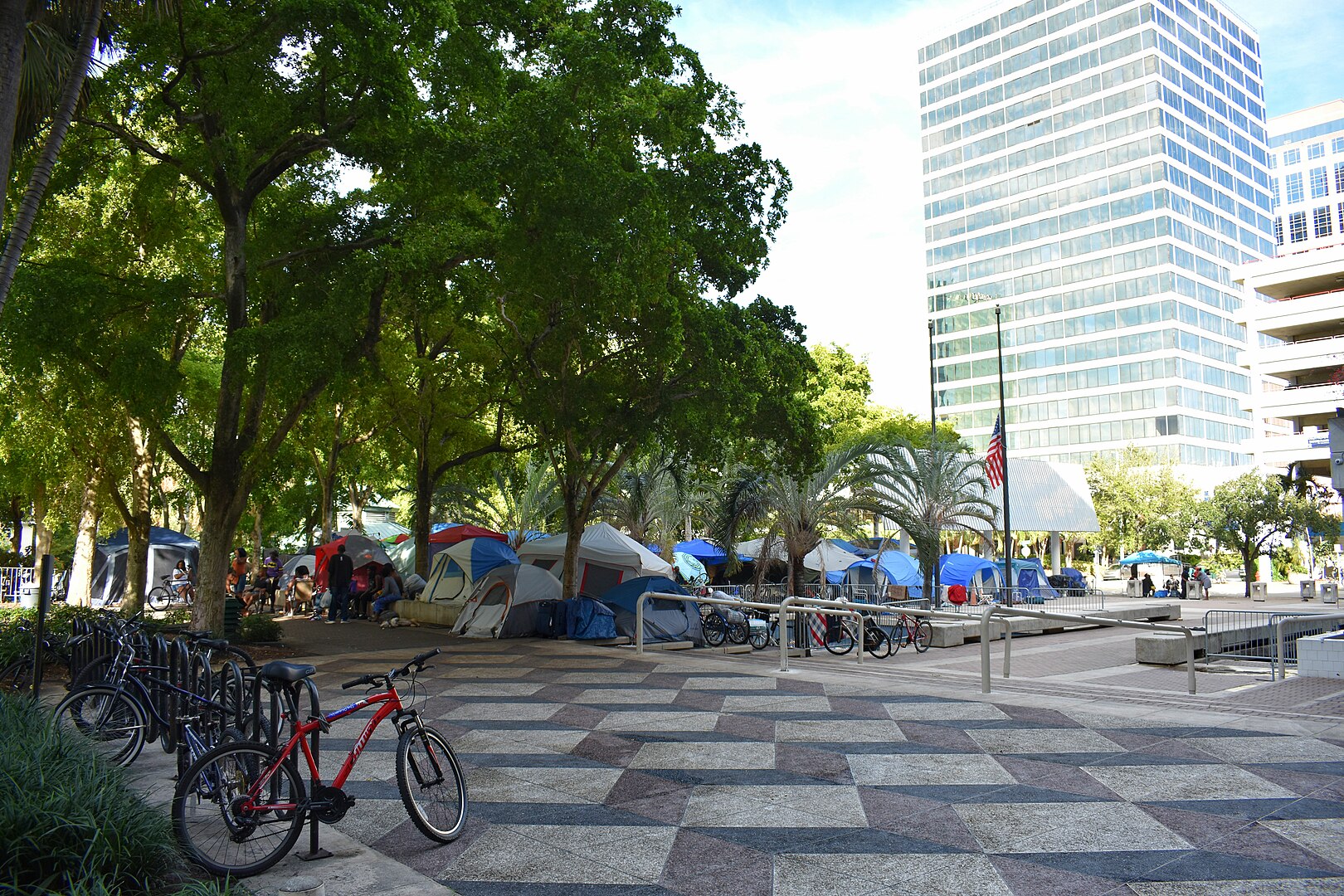
FILE: A homeless camp in Fort Lauderdale, Florida. (Photo By Tamanoeconomico/Wikimedia Commons, CC BY-SA 4.0)
Across Canada, municipalities are grappling with how to respond to a growing number of people living in encampments. It is tempting to blame mayors and municipal councils for the increased number of tent cities. However, poor data, insufficient resources and inadequate guidelines are the real cause of haphazard responses to the problem.
A national response involving all levels of government is needed. This pan-Canadian challenge can be addressed by gathering data, investing in shelter spaces and other housing solutions, establishing clear procedures and sharing best practices. It is time for political leadership at the federal and provincial levels.
By default, it falls to cities to respond to encampments because they manage day-to-day issues within their communities, including public safety, parks, local bylaws and shelter. Consequently, responding to homelessness is often understood as squarely within the purview of municipal governments.
When alternative shelter spaces or other options are not available and encampments emerge, challenges arise in coordination across municipal departments such as parks services, police and emergency response, and public health. In addition to these coordination challenges, governments must balance the rights of individuals in encampments with those in adjacent neighbourhoods.
That’s when public opinion often turns against local governments for perceived inaction or a perceived bungled response.
Cities cannot address this problem on their own.
Each level of government has an essential role to play in a comprehensive and proactive response. We outlined these roles in a recent report entitled Tent Nation: Responding to the rise of housing encampments & the homelessness crisis in Canada.
One broad concern that requires action is gathering reliable statistics about the scope of the problem. Last year, the federal auditor general identified a need for standardized data collection across Canada.
To reach this goal, municipalities should establish by-name lists that track the number and needs of people experiencing homelessness, including those living in encampments. Provinces and territories should follow Ontario’s lead and use their constitutional powers to require municipalities to implement this solution. Good data will reveal the need for intervention and investment.
Insufficient shelter space pushes people to encampments. Communities large and small across the country including Moncton, N.B., Granby, Que., Regina, Vancouver, and many others do not have enough shelter spaces for individuals needing a safe place to stay. In Montreal, the authorities who regularly order officials to dismantle the camps described the situation as a major crisis. In Toronto, the shortcomings became clear recently when asylum-seekers were forced to spend nights on the streets due to a lack of available shelter spaces and an intergovernmental funding dispute.
Some other unhoused individuals prefer encampments due to the strict rules, time limits or lack of privacy in shelters.
To respond to this challenge, increased funding from provincial and federal governments is urgently needed for traditional shelters as well as alternative or creative solutions, including tiny homes or modular housing, for the particularly hard-to-house.
Communities of all sizes need housing options that provide privacy, predictability and autonomy as an alternative to living in encampments.
Projects like the Astum Api Niikinaahk tiny homes settlement in Winnipeg or emergency shelter space using modular homes at the Park Street Emergency Shelter in Charlottetown are examples of innovative smaller-scale projects that make a difference.
The Federation of Canadian Municipalities has called for more funding from federal and provincial governments for supportive housing and wraparound services. Investments from higher levels of government are necessary for similar projects in all cities facing these challenges.
Why is housing cheaper in Quebec than in Ontario?
Green construction is needed to affordably increase housing supply
Some cities have detailed plans for responding to encampments. For example, Hamilton has published guiding principles for responding to encampments; Edmonton’s encampment response team brings together city staff, police and local non-profits to coordinate their response; and Sudbury, Ont., has a guide and infographic that clearly indicates how the city will respond.
Other municipalities should follow suit. Making public their encampment response plans builds trust in government and ensures proactive responses with clear standards. Provinces and territories should require all cities to publish plans that explain how they respond to encampments.
Cities need to learn from each other as they develop and implement response plans. Federal funding, perhaps administered by the Federation of Canadian Municipalities, should facilitate information-sharing between communities across the country.
Overall, these recommendations show what higher levels of government should do to respond to the homelessness crisis and the rise in encampments. Cities large and small need support and leadership from provincial and federal governments to improve the situation.
This article first appeared on Policy Options and is republished here under a Creative Commons license.




















