
News
DHSUD updates guidelines on ICT infra permits

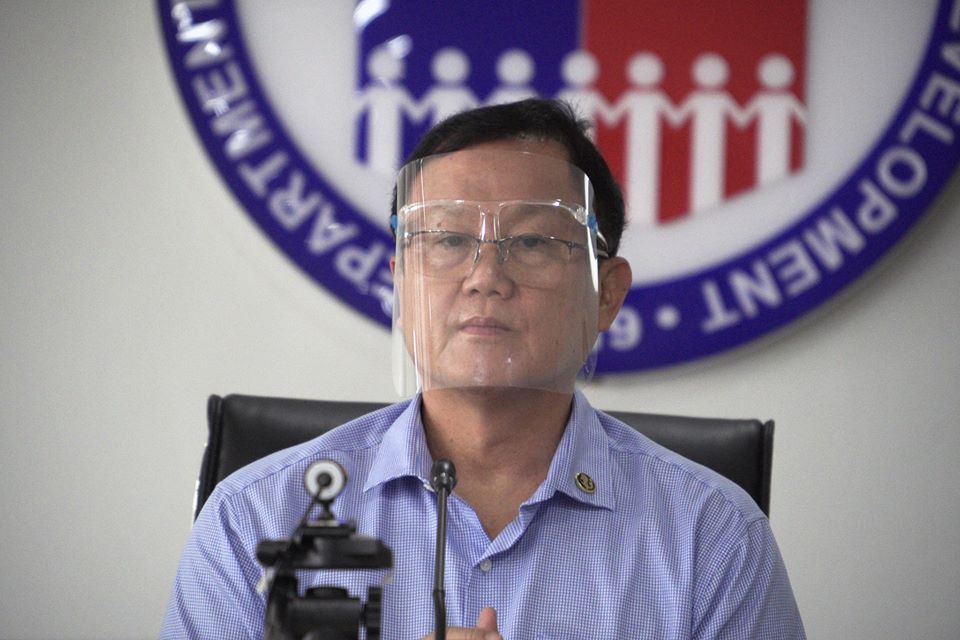
Del Rosario said to expedite the application process for the telecommunication infrastructures, there is no need to go through homeowners associations (HOA), building owners, and concerned tenants. (File photo: Department of Human Settlements and Urban Development/Facebook)
MANILA – The Department of Human Settlements and Urban Development (DHSUD) on Friday said it has updated the guidelines on securing permits for information and communications technology (ICT) infrastructure projects.
The move aims to reduce the number of documentary requirements to hasten processing of permits for building of network towers and other critical ICT infrastructures to hasten processing time.
“Wireless connectivity has turned into a basic necessity—for business, education and almost every aspect of human life. This is especially poignant and important now that we are in the midst of a pandemic that has turned the lives we know inside out,” DHSUD Secretary Eduardo del Rosario said in a statement.
The requirements and procedures in securing clearance for base stations and other telecommunication infrastructure were updated under the “Department Order (DO) No. 2020-009 or the Revised Locational Guidelines for Base Stations and Other Infrastructure for Cellular Mobile Telephone Service, Paging Service, Trunking Service, Wireless Local Loop Service, and Other Wireless Communications Service.”
Del Rosario said to expedite the application process for the telecommunication infrastructures, there is no need to go through homeowners associations (HOA), building owners, and concerned tenants.
Meanwhile, other documentary requirements will remain.
In cases where the proposed ICT facility will be built on privately-owned land within a residential subdivision, a written certification under oath executed by the responsible officer of the company that there is no other available or suitable site within the coverage area except the subject property inside the subdivision project and said location will best serve the purpose of interconnectivity effectively and efficiently will suffice, the DHSUD said.
In lieu of consent, the company should also submit an undertaking that they will conduct social preparation among the affected homeowners, households, or families, it added.
“The HOA consent requirement caused delays to the implementation and construction of ICT facilities, such as shared telecommunications towers,” del Rosario said.
The move was pursued after the DSHUD and the Anti-Red Tape Authority (ARTA) inked a Joint Memorandum Circular (JMC) to streamline the permitting process for common towers that would further bolster the country’s ICT facilities.
Aside from removing the HOA consent requirement, the revised law is now allowing the use of ‘barangay clearance’ instead of requiring a ‘Barangay Council Resolution’ which could be take days or even months in processing.
Documents for ICT infra projects
Under the department order, other requirements include the submission of the project area’s vicinity map, site plan, Certified True Copy of the Original or Transfer Certificate of Title, Radiofrequency Radiation (RFR) Evaluation Report from the Center for Device Regulation, Radiation, Health, and Research of the Food and Drug Administration, Bill of Materials and Estimated Cost, and Proof of Payment of Locational Clearance Processing Fee.
If the applicant is a Mobile Network Operator, it would need to provide the Certified True Copy of National Telecommunication Commission’s Provisional Authority (PA).
For independent tower companies constructing non-electronic telecommunications infrastructure or other passive structures, they must also secure and submit a Certified True Copy of the ITC Certificate of Registration from the Department of Information and Communications Technology.
Upon the submission of complete requirement, a site inspection and evaluation follow immediately.
As an added measure, the DHSUD said it further improved the processing time of the Locational Clearance application to seven calendar days, the completion is much faster than the previous 15 calendar days.
“Applications for clearance can be submitted to the Local Government Unit (LGU) where the proposed ICT infrastructure project will be located,” it said. “However, if the LGU does not have an updated Comprehensive Land Use Plan and Zoning Ordinance, locational clearances must be obtained from its corresponding DHSUD Regional Office.”
The housing department said once the Office of the National Administrative Register of the University of the Philippines Law Center gets a furnished copy of the revised law, the guidelines will take effect immediately.




















