Health
Why face masks can make eyes feel dry, and what you can do about it

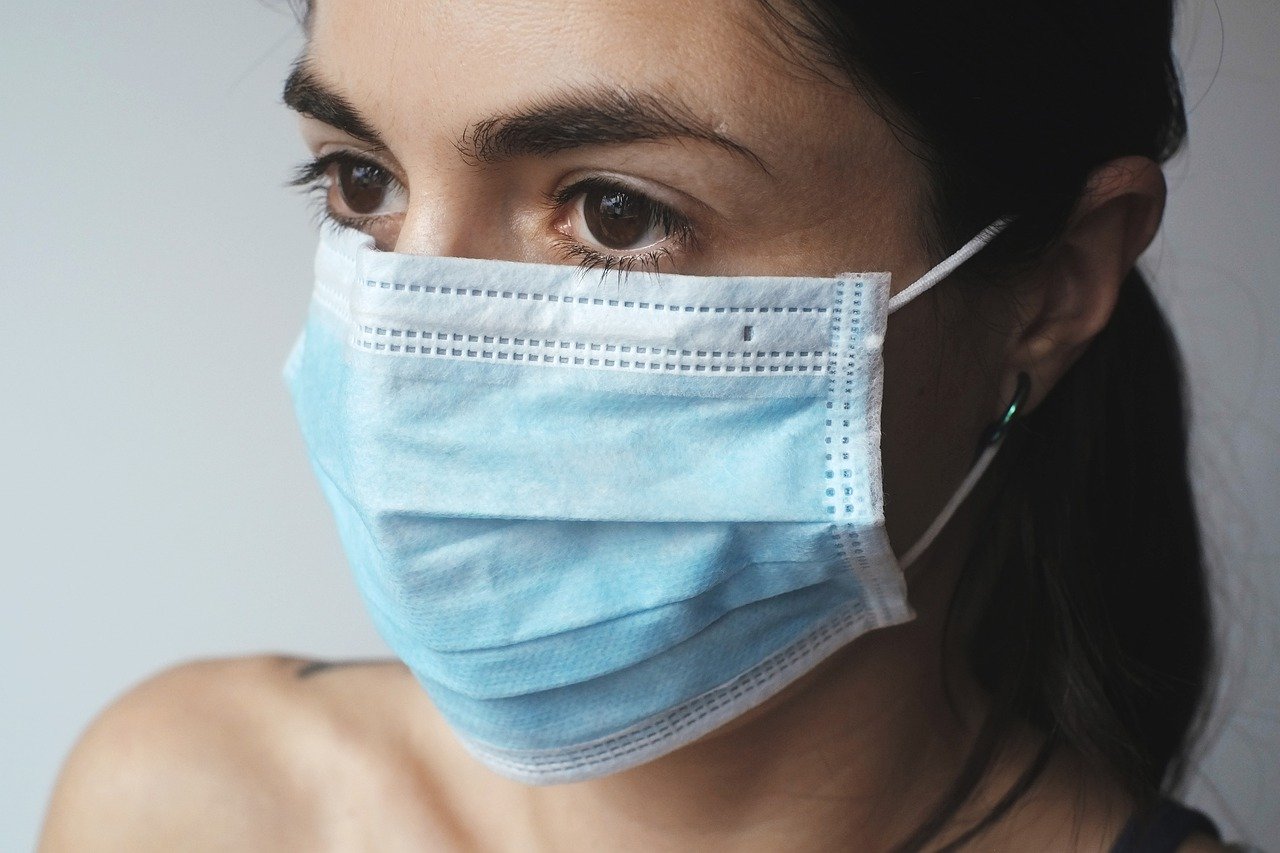
Face masks significantly reduce the spread of air outwards from the mouth and nose. However, exhaled air still needs to disperse; when a mask sits loosely against the face the likely route is upwards. (Pixabay photo)
Face masks help reduce coronavirus transmission, which has prompted mandates and expert recommendations for their use where social distancing is difficult. As the world emerges from shutdowns, wearing face masks for extended periods of time in settings such as offices will increase.
While these protective measures are essential to combating COVID-19’s spread, a new phenomenon is emerging: increasing reports of dry, uncomfortable eyes. What is the science behind this trend, who is at risk and is there a solution?
Dry eye has become much better understood in recent years, thanks to colleagues from the Centre for Ocular Research & Education (CORE) at the University of Waterloo, the Tear Film and Ocular Surface Society and other researchers around the world. That knowledge provides a head start on deciphering this latest wrinkle.
Making sense of MADE: Mask-associated dry eye
The term mask-associated dry eye (MADE) was first described by an ophthalmologist in June based on increasing incidents in his office. Additional reports have since circulated, and a recent review further examined the issue.
People with existing dry eye disease report worsening symptoms — a problematic occurrence for the tens of millions of people worldwide who already struggle with the issue. Concurrently, previously asymptomatic patients are flagging uncomfortable eyes and variable vision for the first time, particularly when reading or using digital devices for a long period of time.
Our tear film’s delicate balance
When addressing MADE, it is helpful to understand our tear film, the liquid layer that coats the eye’s surface. This tiny volume of fluid, equivalent to one-tenth of a single water drop, has a highly complex structure and composition. It lubricates the surface of the eye, allowing smooth and comfortable passage of the eyelid during every blink. Ongoing imbalance in the tear film leads to dry eye disease.
Eyes feel sore, dry and irritated, and may water and look red.
There are many causes of dry eye disease, including issues relating to eye and systemic health conditions, age, gender or medications. Excessive use of digital devices, poor indoor air quality and pollution all result in symptoms. Situations that increase how quickly the tear film evaporates, such as air-conditioned offices or automobile air-blowers, can quickly and significantly dry the eye’s surface, leading to more pronounced symptoms.
Masks, airflow and evaporation
Face masks significantly reduce the spread of air outwards from the mouth and nose. However, exhaled air still needs to disperse; when a mask sits loosely against the face the likely route is upwards. This forces a stream of air over the surface of the eye, creating conditions that accelerate the evaporation of the tear film, like a steady breeze blowing over damp skin.
People who wear glasses are well aware of this, shown by the annoying lens fogging that often occurs when breathing under a mask.
When masks are worn for extended periods, this repeated evaporation may lead to dry spots on the ocular surface.
Similar effects have been reported with continuous positive airway pressure (CPAP) masks that are used to treat sleep apnea. Eye dryness may also result when face masks are taped to seal the top edge, if that interferes with the eyelids’ natural movement, preventing full blinks. Incomplete blinking can cause the tear film to become less stable.
Who may be affected?
In addition to those with pre-existing dry eye disease, the general mask-wearing population may find themselves wondering why their eyes are inexplicably irritated. This includes the elderly, who naturally have less efficient tears.
An extensive review demonstrated that wearing contact lenses does not raise the risk of contracting COVID-19, as long as people follow good hygiene and cleaning measures. However, a contact lens can disturb the tear film, potentially making wearers more MADE-susceptible if exhaled air further impacts tear film stability.
Prolonged use of face masks in air-conditioned locations may also trigger MADE. So too could increased digital device use while wearing masks — a rising trend during the pandemic.
Beyond discomfort, MADE presents another risk: it may encourage people to rub their face and eyes for temporary relief. Coronavirus transmission is possible via the mouth and nose, and, to a lesser extent, potentially the eyes. Bringing unwashed hands near the face may increase the likelihood of infection. That is an additional reason to tackle MADE.
Alleviating MADE
Several simple measures can help reduce the drying effects of upward air flow from masks.
As with any new eye-related concern, first check with an eye care practitioner for advice and to rule out other causes.
Second, ensure that a mask is worn appropriately, particularly when wearing spectacles and sunglasses. A close-fitted mask, or carefully taped top edge that does not interfere with blinking, may help direct air flow downwards. This helps prevent lenses from steaming and reduces MADE.
Lubricating drops may help with comfort. Eye care practitioners can recommend the best type, based on medical history and circumstances.
Limit time in air-conditioned or windy environments when wearing masks, and take regular breaks from digital devices.
Don’t ditch the mask
Is wearing a mask worth it, when you may have to possibly contend with MADE? Absolutely! Masks are here for the foreseeable future. Along with social distancing and hygiene measures, they represent a crucial part of our defence against the spread of COVID-19.
The good news is that we understand why MADE occurs and can address it. Remaining alert and following a few simple steps can help increase eye comfort and promote good mask wear, and with it, we move further along in overcoming the global pandemic.
Lyndon Jones, Professor, School of Optometry & Vision Science, University of Waterloo
This article is republished from The Conversation under a Creative Commons license. Read the original article.