
News
Global e-waste surges 21% in 5 years: UN report

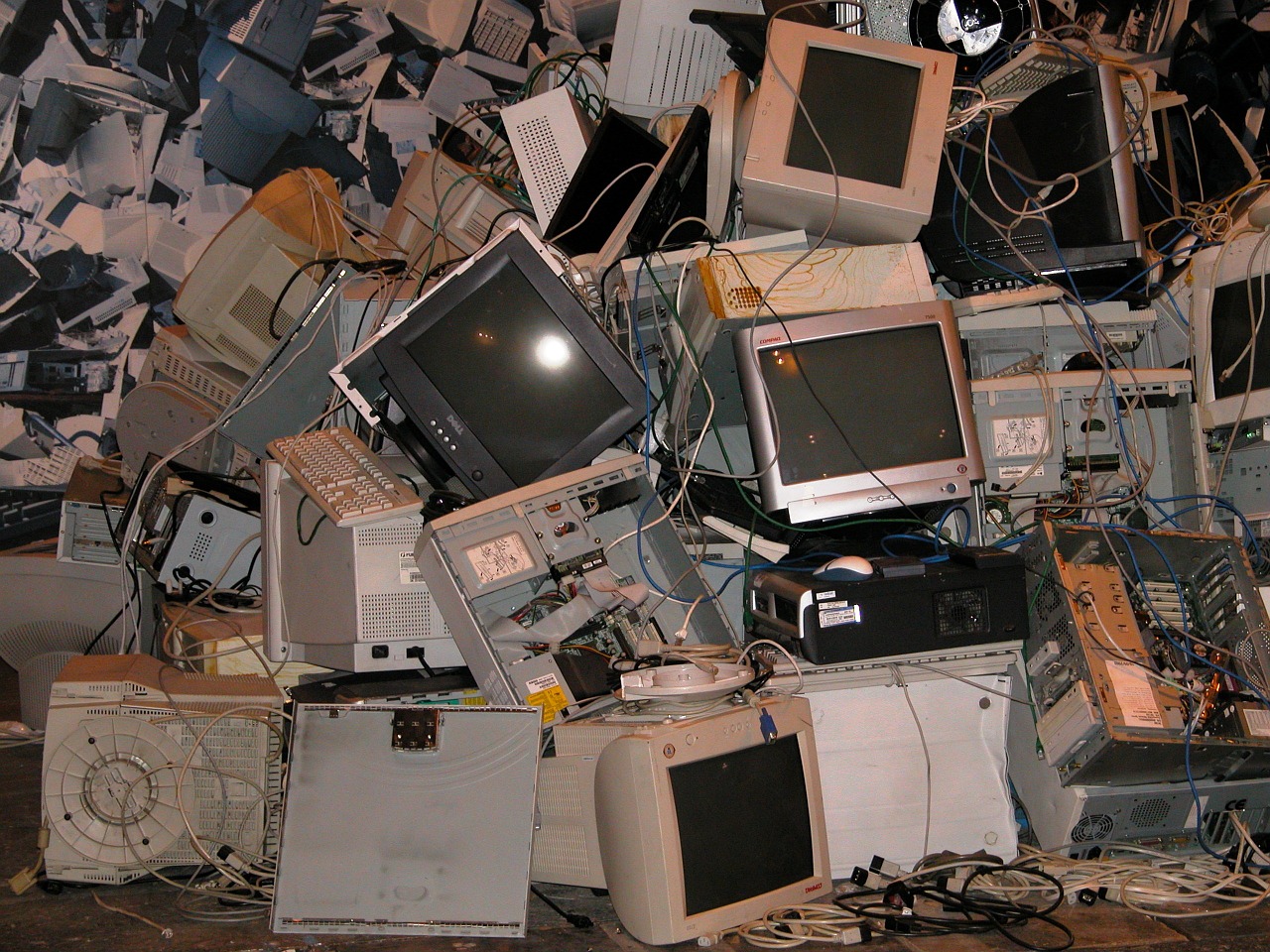
E-waste, therefore, is the world’s fastest-growing domestic waste stream fueled mainly by higher consumption rates of electric and electronic equipment, short life cycles, and few options for repair. (Pixabay photo)
GENEVA – The world produced a record 53.6 million tons of electronic waste in 2019, the weight of 350 big cruise ships, a UN report said on Thursday.
The report said the e-waste – discarded products with a battery or plug – surged 21 percent over the past five years, predicting that it will reach 74 million tons by 2030, almost doubling electronic waste in just 16 years.
E-waste, therefore, is the world’s fastest-growing domestic waste stream fueled mainly by higher consumption rates of electric and electronic equipment, short life cycles, and few options for repair.
“E-waste is a health and environmental hazard, containing toxic additives or hazardous substances such as mercury, which damages the human brain and coordination system,” said the report.
“An estimated 50 tonnes of mercury — used in monitors, PCBs [printed circuit boards], and fluorescent and energy-saving light sources — are contained in undocumented flows of e-waste annually.”
The UN’s Global E-waste Monitor 2020 was produced by the Global E-waste Statistics Partnership (GESP), that includes the UN University (UNU), the International Telecommunication Union (ITU), and the International Solid Waste Association (ISWA).
In the middle- and low-income countries, the e-waste management infrastructure is not fully developed, and in some cases, it is entirely absent.
“Hence, e-waste is managed mostly by the informal sector. In this case, e-waste is often handled under inferior conditions, causing severe health effects to workers and the children who often live, work and play near e-waste management activities,” the report said.
‘Serious challenge’
Only 17.4 percent of 2019’s e-waste was collected and recycled.
Gold, silver, copper, platinum, and other high-value, recoverable materials conservatively valued at $57 billion — higher than the gross domestic product of most countries – were mostly dumped or burned rather than being collected for treatment and reuse.
The report said that Asia generated the highest volume of e-waste in 2019 — some 24.9 million tons, followed by the Americas (13.1 million tons) and Europe (12 million tons), while Africa and Oceania generated 2.
9 million tons and 0.7 million tons respectively.
Antonis Mavropoulos, president of the International Solid Waste Association, said at an online news conference: “Governments, municipalities and the big companies involved in electronic equipment, and the waste management, have a very serious challenge.
“They have to find a way to issue the maximum quality of recycling with children’s environmental protection, without affecting the livelihood of poor people attending to the informal sector. And I think this is a serious governance problem we have.
”
One of the key findings from the E-waste Monitor is that proper e-waste management can help mitigate global warming.
In 2019, an estimated 98 million tons of CO2-equivalents were released into the atmosphere from discarded fridges and air-conditioners, contributing roughly 0.3 percent of global greenhouse gas emissions.
Europe ranked first worldwide in terms of e-waste generation per capita with 16.2 kilograms (37.5 pounds) per capita. Oceania came second (16.1 kg), followed by the Americas (13.3 kg). Asia (5.6 kg) and Africa (2.5 kg) were much lower. (Anadolu)




















