
Canada News
Concerns raised over COVID-19 outbreak plans for Indigenous communities

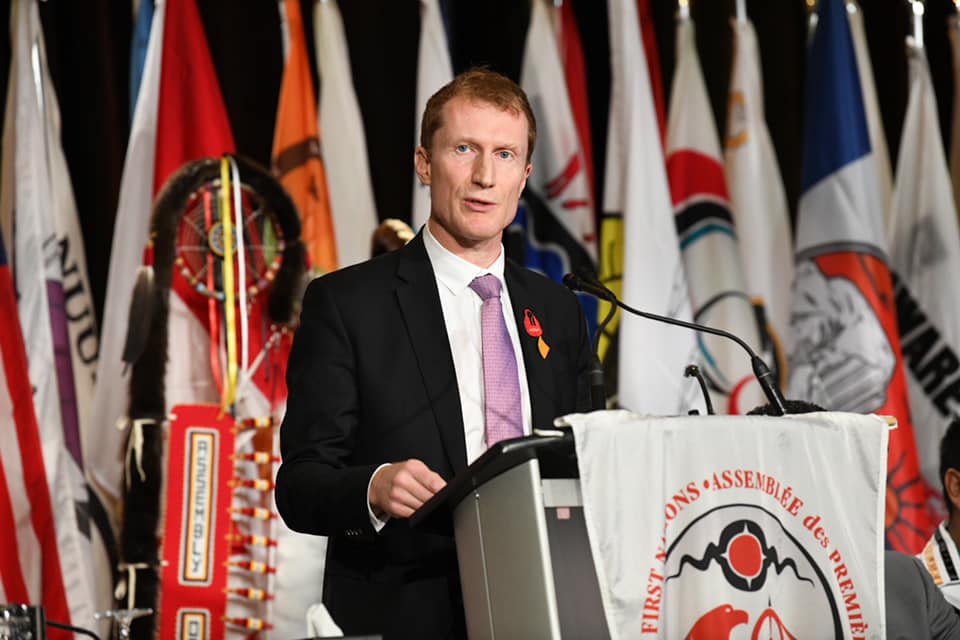
Miller acknowledged that many remote Indigenous communities are at greater risk when it comes to COVID-19. (File photo: Marc Miller/Facebook)
Ottawa’s plans to respond to possible COVID-19 outbreaks in remote, fly-in and already vulnerable Indigenous communities are getting a failing grade from opposition politicians who say they display a troubling misunderstanding of the needs and conditions in these areas.
Indigenous Services Minister Marc Miller told a legislative committee Thursday that Ottawa is preparing to help First Nations, Inuit and Metis communities if the coronavirus begins to spread through a “surge capacity response” that would allow governments to scale up quickly as needed.
Miller acknowledged that many remote Indigenous communities are at greater risk when it comes to COVID-19.
“Indigenous populations are much more vulnerable… overpopulation, overcrowding in housing, health outcomes that are lower than non-Indigenous Canadians,” he said.
Many Indigenous communities do not have local doctors or hospitals and must be flown to urban centres to be treated for serious conditions, which makes them additionally vulnerable.
The federal government is ready to pay what it costs to respond to possible outbreaks in Indigenous communities, Miller said, steps that would include bringing in additional health workers and giving Indigenous communities bottled water, protective equipment and hand sanitizer to help with prevention.
Isolation tents could also be brought in to help smaller, remote communities with only small health clinics.
NDP MP Niki Ashton said this response does not take First Nations realities seriously, stressing that treating sick people in Canada’s North in tents is not realistic. So far, there are no confirmed cases of novel coronavirus in the North.
“This is going to take a lot more than bottled water. We heard about testing tents. Anywhere in northern Canada for the next three months is not the kind of climate where tents of any kind can be used for people who are sick,” Ashton said.
Conservative Senator Dennis Patterson, who represents Nunavut, also scoffed at the idea of tents in the North at this time of year.
“They don’t have a clue. It’s not going to work in Nunavut,” Patterson said.
“Many of my constituents saw that story and said, ‘What planet are these people on? This is the Arctic in March. You don’t want to see anybody live in a tent.”’
The Department if Indigenous Services clarified late Friday that these tents would not be used for housing, but rather for screening if a large influx of patients need testing for coronavirus.
Housing is a concern in many Indigenous communities, not only for residents living in overcrowded homes, but also for additional health workers who may need to be deployed to remote First Nations or Inuit communities, said Valerie Gideon, senior assistant deputy minister for the First Nations and Inuit Health Branch of Indigenous Services Canada.
“If we do need to deploy additional health service providers into isolated communities, there are a number, but they are limited, (of) residences for health professionals. Those are often already occupied by the staff in place in communities delivering the services. Some communities have hotels but they are relatively small and often are full up for other purposes,” Gideon said.
A number of communities have indicated they need temporary accommodations, and the federal government is looking at options. But Gideon said there is no “universal” solution and individual communities are being asked to identify possible options, including the use of schools or community centres.
Some communities may choose to temporarily relocate people who need to self-isolate. If that decision is made, the federal government would cover or reimburse these costs, Gideon said.
“We are looking at temporary shelter solutions that would have heating or other components. This is not something that we have done previously, but we are trying to seek out innovative options so that we can offer those options to communities on an as-needed basis.”
The federal government will not be able to track the total number of Indigenous people in Canada who contract COVID-19 because people who present for testing are not asked to self-identify as Indigenous, Gideon said.
There has also not been any modelling done to try to predict the impact the virus could have on First Nations, Inuit and Metis, she added. Earlier this week, Health Minister Patty Hajdu said projections for the overall population estimate that between 30 per cent and 70 per cent of Canadians could become infected with the novel coronavirus.
Nursing contracts are being extended and other first responders, including paramedics, are being solicited to be deployed to Indigenous communities that need help during an outbreak.
But the department will not be issuing any directives to First Nations, Inuit or Metis communities about whether to limit medical transfers or to encourage patients who have received health care outside the community to self-isolate if they’ve been in areas exposed to COVID-19.
Patients who had to travel for medical appointments in 2009 were identified as the source of H1N1 outbreaks in remote Indigenous communities.
“Would respect First Nations governments to have the authority to make those decisions,” Gideon said.
However, advice has been given to ensure patients with increased risk of complications from contracting COVID-19 would have minimal exposure to the virus during transit, including ensuring transportation or accommodations are not shared, she added.




















