Canada News
UNDRIP, COVID-19 key issues for talks with PM and premiers: Indigenous leaders

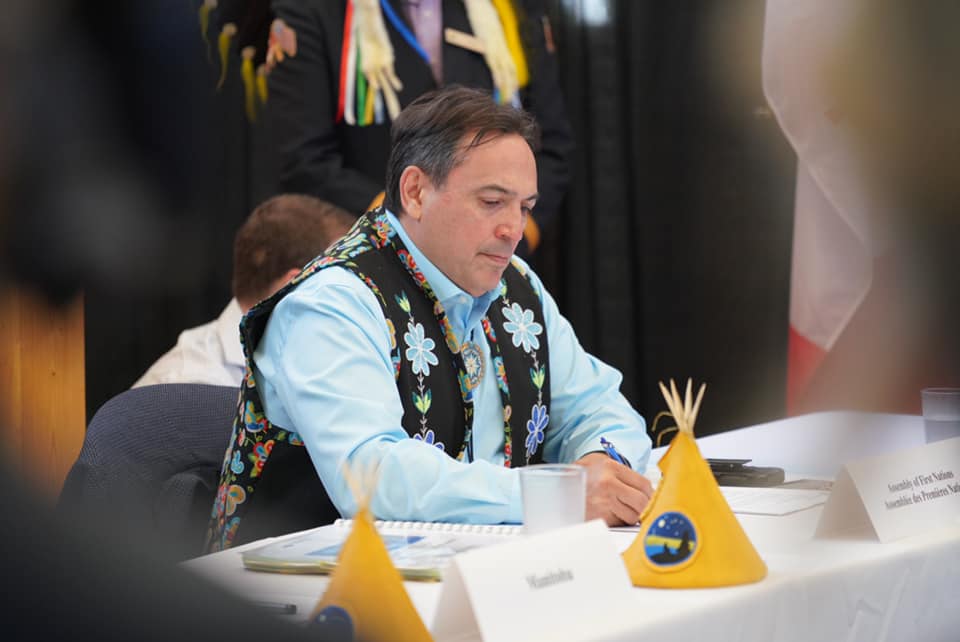
Assembly of First Nations National Chief Perry Bellegarde said he welcomes those discussions. He plans to stress that UNDRIP can stop many conflicts that arise over pipelines before they start, because applying it would mean involving Indigenous Peoples in the designs of proposed projects at the outset. (File Photo: Perry Bellegarde/Facebook)
OTTAWA — Leaders of Canada’s three national Indigenous organizations say they plan to turn up the heat on the Liberal government’s promise to enact the UN Declaration on the Rights of Indigenous Peoples when they meet with Prime Minister Justin Trudeau and Canada’s premiers Thursday.
First Nations, Inuit and Metis leaders say discussions about the declaration, known as UNDRIP, are timely given recent disputes among Indigenous nations, governments and industry over oil and gas projects, including the Trans Mountain and Coastal GasLink pipelines.
A cornerstone of the UN declaration is that “free, prior and informed consent” should be sought on decisions that affect Indigenous Peoples, including their lands or resources.
The Indigenous leaders acknowledge they are likely to face pointed questions from premiers on the role of Indigenous nations in resource development in Canada following recent blockades and protests mounted in solidarity with Wet’suwet’en hereditary chiefs opposed to the Coastal GasLink pipeline in British Columbia.
Assembly of First Nations National Chief Perry Bellegarde said he welcomes those discussions. He plans to stress that UNDRIP can stop many conflicts that arise over pipelines before they start, because applying it would mean involving Indigenous Peoples in the designs of proposed projects at the outset.
“The answer is UNDRIP, the answer is respecting and involving the inclusion of the rights- and title-holders,” Bellegarde said.
“Before provincial, federal government or industry try to build anything they must build a respectful relationship with the rights- and title-holders … If that happens, you’ll always find that First Nations will find a balance between the economy and the environment because our people want to look at jobs for our people, we want to have wealth creation for our people, we want to look at equity ownership in some of these projects, but not at any cost.”
Inuit Tapiriit Kanatami president Natan Obed said he hopes a captive audience of premiers can help counter “mis-truths” and political talking points about UNDRIP and instead focus on the major considerations and concerns for all involved.
When it comes to pipelines or other development projects that affect Indigenous Peoples or traditional lands, Obed said much of the conflict arises from the “absurdly complex nature” of different laws and policies that consider, or sometimes don’t, First Nations, Inuit and Metis rights across Canada.
“It’s easy to just lump all Indigenous groups together and label us as a threat, it’s much harder to recognize that it has been government itself that has created this complexity,” Obed said.
He said UNDRIP is simply a recognition of Indigenous Peoples’ human rights and a way to eliminate disputes over resource extraction projects is to respect those rights from the outset, rather than forcing litigation, he said.
Metis National Council vice-president David Chartrand said he plans to stress to the premiers that UNDRIP does not mean Indigenous communities or First Nations get a veto over projects — a claim provincial and federal conservative politicians have made in opposition to the declaration.
“I know the Conservatives are using UNDRIP as a bogeyman — a bad thing for Canada, a bad thing for industry, it’s going to kill industry. That’s not what it is,” Chartrand said.
“It’s a blueprint to how industry, governments, Indigenous and non-, actually get together and start working and resolving these matters so we don’t find ourselves in the Wet’suwet’en situation that occurred in this country.”
The Indigenous leaders also said they plan to raise the unique needs of remote Indigenous communities when it comes to COVID-19, and that dirty water and overcrowded housing place them at higher risk.
Many Inuit and First Nations residents in remote communities have no hospitals and can only get health care by flying to urban centres. Indigenous residents of fly-in communities and those at higher risk of infection must remain top of mind, Bellegarde said.
“You’ve got to have some extra efforts, focused efforts to make sure that those First Nations are not forgotten in any emergency planning going forward.”
The three Indigenous leaders will meet privately as a group with Trudeau Thursday afternoon before being joined by the premiers.
Other issues on the agenda include the forthcoming national plan on the findings of the National Inquiry into Missing and Murdered Indigenous Women and Girls and the steps provinces will take to contribute to this effort, as well as Ottawa’s overhaul of the Indigenous child welfare system.