
Canada News
Some provinces face huge debt under current policies: report

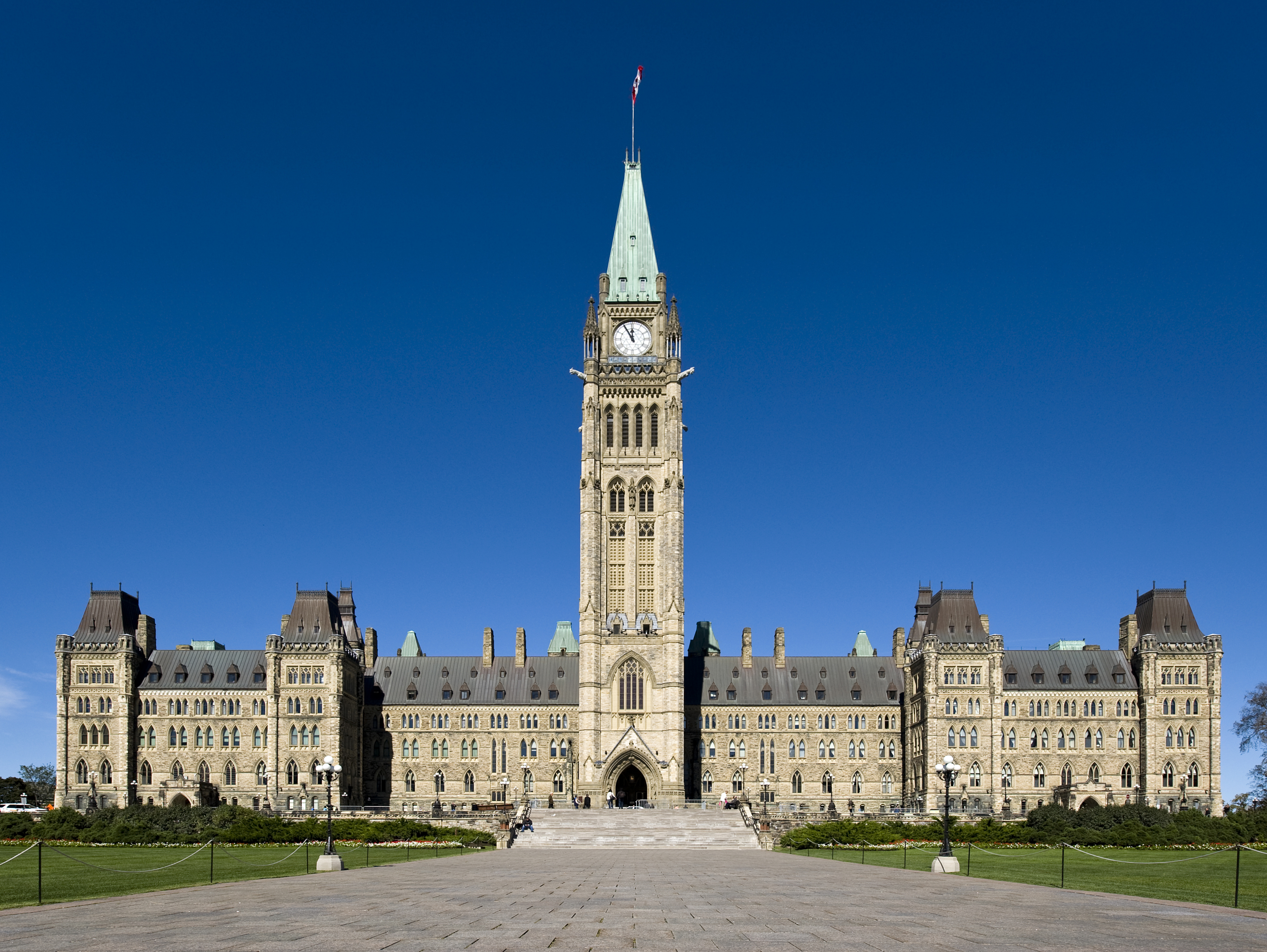
FILE: The Peace Tower dominates the Centre Block structure of the Canadian Parliament buildings. (Photo by Saffron Blaze/Wikimedia Commons, CC BY-SA 3.0)
OTTAWA — Parliament’s budget watchdog says Saskatchewan, Manitoba, Prince Edward Island and Newfoundland and Labrador face huge increases in their long-term debt loads unless they make significant changes to their fiscal policies or get more money from Ottawa.
Parliamentary budget officer Yves Giroux says Saskatchewan and Manitoba, for example, would each need to enact more than billion in spending cuts or tax increases — or a combination of both — to keep their debt-to-GDP ratios steady through to the end of the century.
That number is roughly eight times what the Manitoba government raised by increasing its provincial sales tax by one point in 2013.
“Status quo policies are not sustainable for many jurisdictions, so something’s got to give at some point,” Giroux said in an interview Thursday.
His 42-page report points to pressures facing all provinces in the coming decades — an aging population and rising health-care costs.
Manitoba and Saskatchewan, which have run deficits in recent years, will face additional challenges because their overall population and economies will see fairly strong growth. The required increase in social spending will outpace federal transfers, the report says.
It predicts Manitoba could also get a smaller slice of equalization payments from Ottawa — money meant to help poorer provinces offer services similar to richer ones. Some eastern provinces might receive a larger share, and British Columbia is likely to start receiving equalization sometime around 2060 due to a slower economy.
As a result, Manitoba “will progressively receive less and less equalization as a proportion of their economy.”
Prince Edward Island faces the largest percentage increase in health spending due to its older population, the report says, while Newfoundland and Labrador is expected to see its population decline and economy grow very slowly.
The report’s projections about government finances are not a prediction of what is most likely to happen, Giroux stressed, but rather a look at what could happen if federal and provincial government policies remain unchanged over the long term.
Provincial debt loads, which currently range as high as 34 per cent of provincial gross domestic product in the case of Newfoundland and Labrador, could increase dramatically, the report warns. By 2093, Manitoba’s could jump to 342 per cent, Saskatchewan’s to 253 per cent and Newfoundland and Labrador’s to 463 per cent.
Saskatchewan’s finance minister cautioned against reading too much into the report. Donna Harpauer, who has promised to run a surplus for the fiscal year that ends next month, said the province is working to address the challenges of an aging population via a recent economic growth strategy.
“The … report is a 75-year projection as opposed to a fully informed forecast, and an aging population with no policy response appears to be a large driver of the … projections,” she said in a written statement.
“Forecasts that go this many years into the future are usually not very accurate. Several years ago, Statistics Canada put out long- term forecasts for Saskatchewan that ranged from significant population decline to a minimal increase at best.
“Saskatchewan has grown by 170,000 people over the past 12 years, far exceeding even the most optimistic projection from StatsCan.”
Manitoba Finance Minister Scott Fielding said the report shows the need for fiscal restraint.
“The parliamentary budget officer’s report underlines why our government is clearly focused on fixing Manitoba’s finances and (controlling) spending,” Fielding said in a written statement.
“We pay about a billion dollars a year in interest charges, an amount higher than the budgets of all but three government departments. “
Giroux suggests one alternative to provincial tax increases or spending cuts would be an increase in transfer payments from the federal government. Ottawa currently pays for 21 per cent of provincial health spending, but that number could slip to 17 per cent unless the funding formula is changed.
Another possible solution would be for Ottawa to cut its taxes and allow the provinces to raise theirs, Giroux adds.
The federal government has fiscal room over the long term despite its current string of deficits, he says, due partly to limits on how quickly federal expenses can rise. Some transfer payments to the provinces are capped by the rate of economic growth. Some payments to individuals, such as old age security, are tied to inflation.
“Most expenditures are constrained at the federal level, while at the provincial level, it’s demand-driven.”
-with files from Stephanie Taylor in Regina




















