
News
SC orders copra firm to pay almost P1-B loan to BDO

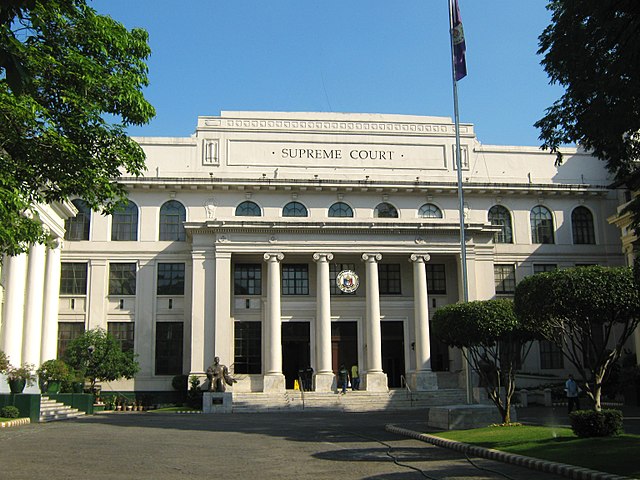
The Court imposed a 6-percent interest per annum from the finality of the decision until fully paid instead of the 10 percent previously imposed by the Makati RTC. (File Photo By Mike Gonzalez (TheCoffee) – Own work, CC BY-SA 3.0)
MANILA — The Supreme Court (SC) ordered a local copra exporting firm to pay close to PHP1 billion representing its unpaid loan obligations to Banco de Oro Unibank, Inc (BDO).
In a resolution dated November 11 released on Tuesday, the SC’s Third Division affirmed with modification the Court of Appeals’ (CA) Nov. 22, 2018 decision which upheld the ruling issued by the Regional Trial Court of Makati City on Jan. 25, 2017, directing International Copra Export Corporation (ICEC), Interco Manufacturing Corporation (Interco) and their affiliated security companies owned by the Luy family to pay BDO a total of PHP833,589,999.
The Court imposed a 6-percent interest per annum from the finality of the decision until fully paid instead of the 10 percent previously imposed by the Makati RTC.
The SC also increased the attorney’s fees awarded to BDO from PHP25 million to PHP41.67 million.
“Acting on the petition for review on certiorari assailing the decision and resolution, dated November 22, 2018 and July 3, 2019, respectively, of the Court of Appeals, the Court resolves to deny the petition for failure to show any reversible error in the challenged decision and resolution as to warrant the exercise by this Court of its discretionary appellate jurisdiction,” the SC resolution read.
BDO’s predecessor-in-interest, Philippine Commercial International Bank (PCI Bank) which later on became Equitable PCI Bank (EPCI), has been extending loan and credit facilities to ICEC and Interco.
On account of the good standing of the two copra companies, the loans were consistently renewed without any collateral.
Between 1995 to 2007, a surety agreement and deed of suretyship were executed between the bank and the Luys.
In June 2006, the parties negotiated the collateralization of ICEC and Interco’s loans due to the drastic drop in their export volumes.
EPCI proposed that a portion of the total obligation be secured by a real estate mortgage over the LKG Tower, a building in Makati City owned by ICEC Land but was rejected by the copra companies.
On account of defendants-appellants’ refusal to collateralize their loan, EPCI offered them two options : (a) renew the PHP900 million loan on a clean basis but subject to a PHP25 million quarterly amortization beginning November 2006; and (b) the outstanding obligation of PHP255 million shall be amortized for five years beginning January 2007 through five annual payments of PHP51 million.
Both options are nevertheless subject to a condition that all the creditors of defendant-appellants shall remain on “pari passu” (equal footing).
Under the said arrangement, their creditors would be treated on equal footing with respect to the uniform absence of collaterals. And, should they provide collaterals to any of their creditors, excluding the real estate mortgage with the Bank of the Philippine Islands (BPI), or if any of their creditors enjoy preferential terms over that of EPCI, these circumstances shall be considered as events of default.
By reason of the pari passu agreement, BDO extended the maturity date of defendants-appellants’ loans and even extended credit facilities in various dates in November and December 2008 and January and February 2009, as evidenced by promissory notes.
However, BDO discovered that contrary to their representations, ICEC and Interco had been mortgaging and disposing their properties to secure their indebtedness to other creditors.
It claimed that ICEC mortgaged units of the LKG Tower to Allied Banking Corporation (Allied Bank) as a security for its loan.
The bank also found out that the maturity dates of the promissory notes have lapsed without the obligation being settled by the copra companies.
This prompted BDO to seek redress from the court through a complaint for sum of money with an application for preliminary attachment.
In upholding the ruling of the trial court, the appellate court did not give weight to the claim of the copra companies that there was actually no pari passu agreement between them and BDO due to lack of written agreement between the parties.
“In this case, the absence of any written conformity of defendants-appellants to the pari passu agreement is not fatal to plaintiff-appellee’s case. The latter only needed to show by a preponderance of evidence that there was indeed an oral representation on the part of the former, which the bank did,” the CA ruled.
“Conspicuously, the evidence submitted by plaintiff-appellee weigh more than defendants-appellants’ bare denials. Other than denial, no other evidence was submitted by defendants-appellants to prove its defense.
As aptly pronounced by the RTC, their plain denial that there was no pari passu representation deserves no weight and cannot overcome the straightforward, unequivocal and categorical declaration of plaintiff- appellee’s witnesses,” it added.




















