Canada News
Safety concerns for Indigenous women in resource development: MMIW inquiry

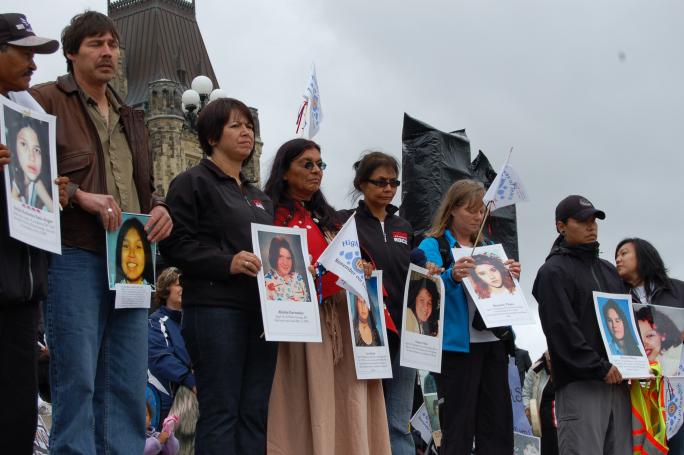
The inquiry, which released its final report on Monday, says it found “substantial evidence of a serious problem” in a link between resource extraction and violence against Indigenous women, girls, and LGBTQ and two-spirit people.
OTTAWA — Amnesty International Canada is supporting the call from the national inquiry into missing and murdered Indigenous women on the “urgent need” to consider the safety of Indigenous women in all stages of resource-extraction projects.
The inquiry, which released its final report on Monday, says it found “substantial evidence of a serious problem” in a link between resource extraction and violence against Indigenous women, girls, and LGBTQ and two-spirit people.
The report says that industries create “boomtown” and “man-camp” environments implicated in increased rates of drug- and alcohol-related offences, sexual offences, domestic violence, and gang violence, as well as sex-industry activities.
“This increased rate of violence is largely the result of the migration into the camps of mostly non-Indigenous young men with high salaries and little to no stake in the host Indigenous community,” the report said.
Jackie Hansen, a gender-rights campaigner with Amnesty International Canada, said Wednesday in an interview that the pattern of risk is well known not only in Canada, adding it remains an under-discussed issue.
“It is critical to note that whether you’re in Guatemala or Canada or the Philippines, we are seeing similar impacts when industry comes to town,” she said.
Hansen stressed that not every worker is at fault, but she said on a broad basis resource development projects tend to exploit Indigenous women and LGBTQ and two-spirit people the most.
In November 2016, Amnesty released a study on gender, Indigenous rights, and energy development in northeast B.C. that documented problems that included hard working conditions in the resource sector with long periods away from home.
“When workers return home, some release work-related stress through a pattern of destructive and anti-social behaviours referred to locally as ‘blowing off steam,’ which can include excessive partying accompanied by drug and alcohol use,” the report said.
Pauktuutit Inuit Women of Canada published a report in 2016 with similar concerns about the social impacts of a gold mine near Qamani’tuaq (Baker Lake) on Inuit women and families in the community.
It found through a questionnaire taken by 62 women, aged 19 and older, that a significant percentage reported sexual harassment at the mine (49 per cent), increased harassment in the community (28 per cent), an increase in sexually transmitted infections (46 per cent) and more prostitution in the community (14 per cent).
The new final report from the inquiry into missing and murdered Indigenous women also quotes findings of James Anaya, the former United Nations Special Rapporteur on the Rights of Indigenous Peoples, who has said there is evidence to show extractive industries often disproportionately impact Indigenous Peoples, notably women living in communities near oil, gas and mining operations who are vulnerable to sexually transmitted diseases, including HIV and AIDS.
J. Lightfoot, a two-spirit Mi’kmaw person from Elsipogtog First Nation in New Brunswick, told the inquiry that the work camps associated with industrial resource extraction can pose a risk of violence for Indigenous women and children.
NDP MP Niki Ashton said Wednesday that First Nations in her province have been a “clear voice” about concerns about violence toward Indigenous women at camps for hydroelectricity projects in northern Manitoba, adding she fully supports calls for an inquiry into the issue — a recommendation also made by the national public inquiry in its 231 “calls for justice.”
“This is a story we hear from across the country with respect to resource extraction and violence against Indigenous women,” Ashton said.
In a Wednesday statement, a spokeswoman for Natural Resource Minister Amarjeet Sohi said the minister has heard directly about both the positive and negative impacts of resource development through discussions with Indigenous communities on the Trans Mountain pipeline.
“We will continue to restore public trust, create a faster and more transparent process, and provide more certainty for all Canadians,” said press secretary Vanessa Adams, noting the government’s proposed legislation to overhaul its assessment process for resource development projects.
Hansen said that Amnesty welcomed the Liberal government’s decision to include a gender-based analysis in the legislation, now at third reading in the Senate, adding it will be incredibly disappointing if it passes without it.
“I think it is a critical time to be shedding light to the intersection of gender and Indigenous rights and resource development because there are more projects in more places that are going to impact more people,” she said.