Canada News
Ontario’s highest court sets 15 day cap on solitary confinement

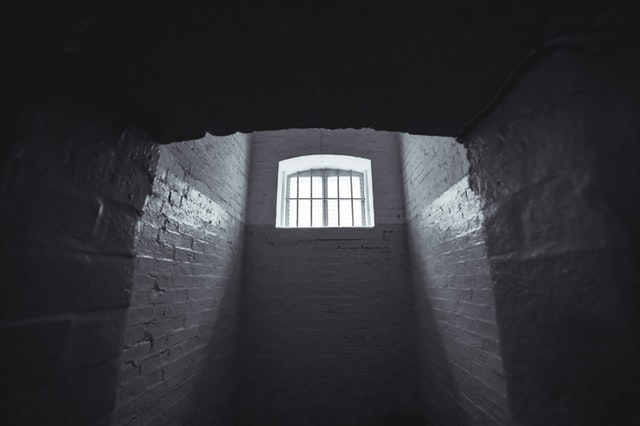
Ontario’s top court has placed a hard cap on solitary confinement in prisons, saying inmates can no longer be isolated for more than 15 days because that amounts to cruel and unusual punishment. (Pexels Photo)
TORONTO — Ontario’s top court has placed a hard cap on solitary confinement in prisons, saying inmates can no longer be isolated for more than 15 days because that amounts to cruel and unusual punishment.
In a ruling released Thursday, the Court of Appeal for Ontario said prolonged administrative segregation does not hold up to constitutional scrutiny.
“I reach this conclusion because prolonged administrative segregation causes foreseeable and expected harm which may be permanent and which cannot be detected through monitoring until it has already occurred,” Justice Mary Lou Benotto wrote on behalf of the three-judge panel.
“Legislative safeguards are inadequate to avoid the risk of harm. In my view, this outrages standards of decency and amounts to cruel and unusual treatment.
“
The appeal court rejected, however, the Canadian Civil Liberties Association’s argument that the practice should be banned entirely for inmates between 18 and 21, those with mental illness, or those in segregation for their own protection.
Benotto said the court lacked the evidence to impose a ban for young or mentally ill inmates, and agreed with a lower court that segregation did not amount to additional punishment for those needing protection because it does not prolong their sentence.
“In principle, I agree with the CCLA that those with mental illness should not be placed in administrative segregation. However, the evidence does not provide the court with a meaningful way to identify those inmates whose particular mental illnesses are of such a kind as to render administrative segregation for any length of time cruel and unusual,” she wrote.
“I take some comfort in my view that a cap of 15 days would reduce the risk of harm to inmates who suffer from mental illness — at least until the court has the benefit of medical and institutional expert evidence to address meaningful guidelines. This issue therefore remains to be determined another day.”
The civil liberties association said the decision nonetheless amounts to a victory.
“This is the first time that a Canadian court has imposed a hard limit on the use of solitary confinement, and it represents a very significant win for the Canadian Civil Liberties Association, and for the rule of law more generally, ” Michael Rosenberg, one of the association’s lawyers, said Thursday.
“With this decision, the Court of Appeal has brought to an end a sorry chapter in the administration of Canada’s prisons.”
The Correctional Service of Canada said it is reviewing the ruling and remains committed to providing a safe environment for inmates and staff.
The government had argued in the case that a provision in the law requires that an inmate’s health be taken into consideration when it comes to segregation.
Administrative segregation is used to maintain security when inmates pose a risk to themselves or others and no reasonable alternative is available.
The civil liberties association had challenged a lower court ruling that found the existing law on solitary confinement unconstitutional because the system lacks proper safeguards. That ruling also found that the harms of severe isolation could be mitigated by appropriate monitoring.
The lower court gave the government a year to fix things but recently extended the deadline to April 30. That deadline is still in place, though the 15-day cap imposed by the appeal court is set to take effect earlier, in 15 days.
A court in British Columbia also found administrative segregation to be unconstitutional and then agreed to push back its deadline to mid-June.
Ottawa had asked for more time because it was working on legislation — Bill C-83, now before the Senate — that replaces administrative segregation with something it calls “structured intervention units.” It does not, however, include a cap on segregation.
Critics have said the bill does not do enough to protect inmates from the dangers of isolation.
An independent senator who has long advocated for the rights of inmates, particularly marginalized groups, said Thursday’s decision highlights the key flaws in the proposed legislation.
“I hope the government takes a long, hard look at whether they even choose to proceed with Bill C-83 because the clear message, I think, coming from the court is that what is being proposed in Bill C-83 will not actually address the issues that the courts are having with the use of segregation in Canada,” Sen. Kim Pate told The Canadian Press.
The Senate could propose amendments and send the bill back to the House of Commons, “but it would end up looking like a very different bill, so my guess would be that starting from scratch would be a better place to go,” she said.
Pate also expressed concerns that Bill C-83 essentially “renames segregation” without changing the physical space in which inmates are placed. It also takes out procedural safeguards, putting more decision-making in the hands of correctional staff, she added.
“Even though they have been ineffective, at least there were some (safeguards) in place,” she said.