Business and Economy
PH economy still strong amid adversities: Finance chief

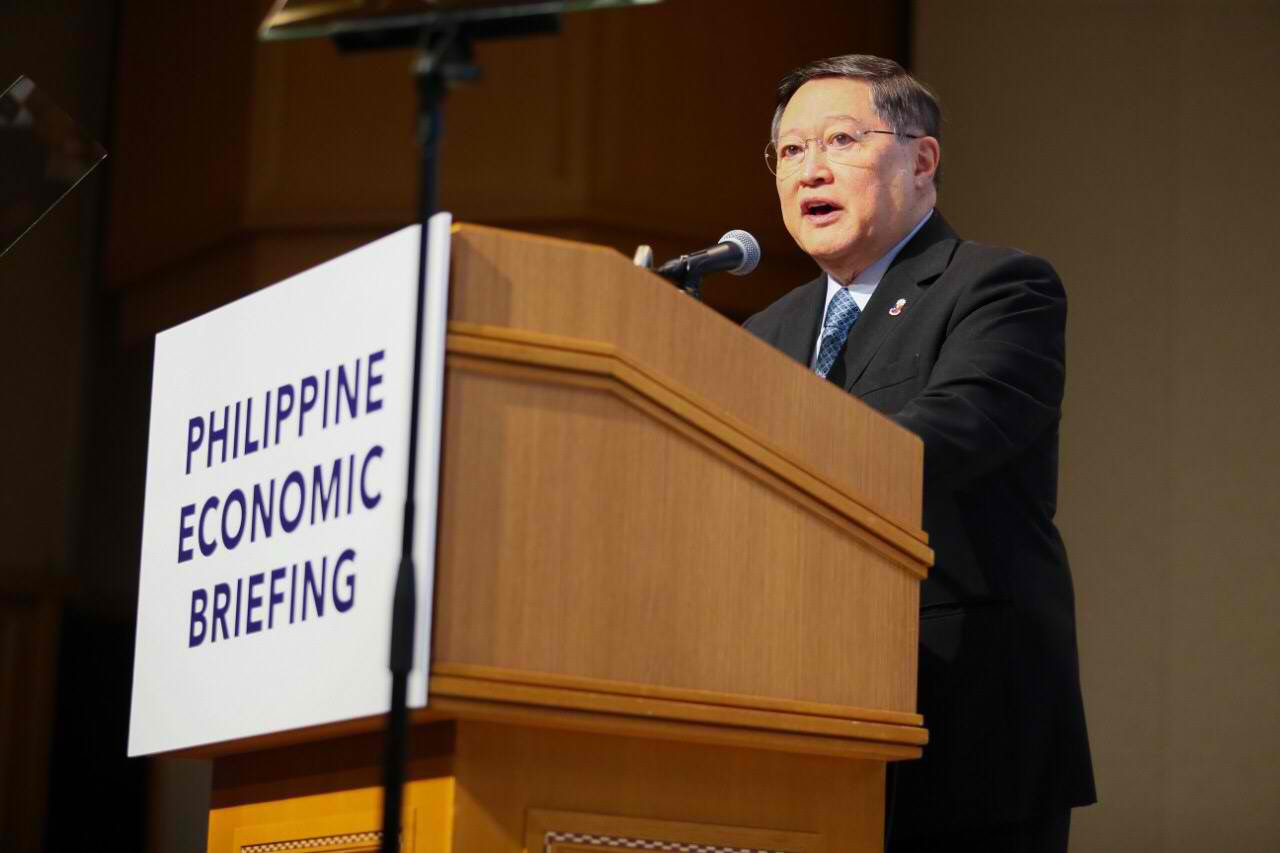
FILE: Dominguez said the tax reform law increased the purchasing power of consumers, noting the increase in profits of fast food giants. (Photo courtesy of Sec. Martin Andanar via PNA)
MANILA — The Philippines is currently experiencing challenges such as elevated inflation and current account deficit, but Finance Secretary Carlos Dominguez III said this is just a phase and the economy remains strong.
“We would like to encourage everyone to take a long view of our situation as a country,” Dominguez said during the Philippine economic briefing held at the central bank office in Manila Tuesday.
The rate of price increases averaged at 4.8 percent in the first eight months this year, higher than the government’s two to four percent target band until 2020.
This was traced to faster inflation rate of basic commodities like rice, fish, meat, and vegetables due to supply issues.
Thus, economic authorities have put in place nine measures seen to address supply issues.
These measures include the release of some 4.6 million bags of rice from the warehouses of the National Food Authority (NFA) to retailers and the establishment of an inter-agency surveillance and monitoring team that will ensure that rice from the ports are directly delivered to the NFA warehouses and retailers without delay or fraud.
Other measures include the reduction of gap between farm gate prices and retail prices of chicken; the opening by the Sugar Regulatory Administration (SRA) of sugar importation to direct users to moderate costs for consumers; and for the Bureau of Customs (BOC) to prioritize the release of essential food items at the ports.
The implementation of these measures is estimated to bring down inflation rate by about 2.4 percent.
Relatively, the country ended 2017 with a current account deficit amounting to USD2.5 billion after having surpluses in the past decade.
Authorities pointed this to higher importation due to increased domestic demand as the domestic economy continues to expand.
Also, the government has been posting increases in its budget gap due to increased infrastructure spending.As of last July, the government’s budget deficit amounted to PHP279.4 billion, 36 percent higher than year-ago’s PHP205 billion.Revenues in the first seven months this year rose by 21 percent year-on-year to PHP1.65 trillion but expenditures reached PHP1.93 trillion, up 23 percent from year-ago level.
This, as the government continues to increase investments in infrastructure as part of its “Build, Build, Build” program.
Under the infrastructure program, the government plans to invest at least PHP1 trillion annually until 2022, with minimum investment during the current administration’s six-year term placed at PHP8 trillion.
Dominguez said the domestic economy remains resilient due to improvement in fiscal health, with revenue collections still on upward trend, continued improvement of investment grade rating, and low debt to gross domestic product (GDP) ratio, which is currently at around 42 percent from over 70 percent in the past.
“So we have a lot of headroom. Furthermore, our debt service is now only 13 percent of our annual budget,” he said.
Additional boost for the domestic economy is the healthy banking system, the Finance chief said.
“We have a very healthy banking system, which is a result of the excellent job the BSP (Bangko Sentral ng Pilipinas) has been doing over the years,” he said.
The country also enjoys high gross international reserves (GIR), he said.
As of end-August this year, preliminary data show that the country’s foreign exchange reserves amounted to USD77.83 billion, higher than the USD76.72 billion in the previous month.
Dominguez said the private sector is also a plus since it is “acting very rationally” by paying and prepaying their foreign currency-denominated obligations.
“They have paid down their foreign debt, I believe, to the extent of over USD2.5 billion in the first six months of the year,” he said.
In 2017, the private sector paid a total of USD4 billion worth of foreign obligations.
“We have a lot of tools in our chest and we can face temporary adversity. We are very confident that we can overcome whatever temporary adversity we are facing,” he added.