Art and Culture
Canada says B.C. Indigenous basket making an event of historic significance

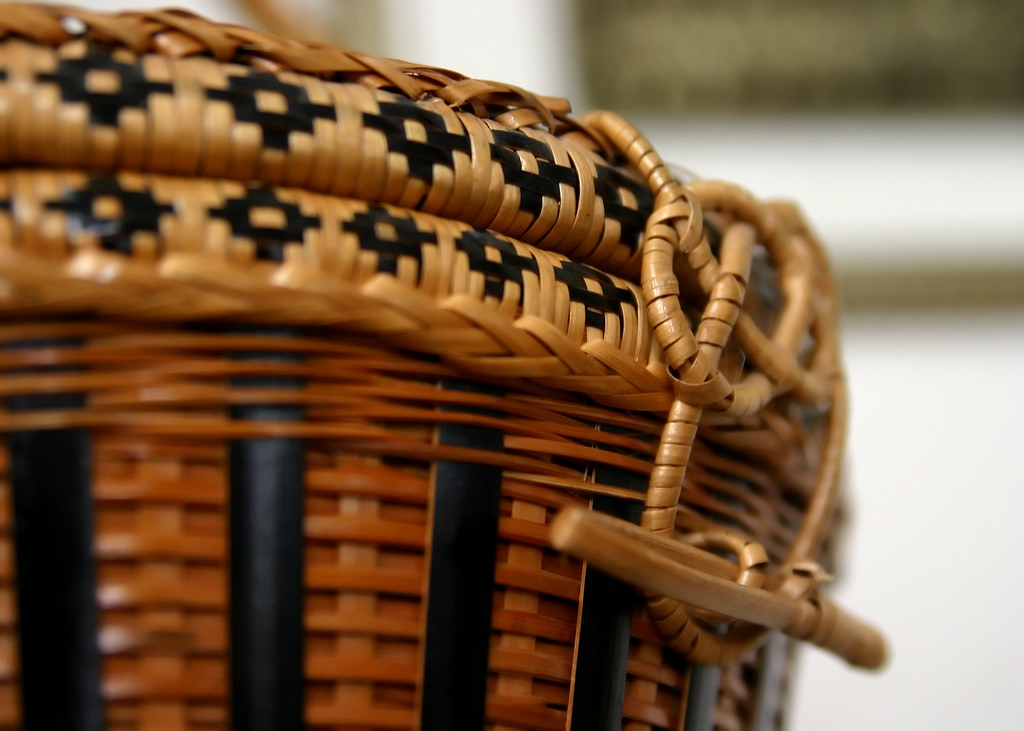
“She was showing off and it’s really, truly the mark of a master weaver.” (File Photo: Juan23/Fickr, CC BY-NC-ND 2.0)
VICTORIA — Matilda Borden liked to pour a cup of tea to display her basket making expertise, proving her cups made from material gathered in British Columbia’s forests were watertight, says her granddaughter Brenda Crabtree.
Not one drop would leak, recalls Crabtree, who is also a basket-making artist and Aboriginal programs director at Emily Carr University of Art and Design in Vancouver.
“She was showing off and it’s really, truly the mark of a master weaver,” she said of her grandmother who died in 1975.
Among First Nations, basket weavers have always been held in high regard, said John Haugen of the Nlaka’pamux Nation from B.C.’s Fraser Canyon.
“If you were a good basket maker and somebody else wanted your baskets they would have food to trade with you or other items.”
Now the baskets are gaining more notice than just being functional works of art.
Canada recognized Nlaka’pamux basket making for its national historic significance this month with a ceremony at Lytton, about 265 kilometres northeast of Vancouver.
“Historic designations reflect Canada’s rich and varied history and I encourage all Canadians to learn more about Nlaka’pamux basket making and its important contributions to Canada’s heritage,” said Jati Sidhu, Mission-Matsqui-Fraser Canyon MP, on behalf of Catherine McKenna, the minister responsible for Parks Canada.
Andrea Laforet, retired director of ethnology and cultural studies at the Canadian Museum of Civilization, said the making, use and trading of coiled basketry has been part of the history of the Indigenous Peoples of the southern Interior of B.C. and parts of Washington state for centuries, if not thousands of years.
“Like many of the utilitarian objects made in Indigenous societies in B.C., they are also works of art,” said Laforet, who attended the ceremony in Lytton.
The baskets served as vital trade commodities for Indigenous Peoples in the Fraser Canyon area before and following contact with non-Indigenous people, Haugen said.
“We knew we were prolific basket makers and our baskets were traded outside of our nation prior to contact,” said Haugen, who said war canoes from Vancouver Island made the voyage up the Fraser River to Spuzzum on trade missions.
The baskets made by Nlaka’pamux women provided economic support for families and communities from about 1850 to 1930 when they were traded in nearby non-Indigenous communities, he said.
Today, the baskets are on display in museums around the world and are coveted pieces at auctions, said Haugen, whose aunts were well-known basket makers, and his mother was an avid collector who often helped local people sell their work to collectors.
Borden was also part of the Nlaka’pamux Nation, and Crabtree said some of her earliest memories are of helping her grandmother harvest, process and weave cedar roots and bark into baskets.
“I love the fact that this form of basketry has been recognized as really, truly, technically amazing,” she said.
She said the baskets served as items for cooking, storing and transporting food as well as being expressions of art by local women.
“We never really developed a pottery complex in the northwest coast because we didn’t need it,” she said.
“People think how can you cook with just a cedar root basket? Well, you fill them with water and put hot rocks from fires into the basket. It would steam the food.”
Crabtree said her most recent works of basketry include cultural commentary woven into the object. She said one of her baskets includes the residential school policy statement: “Kill the Indian in the child.”
“I’m really using our baskets now as a vehicle for a discussion related to aboriginal identity and contemporary issues,” she said. “They can hold water, cook, and have an added message.”
Retired ethnobotanist Nancy Turner, who wrote extensively about Interior basket making, said the baskets embodied the lifestyle of the Interior peoples.
“They say if you are making a basket you should never be in a bad mood,” she said. “You should never get angry. You should be of good mind because the basket you are making will pick up on your own sense of well being.
“
Turner said students soon learned her courses in basket making were not as easy as imagined.
“People will sometimes talk about ‘Basket Making 101’ if you’re taking a simple course at university, but when I taught ethnobotany at University of Victoria, I had the students do a making-things project,” she said. “The students soon learned it’s not at all simple.”