
News
House Republicans seek permanent tax cuts as elections loom

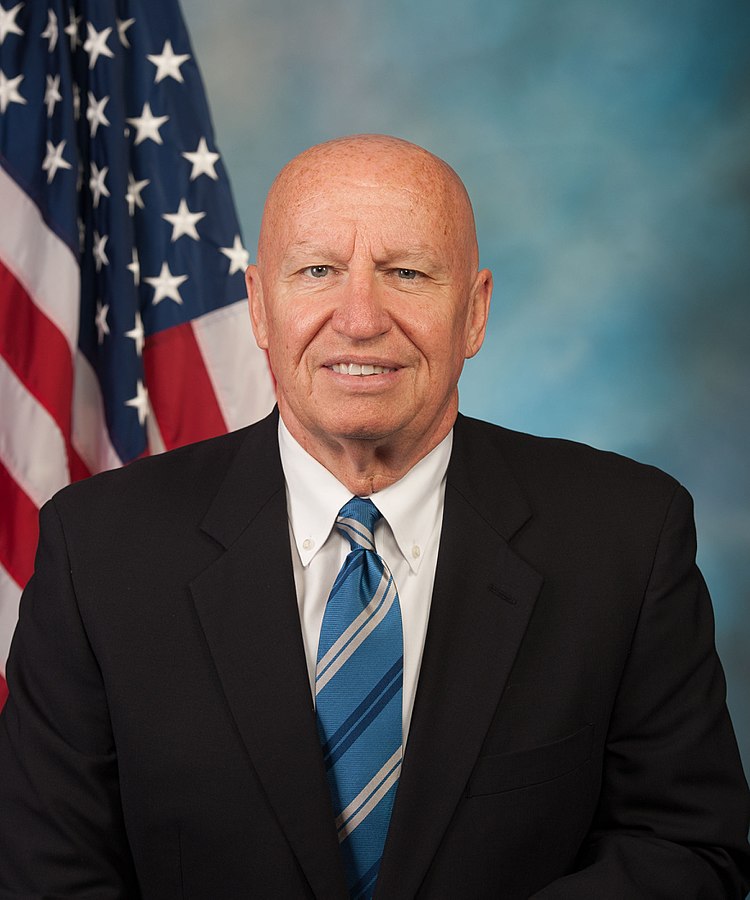
House Republican leaders have unveiled their proposal to expand the massive tax law they hustled through Congress last year. (File Photo By U.S. House Office of Photography/Wikimedia, Public Domain)
WASHINGTON — House Republican leaders have unveiled their proposal to expand the massive tax law they hustled through Congress last year. They’re aiming to make permanent the individual tax cuts and small-business income deductions now set to expire in 2026.
With midterm elections barely two months away, the second crack at tax cuts outlined Monday is portrayed as championing the middle class and small businesses. Republican Rep. Kevin Brady of Texas, who heads the tax-writing House Ways and Means Committee, is looking toward a vote on the legislation by the House this month. The solid Republican majority in the House nearly ensures passage before the November elections.
But prospects for the legislation in the Senate are weak, given the slim Republican majority and concern over the potential for further blowing up the deficit with a new tax cut — without corresponding new revenue sources. And even some House Republicans oppose a new tax bill.
The proposal also calls for new tax incentives for savings by creating a “universal savings account” for families that could be used for a range of purposes and would allow the tax-free earnings to be more easily withdrawn than is the case with existing retirement accounts. In addition, the Republican plan would allow the popular, tax-free 529 college savings accounts to also be used to pay for apprenticeship fees and home schooling expenses, as well as paying off student debt.
Also, workers would be able to tap their retirement savings accounts without tax penalty to cover expenses from the birth of a child or an adoption.
Startup businesses would be permitted to write off more of their initial costs.
“This legislation is our commitment to the American worker to ensure our tax code remains the most competitive in the world,” Brady said in a statement. Making the tax cuts permanent would build on the tax law’s economic boost by adding 1.5 million new jobs and increasing wages, he said.
As the elections loom, polls are showing only lukewarm support among voters for the $1.5 trillion package of individual and corporate tax cuts that President Donald Trump signed into law in December as his signature legislative achievement.
Several Republican House members, facing tough re-election fights in high-tax, Democratic-leaning states like New York and New Jersey, voted against the tax legislation last year and would prefer to do without this new version as well.
The tax law that took effect Jan. 1, the most sweeping rewrite of the U.S. tax code in three decades, is estimated to add around $1.5 trillion to the ballooning deficit over 10 years. Deficit hawks as well as Democratic lawmakers — who were unanimous in opposing the tax legislation last year — are asking how the Republicans intend to pay for the extended tax cuts.
“After handing massive unpaid-for tax breaks to Big Pharma, Wall Street and the wealthiest 1 per cent with the first GOP tax scam for the rich, House Republicans are here with more of the same,” House Democratic leader Nancy Pelosi said Monday. “Republicans want to add even more to the deficit, and even more to the bank accounts of the wealthiest 1 per cent.”
The new tax law enacted in December provides steep tax cuts for corporations and the wealthiest Americans, and more modest reductions for middle- and low-income individuals and families.
While the law slashed the corporate tax rate permanently from 35 per cent to 21 per cent, its tax cuts for individuals and the millions of U.S. “pass-through” businesses expire in eight years. The “pass-through” businesses funnel their income to owners and other individuals, who then pay personal income tax on those earnings, not the corporate rate. They are allowed under the new law to deduct 20 per cent of the first $315,000 of their earnings.
Also until 2026, the tax law ended the $4,050 personal exemption for individuals and capped at $10,000 the amount of property taxes or state or local taxes that consumers can deduct on their federal returns.
Early this year, millions of working Americans got a boost from the tax law as they saw increases in their paychecks with less tax withheld by employers. But as Trump’s populist attacks against free trade have erupted into trade wars with China and U.S. allies, trade tensions have overshadowed the tax cuts in economically vulnerable areas of the country that depend on exports.




















