Health
American scientists develop gene therapy for blinding disease

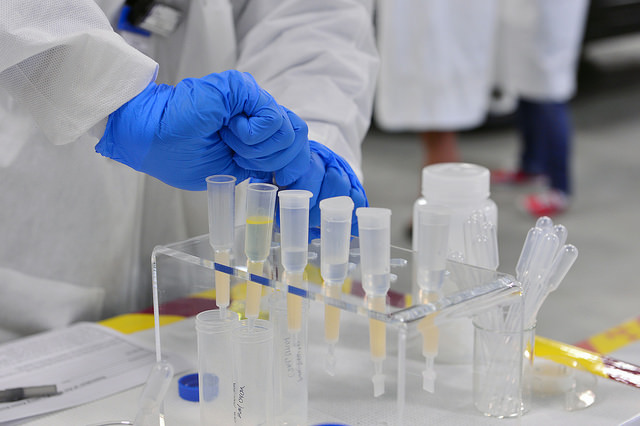
New initiatives to increase access to Indigenous knowledge have also been in the works at other post-secondary institutions across Canada. (File Photo: IAEA Imagebank/Flickr, CC BY-NC-ND 2.0)
WASHINGTON — American scientists have developed a gene therapy in treating a form of eye disease that progressively robs people of their sight and peripheral vision before blindness develops.
A study published on Monday in the journal Proceedings of the National Academy of Sciences described the therapy that effectively eliminated the abnormal copy of rhodopsin, a light-sensing molecule, and then restored it with a healthy copy of the protein.
The knockdown and replacement approach preserved the retina’s light-sensing photoreceptor cells in affected dogs, which could develop a very similar disease to affected humans, according to the study.
The researchers from the University of Pennsylvania and University of Florida also managed to use a single viral vector to co-deliver the genetic material needed to achieve both the knockdown and replacement.
Though more than 150 different mutations in rhodopsin have been identified to cause retinitis pigmentosa, this approach is intended to work regardless of the mutation or the mechanism by which rod photoreceptor cells, those responsible for vision in dim light, die.
Therefore, a large percentage of patients with rhodopsin autosomal dominant retinitis pigmentosa are expected to benefit if the therapy is found to be safe and effective in people.
“It’s a one treatment fits all,” said William A. Beltran, professor of ophthalmology and director of the Division of Experimental Retinal Therapies at Penn and co-lead author of the study.
“The treatment targets a region of the rhodopsin gene that is homologous in humans and dogs and is separate from where the mutations are located. That gives us great hope about making this a translational treatment.
”
The team restored roughly 30 percent of the normal level of rhodopsin, enough to prevent deterioration of rod cells in the retina.
Tracking the treatment effect more than eight months after delivery of the gene therapy, the researchers found the effect seemed stable and lasting. The team is currently working to move the findings into clinical trials.