
Canada News
Hundreds of Ontario patients didn’t receive full doses of cancer drug: agency

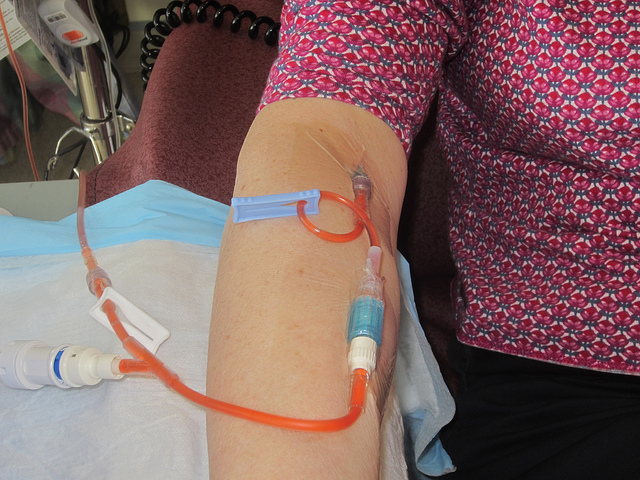
“We don’t take this issue lightly,” said Dr. Robin McLeod. (File Photo: kbrookes/Flickr, CC BY-NC-ND 2.0)
TORONTO — Hundreds of patients in Ontario did not receive full doses of cancer drugs because of issues with how the intravenous medications were administered, the agency overseeing cancer care in the province found in a recent review.
Cancer Care Ontario said about 1,000 people were affected, and fewer than 10 needed additional treatment as a result. The agency said, however, that the matter was taken seriously and prompted the updating of guidelines to hospitals on how such drugs should be administered.
“We don’t take this issue lightly,” said Dr. Robin McLeod, vice president of clinical programs and qualities initiatives at Cancer Care Ontario. “We want to make sure that patients are getting the best treatment.”
The dosing issue first arose in June when the Mississauga Hospital west of Toronto notified Cancer Care Ontario of medication being left behind in intravenous tubes after patients received treatment.
“They were concerned that some patients who were receiving some cancer drugs were not getting all of the drug,” McLeod said.
Cancer Care Ontario immediately asked all 74 Ontario hospitals that deliver cancer drug treatments to review their procedures to ensure medication was being administered properly, McLeod said.
“We sent out a survey to understand if this might have been an issue at these hospitals,” she said. “We did this with some intensity.”
Thirty-five hospitals reported back saying they found issues with how three drugs were being given to cancer patients, McLeod said, and 28 of those facilities found an estimated 1,063 records where they believed patients didn’t receive proper doses.
Two of the drugs are for immunotherapy, where they boost a patient’s immune system to fight cancer, said McLeod. The third is for targeted therapy that identifies a gene related to cancer, she said.
The drugs are not as diluted as chemotherapy drugs are when given via an intravenous tube, she said. That means if a bit of medicine is left over within IV tubes, not receiving that amount could impact patients, she said.
All hospitals in Ontario that identified issues with dosing contacted the patients affected and also changed how the drugs were administered in light of the review, McLeod said.
“The hospitals have made changes so that it’s not an issue anymore,” she said, noting that those changes may include adding filters or pumps in the administration of the intravenous drugs to ensure all medication is given to the patient.
Cancer Care Ontario said it also notified cancer care agencies in other provinces of the issue.
One of those agencies, Cancer Care Manitoba, said it found that 175 people were affected by the dosing issue, but said it decided not to contact those patients as it believed a small change in dose for the three kinds of drugs involved wouldn’t have a negative impact.
Informing the patients when the issue was believed to have caused no risk to them, “was going to cause unnecessary anxiety,” said Dr. Piotr Czaykowski, the organization’s Chief Medical Officer.
The Manitoba agency, which is largely in charge of providing cancer drugs to patients in the province, said it updated its medication administration practices in light of the Ontario review and will be informing hospitals about the changes.
“Effectively this problem has been resolved, going forward,” Czaykowski said. “We’re confident that it’s not harmed (the affected patients) in any way.”
Cancer Care Ontario said it will be conducting a review of the dosing issue with Institute for Safe Medication Practises in Canada, an independent non-profit organization that works with regulatory agencies and other governing bodies to ensure patient safety with medications.
The joint analysis will involve understanding the process by which cancer drugs are administered to patients and that impacts dosing.




















