Health
Long non-coding RNA may play role in fat metabolism: study

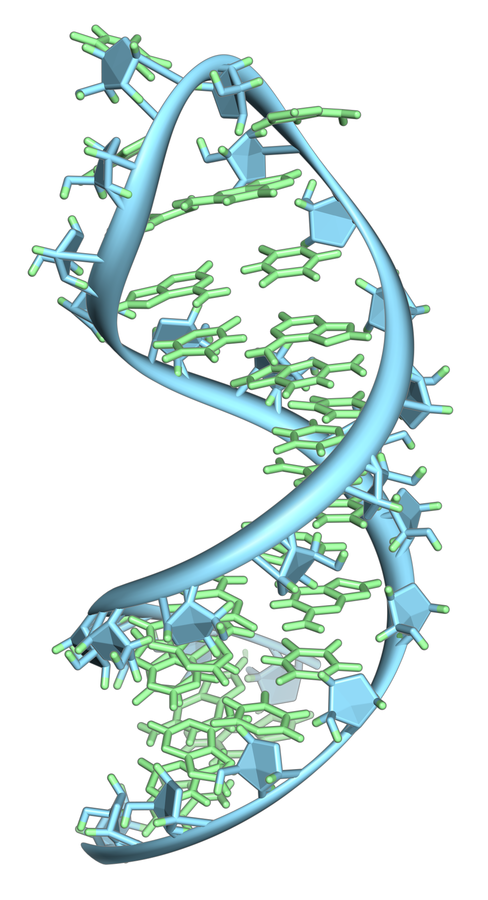
In a study, the researchers examined the RNA content of fat tissue from 25 healthy and lean participants.
They discovered that thousands of long intergenic non-coding RNAs (lincRNAs) in human fat cells are not found in mice, and that many of these human adipose-specific lincRNAs share features that suggest they play a role in fat metabolism. (Photo By Vossman – Own work, CC BY-SA 3.0)
CHICAGO — Researchers at Northwestern University (NU) have identified that thousands of lincRNAs, long non-coding RNA molecules produced by so-called “junk DNA”, may in fact play an important role in fat metabolism.
In a study, the researchers examined the RNA content of fat tissue from 25 healthy and lean participants. They discovered that thousands of long intergenic non-coding RNAs (lincRNAs) in human fat cells are not found in mice, and that many of these human adipose-specific lincRNAs share features that suggest they play a role in fat metabolism.
The researchers also looked closely at the most prevalent molecule, linc-ADAL, which is not expressed in mice, and found that linc-ADAL plays an important role in how fat cells develop and store fat.
LincRNAs are transcribed from what was previously known as “junk DNA”, portions of the human genome that do not code for proteins and were originally thought to be non-functional.
“We are still in the early stages of figuring out how lincRNAs function in human disease, but what used to be considered ‘junk’ in the genome may actually point us towards the jackpot of developing effective therapeutic approaches for cardiometabolic diseases,” said Jennie Lin, assistant professor of Medicine in the Division of Nephrology and Hypertension and co-author of the study.
The study demonstrates the importance of taking a human-centric approach to studying pathways relevant to fat metabolism and suggests the clinical significance of lincRNAs and other human-specific molecules that are not found in animal models, and could lead to novel treatments for obesity and related diseases in the future.
The findings have been published in Science Translational Medicine.