
Canada News
‘Little backpacks:’ GPS used to track nighthawks from northern Alberta to Brazil

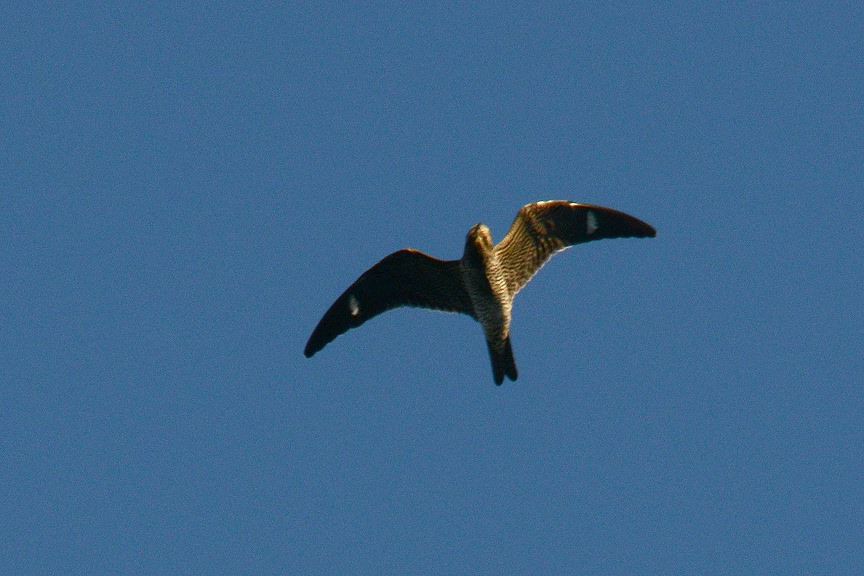
File Photo: Nighthawks breed almost everywhere in southern Canada and as far north as central Yukon. (Photo by GreenRavenPhotography.com/Flickr, CC BY-ND 2.0)
EDMONTON — The whoosh of nighthawk wings is a familiar sound in the Canadian dusk.
Now, scientists have figured out where those enigmatic wings whoosh off to for the winter.
“We have identified where these birds actually go,” said University of Alberta biologist Elly Knight, co-author of a new paper in the Canadian Journal of Zoology.
Nighthawks breed almost everywhere in southern Canada and as far north as central Yukon.
“A lot of people really identify strongly with nighthawks, in a very nostalgic way,” Knight said. “There are a lot of folks from country landscapes that spend time on their back porch and the sound of the nighthawk, they associate with those warm summer nights.”
Still, little is known about them, partly because they’re well camouflaged during the day and only active at dusk, when they’re hard to see.
“They look a lot like a branch, or the ground,” said Knight.
“But once they break that camouflage, they have these long wings with beautiful markings and when they open their mouths, they look a little bit like a dinosaur. They have this huge mouth that opens up.”
Their greatest mystery, however, has been their breeding ground. Until now.
Working with the Smithsonian Migratory Bird Centre, Knight and her colleagues attached tiny, three-gram backpacks to 10 birds north of Fort McMurray. Those tags fed data to overhead satellites every 10 days, allowing the team to track their migratory path for the first time.
The birds flew south over the Gulf of Mexico to Brazil, where they spent the winter hawking around in the Amazon rainforest and tropical savannah. Then they flew back from where they came — an annual round trip of 20,000 kilometres.
“That’s about as much as most people put on their car,” Knight said. “This is an 80-gram bird that’s doing it fuelled by insects.”
What’s more, the nighthawks are so good at navigating that after all that distance, most of them returned to within a kilometre of where they left.
Knight notes the trackers are mounted with cords that decay after a time, releasing the birds from their burden.
North America has 13 nighthawk populations. All but one are in decline and the species is considered threatened in Canada and several U.S. states.
What’s behind the decline is poorly understood. Many nighthawks seem perfectly content to breed on agricultural land in the nesting range.
Connecting all the dots on their migratory path is a big step toward understanding all the threats the birds face, said Knight.
“Understanding that connection will help us figure out what conditions are they experiencing across what we call their annual cycle, where they’re up north to breed and they migrate through the U.S. through Central America and then overwinter in South America,” Knight said. “They’re declining across their range as a whole.”
Most bird species are declining in North America. But birds that eat bugs on the wing are dropping particularly quickly.
“That whole group of birds is declining faster than any group of birds in North America.”




















