
Canada News
Invasive species known as the zombie plant present in waterways of five provinces

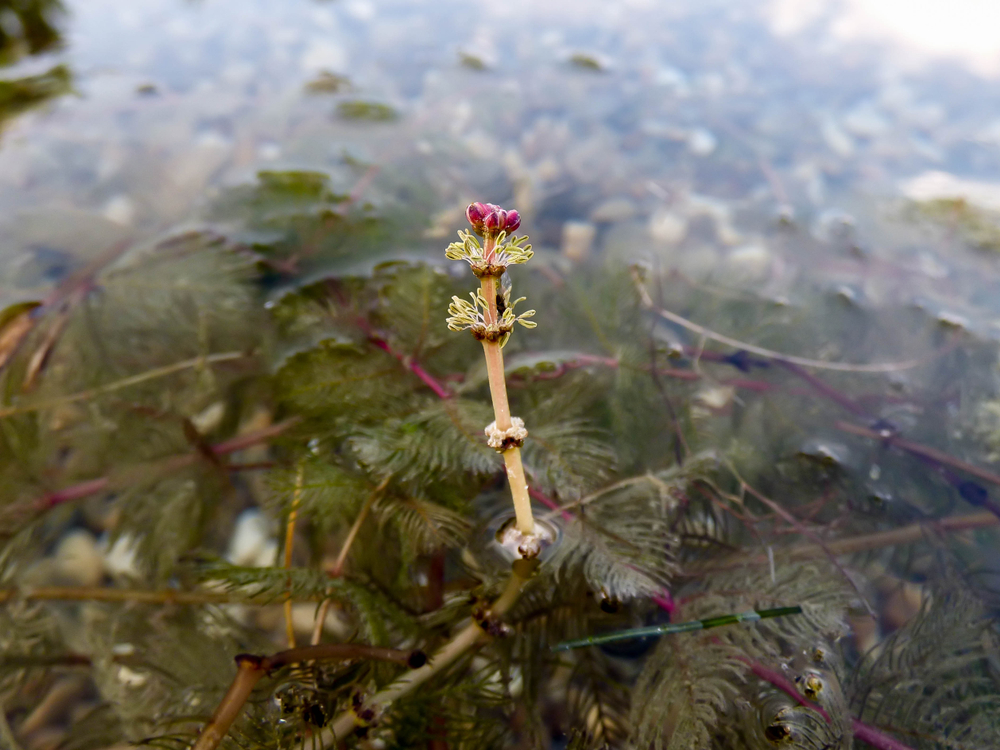
Barbara King, executive director of the non-profit Watersheds Canada, says the species is known to occur in New Brunswick, Ontario, Manitoba and British Columbia. (Shutterstock)
MONTREAL — An invasive plant species that has become a worrisome problem in Quebec lakes and rivers is also present in four other provinces as well as in almost every U.S. state.
Barbara King, executive director of the non-profit Watersheds Canada, says the species is known to occur in New Brunswick, Ontario, Manitoba and British Columbia.
She cited a report from the New Brunswick Alliance of Lake Associations, a group of volunteers who are devoted primarily to the health of lakes.
“Eurasian watermilfoil has been a huge problem in Ontario for the last five to 10 years and unfortunately it is in many of the lakes in cottage country from Muskoka to eastern Ontario,” King said in an interview Tuesday. It was first observed in Ontario in 2007.
In the United States, the National Oceanic and Atmospheric Administration, a government agency, estimates the plant is present in virtually every state. It also says it can grow from one to three metres in length.
And in Quebec, a coalition of groups has called on the province to act immediately because at least 200 rivers and lakes have been invaded by the plant, which is hurting recreational activities as well as aquatic flora and fauna. The coalition represents municipalities, scientists, tourism groups and business people.
The Quebec Union of Municipalities says the province should launch an awareness campaign and launch pilot projects to test prevention and eradication methods.
The Eurasian watermilfoil has been nicknamed the “zombie plant” because parts of it can detach from the root system, be transported to a new site and come back to life as a new plant. The aquatic plant is native to Europe and Asia and was introduced to North America in the 1940s.
King said the species can grow in water from one to 10 metres deep and spreads easily — especially when it’s been cut into small pieces.
“If you have a lot of boating motors and people going from lake to lake, it can get caught on the propellers of boats and, as it floats and gets into another lake, one tiny fragment will root and that’s how it spreads,” King said.
She noted that people are travelling to different provinces and different lakes at this time of the year so it’s important they clean their boats, adding it can also get into fishing equipment and boat trailers.
“Once it’s in a lake and established it’s virtually impossible to eradicate,” she added. “It chokes out all the native vegetation . . .and it can have an impact on water quality and fish and wildlife.”
She noted that even as it decomposes, the plant can kill fish because it reduces oxygen levels in the water.
King said people who try to get rid of the plant by cutting it or ripping it out won’t get every little piece so they should remove it and compost it on shore.
Mark Fisher, CEO and president of the Council of the Great Lakes Region, says the impact of the plant has been quite extensive.
“Eurasian watermilfoil has been around for some time and certainly assessments that I’ve seen have indicated that it’s present in varying degrees in all of the Great Lakes — particularly in our streams, tributaries and watersheds leading into the five Great Lakes themselves,” he said in an interview.
“Depending on the nature of certain sites I think it can be eradicated and reduced. But obviously it’s going to be a constant battle across the Great Lakes region (but) I’m not sure if they will ever be completely removed.”
Scientifically known as Myriophyllum spicatum, the plant flowers twice a year, typically in mid-June and late-July, but its root system can survive the winter.
Fisheries and Oceans Canada has also set up hotlines across Canada to report any aquatic invasive species.




















