Canada News
Provincial permits don’t consider Species at Risk Act: Environment Canada

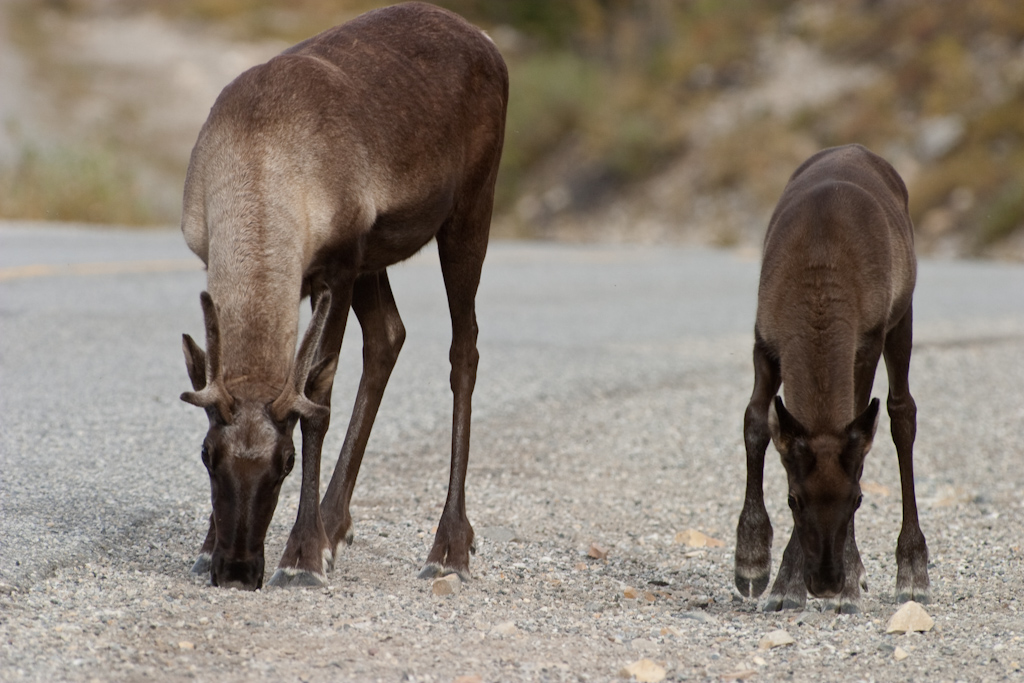
(Photo By Joseph N Hall (talk). – Transferred from en.wikipedia to Commons by Kelly using CommonsHelper., Public Domain)
OTTAWA — Recovery of Canada’s declining caribou herds is being hampered because provincial agencies that license development on the habitat of the threatened species aren’t required to follow federal environmental laws.
“It is a concern,” said Jonathan Wilkinson, parliamentary secretary to Environment Minister Catherine McKenna.
On Monday, Environment Canada released a report assessing how provinces are doing in protecting habitat for caribou, a threatened species in every jurisdiction that has them. The idea, said Wilkinson, was to examine actions on the ground and a province’s “legal architecture” to see if it was equivalent to federal legislation.
“What we have found is they are not,” he said. “There are gaps with respect to protection relative to species at risk nationally.”
In every province, agencies that issue permits for forestry or energy development aren’t required to conform to the federal Species At Risk Act.
The phrase “the discretion to authorize these activities is not subject to constraints consistent with those under SARA” appears again and again. Those constraints include requirements that at least two-thirds of critical habitat be left undeveloped.
When the act was passed in 2002, the government of the time anticipated provinces would pass similar legislation.
“With just a couple exceptions, the provinces haven’t done that,” Wilkinson said.
British Columbia is developing such legislation. Ontario has an endangered species act, but it exempts forestry.
The federal report also concludes that little conservation is taking place on the ground. Measures in almost every case are still in planning or draft stages.
“We do need to start to see action on the ground,” Wilkinson said. “We’ve had several years of planning exercises. We need more action on the part of the provinces.”
Saskatchewan’s Environment Ministry released a statement in response to the federal report saying it is committed protecting woodland caribou.
“Saskatchewan is confident that it currently has all of the legislative tools necessary to protect critical habitat for woodland caribou.”
A spokesperson for the Manitoba government said it considers the Species at Risk Act when reviewing development proposals and will have caribou range action plans by 2020.
Eric Hebert-Daly of the Canadian Parks and Wilderness Society said the report emphasizes what groups like his have been saying for years.
“At the provincial level, we have a lot of work to do,” he said. “Provincial laws are either missing or their flexibility is too flexible.”
The latest assessment of woodland caribou suggest 81 per cent of Canada’s herds are in decline. Loss of another one-third of the population is expected “in the near term.”
The main threat to their numbers is alteration of habitat, which reduces its productivity and allows access by predators.
Wilkinson said the federal government is able to oblige provinces to immediately enforce the Species At Risk Act.
But for now, he said, Ottawa will continue to work with the provinces on conservation agreements funded from allotments in the most recent budget.
“That allows us to bring some money to the table around reforestation or a range of other things the provinces need to do to protect the caribou.”
Caribou conservation is often seen to be in direct conflict with forestry and energy and the jobs they generate. In late March, Alberta delayed its own caribou range plans over economic concerns.
“There tends to be a lot of fear in those (resource) communities about what those impacts would be,” Wilkinson said. “We have to avoid this being seen as an environment versus economy issue.”