News
India China summit expected to ease tensions over border

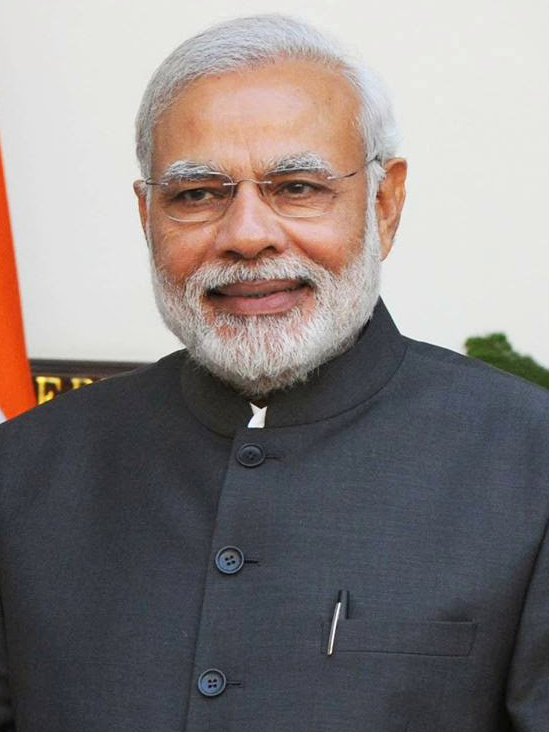
The Wuhan meeting comes at a crucial time for both leaders. Beijing is dealing with U.S. tariff threats on Chinese products, which have led to fears of a trade war. Modi needs steady economic growth ahead of a national election next year. (Photo By Narendra Modi – State Visit of the President of the Republic of Singapore to India, CC BY-SA 2.0)
NEW DELHI – Indian Prime Minister Narendra Modi is meeting this week with Chinese President Xi Jinping, a visit that some experts believe could reset a complicated relationship that faced several tests last year, including a tense border standoff.
The meeting between the leaders of the world’s two most populous nations is to take place in the central Chinese city of Wuhan on Friday and Saturday.
“Our common interests far outweigh our divergences,” Chinese Foreign Ministry spokesman Lu Kang said about the meeting’s prospects.
And the divergences are many, the most complicated being a lingering border dispute.
The two countries fought a monthlong border war in 1962 and have been trying to settle the boundary since the 1980s. Each side accuses the other of occupying its territory.
China claims some 90,000 square kilometres (35,000 square miles) of territory in India’s northeast and cites the region’s cultural affinity with Tibet as evidence that the area is part of what it calls “southern” Tibet. India says China occupies 38,000 square kilometres (15,000 square miles) of its territory in the Aksai Chin Plateau in the western Himalayas. Over the last three decades or so, officials have met at least 20 times to discuss the competing border claims.
Minor skirmishes, often little more than shouting matches between soldiers, occur fairly regularly, but the most aggressive confrontation in decades took place last summer where the Himalayan borders of India, China and Bhutan come together.
It started in June when Indian troops moved in to stop China from constructing a road in the Doklam region in Bhutan. For 10 weeks, soldiers from the two nuclear-armed nations eyeballed each other. The two countries finally agreed to pull back their troops on Aug. 28, though neither Beijing nor New Delhi offered any explanation of how the crisis was resolved.
There are other annoyances too.
Last year India refused to be part of Xi’s grand initiative to build a “new Silk Road” of ports, railways and roads to expand trade in a vast arc of countries across Asia, Africa and Europe. India is unhappy that Chinese state-owned companies are working in the Pakistani-held part of Kashmir, the Himalayan region claimed by both India and Pakistan. Indian leaders see that as an endorsement of Pakistani control over the area.
For India, China’s ever-growing influence in the neighbourhood, with significant strategic presences in Sri Lanka, Nepal and the Maldives and close ties with Pakistan, is a constant irritant. For Beijing, India’s playing host to the Tibetan spiritual leader the Dalai Lama and the Tibetan government-in-exile is a source of friction.
“The goal of the meeting will be to put China-India ties on a better track as the relationship has been strained in recent years due to China’s increased focus, investments, and activity in South Asia outside of India,” the consulting firm Eurasia Group said.
The first signs that Beijing and New Delhi were trying to mend their relationship came in February when India publicly ordered officials to stay away from events marking the Dalai Lama’s 60th year in India. Since then, diplomats from the two sides have held meetings and Indian Foreign Minister Sushma Swaraj met her Chinese counterpart, Wang Yi, earlier in the week before announcing the Wuhan summit.
Modi will be travelling to China again in June for the Shanghai Cooperation Organization summit. Along with China and India, that group includes the Central Asian states of Kazakhstan, Kyrgyzstan, Tajikistan, Uzbekistan as well as Pakistan.
The Wuhan meeting comes at a crucial time for both leaders. Beijing is dealing with U.S. tariff threats on Chinese products, which have led to fears of a trade war. Modi needs steady economic growth ahead of a national election next year.
“The world is now faced with rampant unilateralism as well as rising protectionism in the process of globalization,” Lu, the Chinese Foreign Ministry spokesman, said this week, explaining the backdrop of the talks between Xi and Modi.
No one expects the two men to work out all the tangles in the complicated diplomatic relationship.
“Given the depth and breadth of the problems between India and China, it will be unwise to expect dramatic breakthroughs,” C. Raja Mohan, director of Carnegie India, wrote in the Indian Express.
The most likely outcome of the meeting, according to the Eurasia Group, is the “resumption of diplomatic exchanges that will reduce the risk of a flare-up in the short term but is unlikely to result in any real bilateral solution to these areas of tension.”