
News
Introducing data science as ‘future’ of policy making in PH

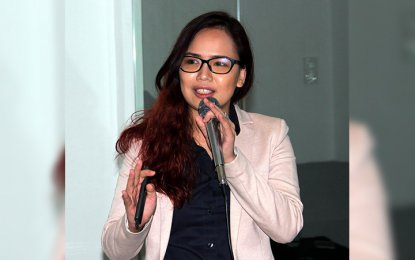
This is where “data science” enters, said Erika Fille Legara, academic program director of the newly established Master of Science in Data Science (MSDS) program in Asian Institute of Management (AIM), also first of its kind in the Philippines. (PNA Photo)
MANILA — Implementing policies and strategies based on intuition alone, especially when wrong, can be expensive, time-consuming, and sometimes catastrophic, thus the pressing need for data-driven modes of decision making in all sectors.
This is where “data science” enters, said Erika Fille Legara, academic program director of the newly established Master of Science in Data Science (MSDS) program in Asian Institute of Management (AIM), also first of its kind in the Philippines.
Data science is basically the extraction of data, looking for patterns within the collection, building predictive models, and producing actionable insights from it.
“Most people in advanced society would think that data science is something that is common sense or something that everybody is familiar with but the Philippines hasn’t arrived at this point yet,” she told the Philippine News Agency in an interview on the sidelines of a YSEALI forum entitled, “Forming Future Leaders One Day at a Time.”
“It’s starting to spread in the Philippines but not yet at its peak,” Legara added.
In her presentation, Legara named a few prominent applications such as Facebook, Spotify, and navigation app Waze as prime examples which use data collection in predicting preferences and interpreting patterns.
But aside from usage in daily lifestyle, Legara, who had been working with the Singapore government’s Agency for Science, Technology and Research for five and half years already witnessed the Southeast Asian giant establishing data science as foundation of its public administration.
Naming a few, she said Singapore already commissioned for the building of a simulation tool for transport to assess scenarios when breakdown happens. Further, it also enabled a data science machine learning to look at the interplay between land-use design and traffic or transport demand.
Revolutionizing data science provides the Philippines “good prospect” in following its neighbor and establishing itself firmly in the digital age, Legara said.
She bared that at present, some sectors in the country were engaging in this field but lack of graduates and professionals with such specialization was proving challenging.
Towards nation-building
As part of her commitment to contribute in nation-building, Legara shared she decided to come home and take part in the innovation of the data science curriculum in AIM.
The MSDS program is a 14-month, full-time degree course offered to aspiring data scientists who want to provide relevant and timely data-driven actionable insights to multinational corporations, industries, and governments.
“We really want to equip Filipinos so that they will know data analytics knowledge and skills,” she said.
“I think if we can really train the youth and make them aware that this area of study exists then it helps a lot, again going back, into nation-building.”
Since data science cuts across different industries, Legara said it became the “future” of both private and public sectors.
Legara, a Doctor of Philosophy in Physics from the University of the Philippines was part of a delegation who bagged the 2016 United Nations Big IDEAS Competition for sustainable cities and urban development.
While working as a scientist in Singapore, she published several papers including those focused on impacts of land use and amenities on public transport use, urban planning and design and the non-invasive procedure to probe the route choices of commuters in rail transit systems. (PNA)