Breaking
Molecules that kill cancer cells discovered

shutterstock
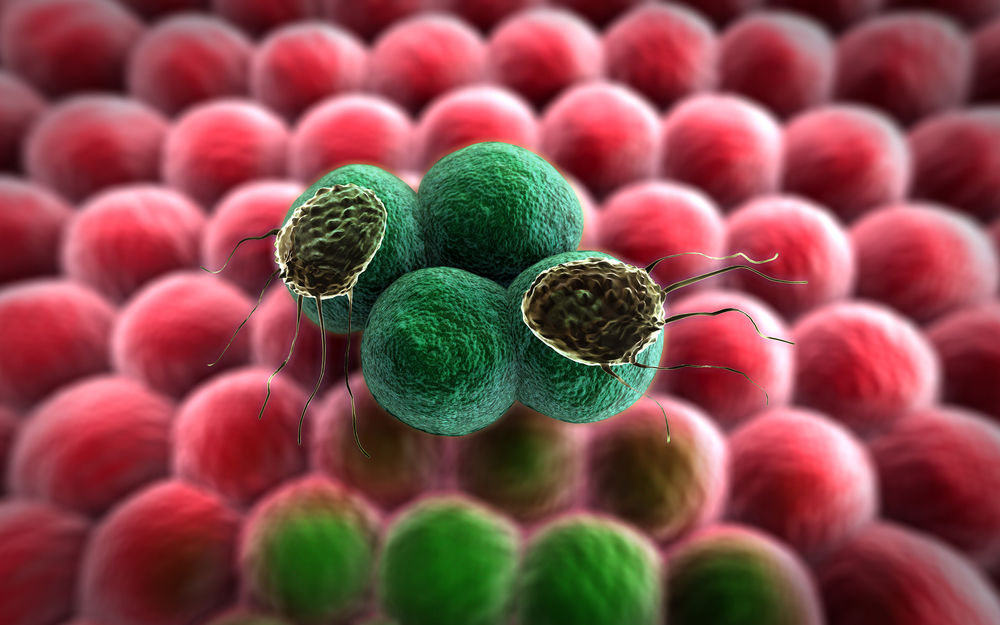
TORONTO — Scientists have discovered a new family of molecules that kill cancer cells and protect healthy cells and could be used to treat a number cancers, including cervical, breast, ovarian and lung cancers.
New research shows that as well as targeting and killing cancer cells, the molecules generate a protective effect against toxic chemicals in healthy cells.
Cells can become cancerous when their DNA is damaged.
Many different things can cause DNA damage, including smoking, chemicals and radiation; understanding exactly what happens at the point of DNA damage can help scientists develop new cancer treatments.
By studying this mechanism, researchers from the University of Waterloo in Canada could identify new molecules that selectively target cancer cells.
They studied the process of DNA damage using a sort of molecular filming technique called femtosecond time-resolved laser spectroscopy.
The technique is like a high-speed camera, which uses two pulses of light: one to start a reaction, and the other to monitor the way the molecules react.
This technique let researchers watch how molecules interact in real-time, revealing how cells become cancerous.
Researchers have been using femtosecond laser spectroscopy to study biological molecules for decades, in fields called femtochemistry and femtobiology.
More recently, this technique was fused with molecular biology and cell biology techniques to advance our understanding of human diseases, notably cancer, and how their treatments work. This potential new field is being dubbed femtomedicine (FMD).
“We know DNA damage is the initial and crucial step in the development of cancer,” said Professor Qing-Bin Lu, lead author of the study from the University of Waterloo, Canada.
“With the FMD approach we can go back to the very beginning to find out what causes DNA damage in the first place, then mutation, then cancer. FMD is promising as an efficient, economical and rational approach for discovering new drugs, as it can save resources required to synthesize and screen a large library of compounds,” said Lu.
Taking advantage of the FMD approach, Lu and his colleagues discovered a new family of molecules called nonplatinum-based halogenated molecules, or FMD compounds.
These are similar to cisplatin — a drug used to treat ovarian, testicular, lung, brain and other cancers. However, while cisplatin is highly toxic, the new FMD compounds are not harmful to normal cells.
When the FMD compounds enter a cancer cell, they react strongly and form reactive radicals, which cause the cell to kill itself.
When the FMD compounds enter a healthy cell, the cell starts to increase the amount of a protective molecule called glutathione (GSH) in the cell. This protects the cell against chemical toxins, so it is not damaged.
The research was published in the journal EBioMedicine.