
Art and Culture
Philippine National Flag: Symbol of Independence, Cloth of National Identity

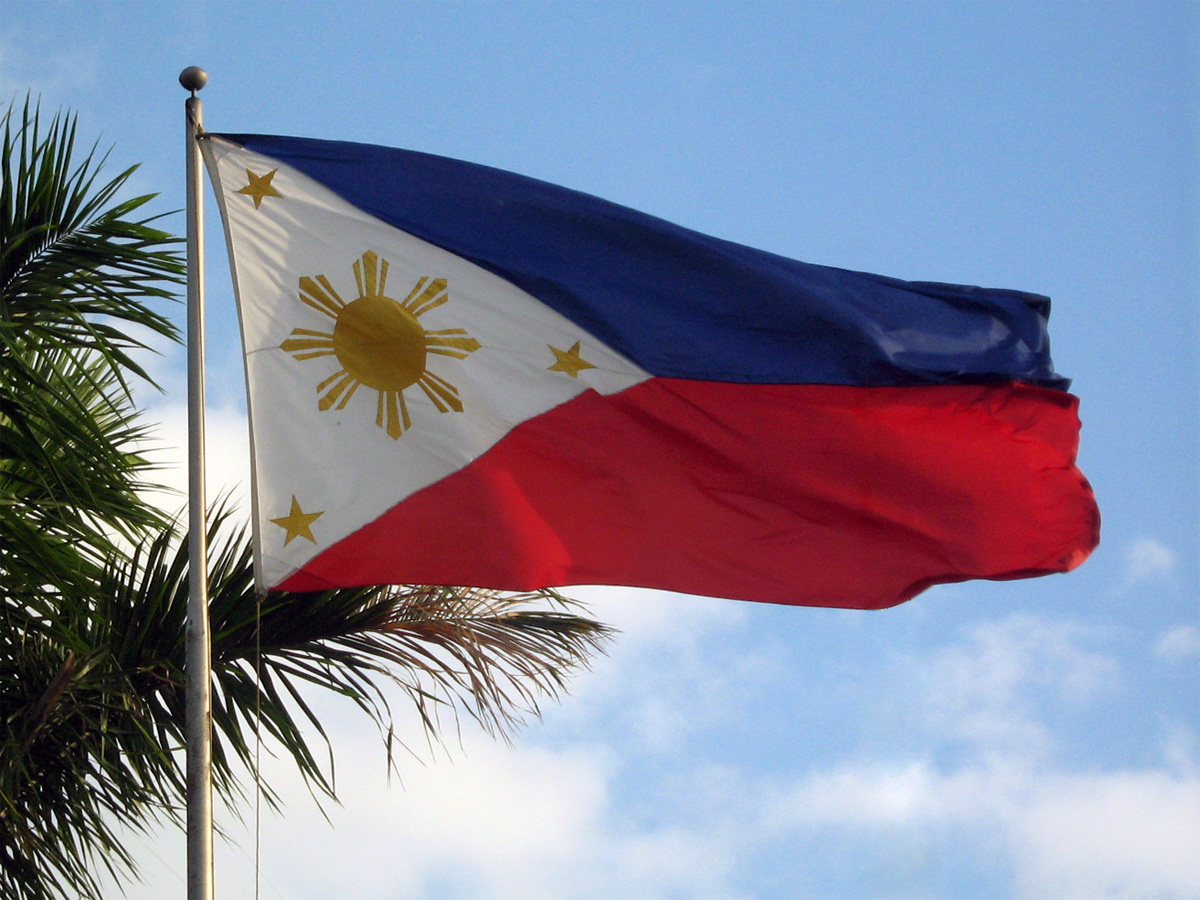
The Philippine Flag / Wikipedia Photo
MANILA — After a war is won, a country’s sought-after independence is hoisted up with pride by raising a flag which symbolizes a country’s freedom and sovereignty. But such scenario of flag appreciation is dated a long time ago.
Gone were the days when blood is literally shed for a piece of fabric that heroes—who died decades and even centuries ago—found to be “worth dying for.”
Today, we raise the same piece of cloth—first raised by Emilio Aguinaldo in Kawit, Cavite—everyday in school, in public plazas, and during special programs and events.
When Manny Pacquiao knocks-out another boxer inside the ring, or every time a Filipina’s beauty is recognized by the world on international beauty pageants, a flag is lifted up with pride by Filipino communities all over the world.
With the spread of the country’s labour force worldwide, is it even possible to name a country that has not a single Filipino resident?
And where there is a Filipino community, there will always be that piece of cloth that binds them as one, and represent the Philippines’ long and hardy race for independence.
Colouring the flag with historical hues
Some historians would argue that as our very own revolution was influenced to some degree by Cuba, so was the design of our flag. The same line of thinking gave birth to the idea that the original colour of the flag was similar to the shades of red and blue found on the flag of Cuba. This was even supported by the idea that Cuba, and other Spanish colonies adopted a common design of a mythical sun with a face in their flags.
The colours used in the flag varied over different time frames. Historians suggest that the blue colour of the flag started with what they call Iazuli Rosco, a colour which, up until now is a mystery for historians. Though some would argue that it was similar to the blue colour in the Cuban flag, other accounts suggest that the colours used matched those used in the American flag.
Another historical controversy in the flag’s colours happened when former President Ferdinand Marcos ordered the flag’s colours to be restored to the same light blue and red used in the Cuban flag. But the decision only lasted during his term as another law was passed, after he was removed from power, designating royal blue as the official colour of the flag.
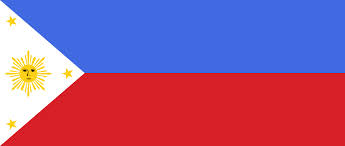
Philippine Flag’s Original Design / Wikipedia Photo
But the colours were not only meant for adding a shade of merriment to the country’s cloth of identity. The colours and the objects in the flag were meant to contain a valuable meaning, history and symbolism.
The flag’s colour was by no means accidentally chosen. Under a state of war, the country need not use a separate flag as the national flag is hoisted with the red fields—which symbolize patriotism and valour—flown upward. Meanwhile, the blue area—which represents peace, truth, and justice—is hoisted upward in times of peace.
Even the flag’s rectangular design with white equilateral triangle stands for something— equality and fraternity.
As mentioned during the declaration of independence, an eight-rayed golden sun at the center of the white triangle symbolizes unity, freedom, people’s democracy, and sovereignty; while the rays stand for the first eight provinces—Manila, Cavite, Bulacan, Pampanga, Nueva Ecija, Bataan, Laguna and Batangas—that started the 1896 revolution against Spain. The five-pointed stars placed at the corner of each triangle’s points represent the three major islands—Luzon, Panay Island, Minadanao—where the revolution started.
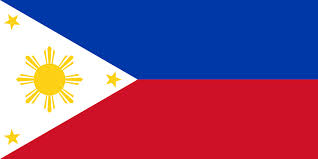
Current Flag Design / Wikipedia Photo
The brains behind the nation’s cloth of pride
Gen. Emilio Aguinaldo was not only the president of the revolutionary government; he was also the brains behind the flag’s earlier design which was conceptualized during the time when the revolutionary members are preparing for the second wave of the country’s revolution against Spanish colonizers.
Within five days, the design was sewn in Hongkong, Aguinaldo’s place of exile, by Mrs. Marcela Marino Agoncillo—wife of the first Filipino diplomat Felipe Agoncillo, along with her daughter Lorenza and Mrs. Delfina Herbosa Natividad, niece of Dr. Jose Rizal and wife of Gen. Salvador Natividad.
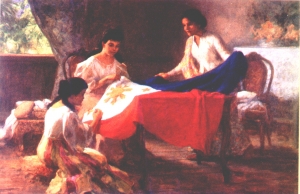
The Philippine Flag sewn in Mexico by by Mrs. Marcela Marino Agoncillo, her daughter Lorenza and Mrs. Delfina Herbosa Natividad. / Wikipedia Photo
The flag was first raised—and according to some historians, first“baptized with fire and blood”—during a bloody encounter between Filipino forces and Spanish marines on May 28, 1898, nine days after Aguinaldo sailed back to the Philippines from Hongkong and two days before the planned hostility against the Spanish forces. That day, the flag was lifted to symbolize the country’s victory over Spain.
But the flag raising ceremony to symbolize the country’s independence from the Spanish colony only came later on June 12, 1898 at the historic window of the Aguinaldo Mansion in Kawit, Cavite.
However, what they call “real independence” from the control of other countries became brief for the Filipino people, as the Americans and the Japanese, came to inhabit the land.
The display of the Philippine flag was prohibited and punished severely during the American regime up until the “Philippine Flag Day” was set by virtue of an Executive Order.
The same prohibition was repeated during the Japanese invasion and only when the country was completely liberated of external control, was the flag freely raised and venerated in all occasions.




















