World News
“Bravo” means target practice: Asia Pacific navies sign communication pact to avoid conflicts

tristan tan / Shutterstock.com
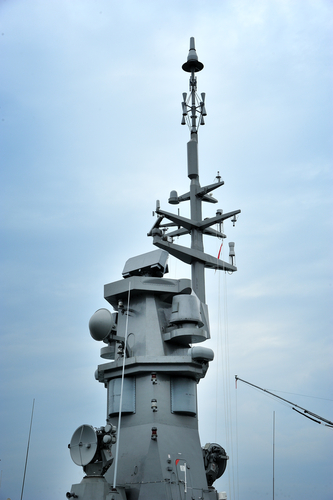
QINGDAO, China – Naval officials from the U.S. and two dozen Asia-Pacific nations adopted an agreement Tuesday aimed at improving communication at sea to reduce the possibility of conflict amid rising friction between an increasingly assertive China and its neighbours.
The Code For Unplanned Encounters at Sea provides simple standardized phrases – such as “alpha” meaning divers are in surrounding waters – that navies can use when they come across ships from other countries.
It’s hoped the code will lessen the possibility of collisions or misunderstandings that could lead to conflict in the heavily trafficked sea lanes surrounding China, Japan and Southeast Asia. Tensions have risen in the region over competing territorial claims, especially over a group of uninhabited islands in the East China Sea that are controlled by Japan but claimed by China.
The agreement, approved unanimously at the Western Pacific Naval Symposium in the eastern Chinese port city of Qingdao, is targeted at “establishing international standards in relation to the use of the sea,” according to a text of the agreement provided by a U.S. Navy officer.
Although not legally binding, China’s adoption of the code indicates its increased willingness to engage with its neighbours, U.S. Navy officials said. The U.S., Japan, South Korea, Philippines, Vietnam, Malaysia, Thailand, Australia, Canada, Mexico, Chile, Peru and several other nations also signed on.
In the China-Japan island dispute, the U.S. has said it takes no side on the question of sovereignty but that it recognizes Japan’s administration of the chain and has responsibilities to protect Japanese territory under a mutual defence treaty.
Chinese and Japanese ships have come into regular contact in the area since China stepped up patrols near the islands after Tokyo moved to nationalize them in 2012.
Addressing the symposium on Tuesday afternoon, China’s navy commander, Adm. Wu Shengli, welcomed the accord as a means for closer co-operation in humanitarian missions, as well as a way to avoid misunderstandings.
“For the sake of the extremely precious peace we enjoy at present, we need to … try to avoid extreme behaviours that may endanger regional security and stability,” Wu told participants, including U.S. Chief of Naval Operations Jonathan Greenert.
U.S. Navy officers said the code was based on protocols already used by the U.S. military and its allies. It had been discussed among Asia-Pacific states for more than a decade, but legal and linguistic barriers were overcome only in the past year.
While ships at sea already talk over the radio, the accord seeks to standardize those communications with code phrases, the meaning of which have been translated into local languages. “Bravo” indicates a ship is conducting weapons practice, reassuring other craft that they are not being fired at. “Foxtrot” means the ship is launching or retrieving helicopters or other aircraft.
While that doesn’t guarantee conflicts won’t occur, it does give regional navies a standard way to communicate and avoid incidents such as the Dec. 5 near-collision between a U.S. Navy cruiser, the USS Cowpens, and a ship accompanying China’s sole aircraft carrier in international waters of the South China Sea.
U.S. Navy officials said the Cowpens manoeuvred to avoid crashing into the Chinese ship, in the two nations’ most serious sea confrontation in years.
China has been increasingly forceful in its claims over almost the entire South China Sea, bringing it into conflict with neighbours to the south, especially Vietnam and the Philippines.
The commander of the U.S. Pacific Fleet, Adm. Harry Harris, told the meeting that Washington would continue to discourage all sides from using force in dealing with their territorial disputes.
“The only acceptable way for responsible nations to resolve these issues is through diplomacy. The U.S. strongly opposes coercion or intimidation as means to resolve territorial disputes,” Harris said.
The meeting in Qingdao, home to China’s northern fleet, is the latest example of Beijing using its military for diplomatic outreach.
Earlier this month in Qingdao, Chinese military officials granted U.S. Defence Secretary Chuck Hagel the first visit by a foreign official to China’s first aircraft carrier, a refurbished Ukrainian ship serving as a test-bed for future domestically built ships.
In another first for China’s military, the navy intends to send a pair of destroyers, an oiler and a hospital ship to join in U.S.-led, 23-nation naval drills near Hawaii, building on a trend of integration with foreign navies begun in 2008 when China committed ships to anti-piracy patrols off Somalia.
The outreach only goes so far, however.
The Qingdao symposium originally was scheduled to include an international parade of navy ships, but that was cancelled, ostensibly due to the continuing multinational search for Malaysia Airways Flight 370. However, U.S. Navy officials said the cancellation followed Washington’s refusal to take part after China declined to invite Japan’s navy.