World News
Crimean side effect: Heroin addicts deprived of methadone because Russia bans it

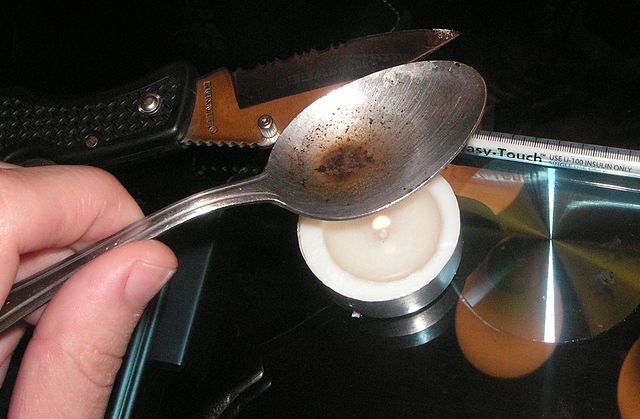
Heroin, being prepared for use via injection. (Wikipedia photo)
Every morning, Sergei Kislov takes the bus to the rundown outskirts of this port city for the methadone doses that keep him off heroin without suffering withdrawal. Now that Russia has taken over Crimea, the trips are about to end.
“For a month and a half I won’t be able to sit or sleep or eat,” Kislov said. “It’s a serious physical breakdown.”
Across the Black Sea peninsula, some 800 heroin addicts and other needle-drug users take part in methadone programs – seen as an important part of efforts to curb HIV infections by taking the patients away from hypodermic needles that can spread the AIDS-causing virus.
But Russia, which annexed Crimea in mid-March following a referendum held in the wake of Ukraine’s political upheavals, bans methadone, claiming most supplies end up on the criminal market. The ban could undermine years of efforts to reduce the spread of AIDS in Crimea; some 12,000 of the region’s 2 million people are HIV-positive, a 2012 UNICEF survey found.
After years of rapid growth in the infection rate, the Ukrainian Health Ministry reported the first decline in 2012.
Many have attributed that decline to methadone therapy. According to the International HIV/AIDS Alliance of Ukraine, which helps fund many local projects with money from the Global Fund to Fight AIDS, Tuberculosis and Malaria, drug injectors accounted for 62 per cent of new HIV infections in Ukraine in 2002. By 2013, that number was down to 33 per cent.
“HIV is an illness that often sweeps up those people who aren’t socially secure,” said Denis Troshin, who runs the local NGO, Harbor-Plus, which helps co-ordinate methadone therapy for 130 of Sevastopol’s recovering addicts. “Many of them were put in the (medical) records at some point, but then they disappear for many years and by the time they show up at the hospital again they’re nearly dead. Our goal is to find them, convince them to come to the doctor and not miss their treatment.”
In Russia, which recommends that addicts quit cold turkey, HIV is spreading rapidly. According to the Russian Federal AIDS Center, the number of people registered as infected increased by nearly 11 per cent in 2013.
While methadone doesn’t have the same euphoric effect as heroin, it weans addicts off the drug by blocking the pain, aches and chills of withdrawal. In preparation, Kislov has already started reducing his daily intake of methadone by about 10 milligrams each week.
Although he voted enthusiastically for Crimea to join Russia, he didn’t expect the methadone program to end so quickly.
“It is happening at such a pace that it’s going to be a massacre here,” he said. “They’re abandoning 130 people and forcing them to fend for themselves, even if that means we’ll end up stealing again and going to jail.”
Patients say that since the program started here five years ago, local doctors had been nothing but supportive of the therapy. They reassured recovering addicts ahead of the referendum that the program would be extended at least until the end of the year.
That attitude changed on March 20, when the director of Russia’s Federal Drug Service, Viktor Ivanov, announced that the program would be banned in Crimea.
“As it turns out, the lives of the people participating in this program are less important than politicking,” said Troshin. “It’s as if (the doctors) are saying: ‘We’re doing everything according to how Russian law is even before it’s implemented … We’re so zealous that we’re closing (the program) right now and we don’t care about the 130 families who will be affected.”’
Troshin says the group has sent letters to both local and national politicians. But even if the group gets permission from local authorities to extend the program, the Ukrainian health minister told local news agencies Monday that Ukraine would not be sending any more methadone to Crimea, and recommended that any addicts there move to mainland Ukraine if they wanted to continue their treatment.
For Alexander Kolesnikov, a 40-year-old who has now been in the group for four years, moving to Ukraine isn’t a possibility. He’s proud of being from Sevastopol and has an aging, diabetic mother to care for.
But while the two went proudly to the polls on March 16 to vote for joining Russia, they are now dreading how a return to life without methadone might affect them.
“One half of my mother’s heart is for Russia – for example, she will get a higher pension and she’ll have a better standard of living,” he said. “But the other half of her heart supports me, and she doesn’t want to see me in that state ever again.”