Canada News
Canada rejects Pentagon criticism of military readiness, defends NATO spending plans

ASM, Philippine Canadian Inquirer
November 25, 2026
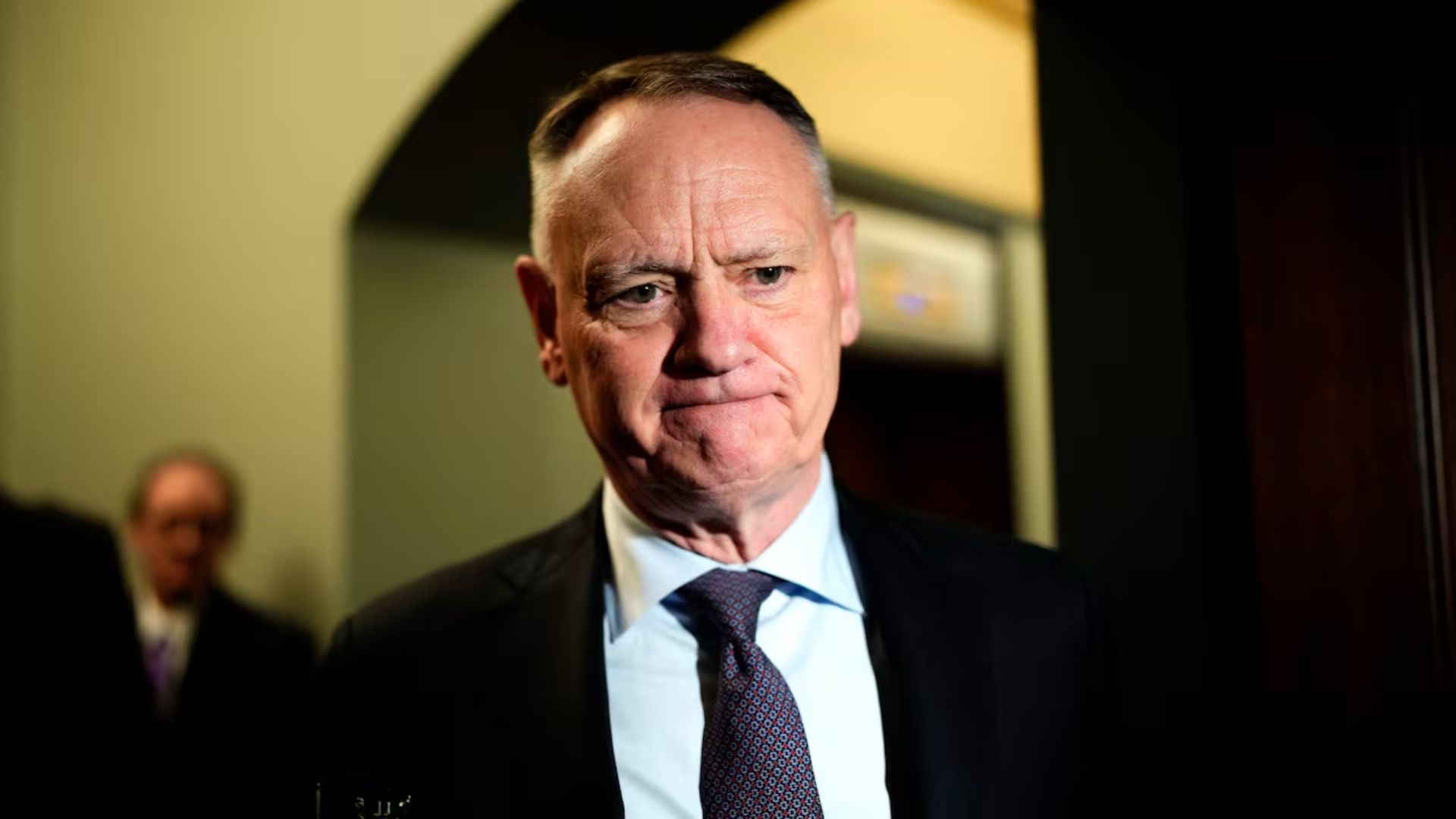
Photo courtesy: CBC News
Canadian Defence Minister David McGuinty has defended the country’s military spending plans after the Pentagon accused Ottawa of failing to adequately strengthen its armed forces and contribute to North American security.
Speaking to reporters on November 24, McGuinty rejected the suggestion that Canada must answer to Washington over its defence decisions, emphasizing the country’s sovereignty and its continuing commitments to international allies.
His response followed the release of a Pentagon document on November 23 questioning Canada’s military readiness, defence investments and ability to meet future NATO spending requirements.
The disagreement comes amid strained relations between the two longtime allies over trade, defence procurement and the sharing of responsibilities for continental security.
Canada maintains military cooperation with US
McGuinty said defence, intelligence and security cooperation between Canada and the United States continues despite the Pentagon’s criticism.
He emphasized that Canada’s military partnerships, including those conducted through NATO and the North American Aerospace Defense Command (NORAD), have not changed.
NORAD is responsible for aerospace warning, aerospace control and maritime warning for North America. It is operated jointly by Canada and the United States.
McGuinty also pointed to ongoing efforts to modernize Canada’s military, including equipment purchases, infrastructure improvements and initiatives to strengthen recruitment and personnel retention.
The minister said Ottawa remains focused on implementing those plans rather than responding to the Pentagon’s political messaging.
The Pentagon’s public criticism followed a separate memorandum issued by US Defense Secretary Pete Hegseth restricting certain engagements involving American military personnel and Canadian counterparts.
Those restrictions concern participation in some events and informal activities, rather than routine military operations or intelligence sharing.
Pentagon raises concerns over military readiness
The US Department of Defense released a fact sheet criticizing Canada’s defence capabilities and the pace of its military modernization.
The document argued that years of insufficient investment had weakened the Canadian Armed Forces and increased the United States’ responsibility for defending North America.
It also questioned whether Ottawa had developed a credible financial plan to meet NATO’s new defence spending targets.
According to figures cited by the Pentagon, 41.9% of Canada’s air force fleet and 53.9% of its naval fleet were serviceable during the 2025–2026 fiscal year.
The Pentagon also placed the army’s operational readiness at approximately 48%.
The figures were presented as evidence of equipment maintenance problems, personnel shortages and broader challenges affecting Canada’s military capabilities.
However, these assessments represent the Pentagon’s stated position. The figures alone do not establish the overall effectiveness of Canada’s military or the full extent of its contributions to joint defence operations.
Canada outlines higher defence spending
Prime Minister Mark Carney’s government has announced substantial increases in military spending as Canada works toward NATO’s updated defence commitments.
Canada reached the alliance’s previous benchmark of spending 2% of gross domestic product on defence in 2025–2026.
NATO members agreed at their 2025 summit in The Hague to increase defence and security-related investments to 5% of GDP by 2035.
Under that framework, countries are expected to allocate at least 3.5% of GDP to core military requirements, with up to 1.5% for broader defence and security-related spending.
Canada’s 2026 federal budget projects combined spending of approximately 4.1% of GDP beginning in the 2027–2028 fiscal year and continuing through 2030–2031.
The government has also outlined approximately $99.2 billion in annual core defence funding by 2030–2031.
McGuinty said Ottawa remains committed to the longer-term NATO target and noted that member countries are scheduled to review their spending commitments in 2029.
Budget watchdog identifies remaining funding gap
Although Ottawa has increased its planned investments, Canada’s Parliamentary Budget Officer has identified a significant gap between current projections and the NATO target.
In its November 2026 assessment, the budget watchdog reported that Canada’s core defence spending would reach approximately 2.6% of GDP by 2030–2031 under the existing financial plan.
That remains below NATO’s 3.5% requirement for core military spending by 2035.
The watchdog estimated that reaching the 3.5% level in 2030–2031 would require approximately $136 billion in core defence spending, or about $37 billion more than currently projected.
The assessment does not mean Canada has already failed to meet its 2035 commitment. Rather, it identifies additional spending that would be necessary if the country were to reach the higher benchmark earlier.
The government’s current budget projections also do not extend far enough to show the complete financial path to 2035.
Fighter jet procurement adds to tensions
Canada’s continuing review of its planned purchase of 88 American-made F-35 fighter jets has become another point of disagreement with Washington.
The federal government has been reassessing the acquisition amid concerns about cost, economic benefits and Canada’s defence procurement priorities.
Ottawa is also considering options involving Sweden’s Saab Gripen fighter aircraft.
The Pentagon has warned that operating different types of fighter jets could create additional challenges for maintenance, training and personnel requirements.
US officials have also raised concerns about the possible implications for NORAD operations.
Canada has not announced a final decision on the full F-35 purchase under review.
The aircraft procurement debate comes as Ottawa seeks to strengthen domestic defence manufacturing and expand partnerships with European suppliers.
While the fighter jet issue is part of the broader disagreement, the Pentagon’s criticism also addresses military readiness, spending priorities and Canada’s future NATO commitments.
Defence partnership continues despite disagreement
The latest exchange follows several changes in US-Canada defence relations under President Donald Trump’s administration.
Earlier this year, the Pentagon suspended the Permanent Joint Board on Defense, a bilateral advisory body established in 1940 to support cooperation between the two countries.
The more recent restrictions on certain military engagements have added to concerns about the direction of the relationship.
Nevertheless, Canadian officials maintain that essential defence cooperation remains operational.
McGuinty has reiterated Ottawa’s commitment to NATO, NORAD and the modernization of Canada’s armed forces.
The financial disagreement remains measurable: Canada’s latest budget projects core defence spending at 2.6% of GDP by 2030–2031, while NATO’s 2035 commitment calls for at least 3.5%.
The Parliamentary Budget Officer estimates that closing that gap at the projected 2030–2031 economic level would require approximately $37 billion in additional annual core defence spending, beyond the amount included in Canada’s current fiscal plan.