
Canada News
B.C. Premier Lorne Doerkson unveils new 25-member cabinet, names key ministers

ASM, Philippine Canadian Inquirer
November 23, 2026
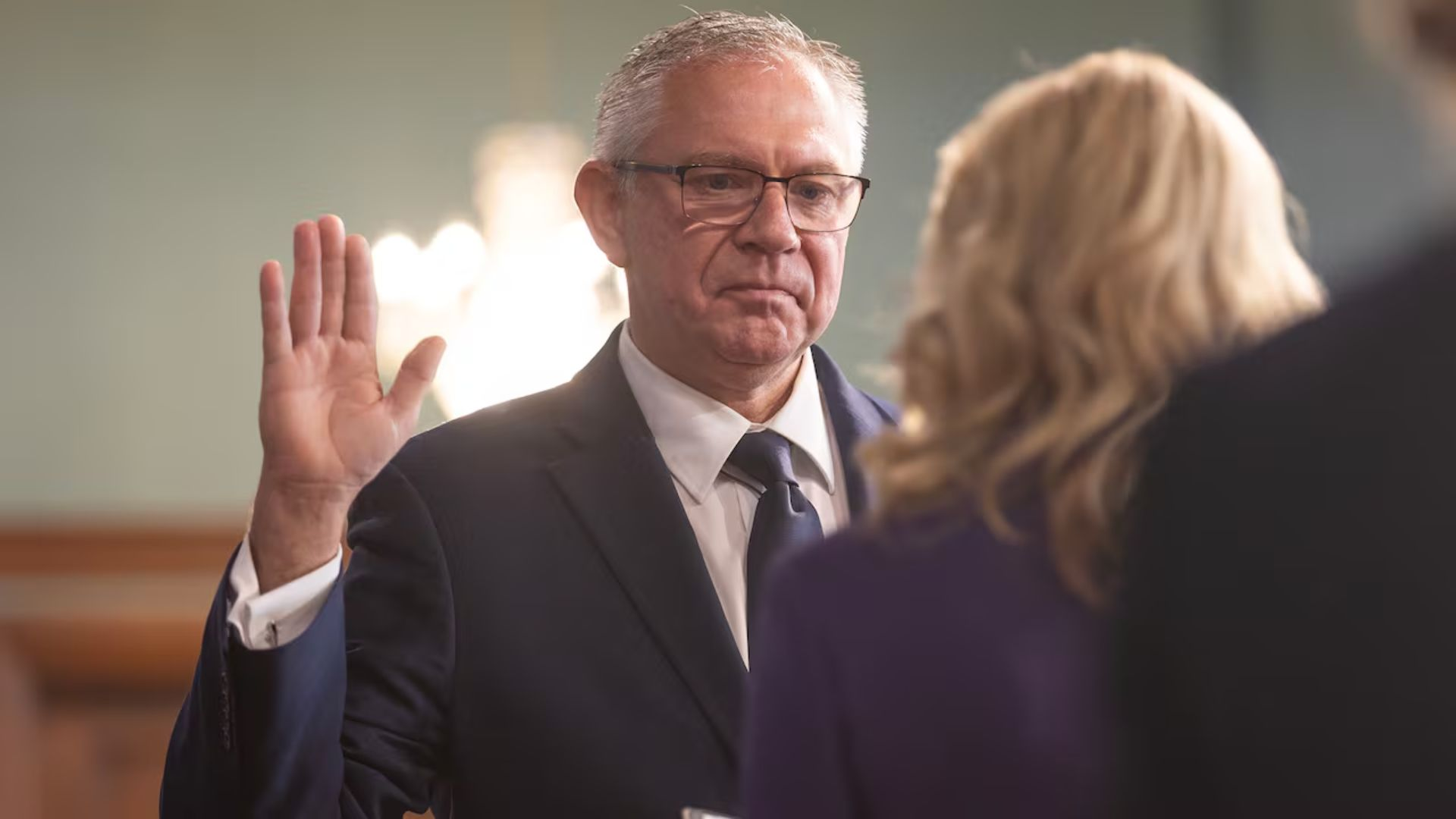
Photo courtesy: CBC News
VICTORIA, British Columbia — British Columbia Premier Lorne Doerkson has unveiled his new 25-member cabinet, appointing ministers to oversee key areas including finance, health care, housing, public safety and economic development as the province’s new Conservative government begins its term.
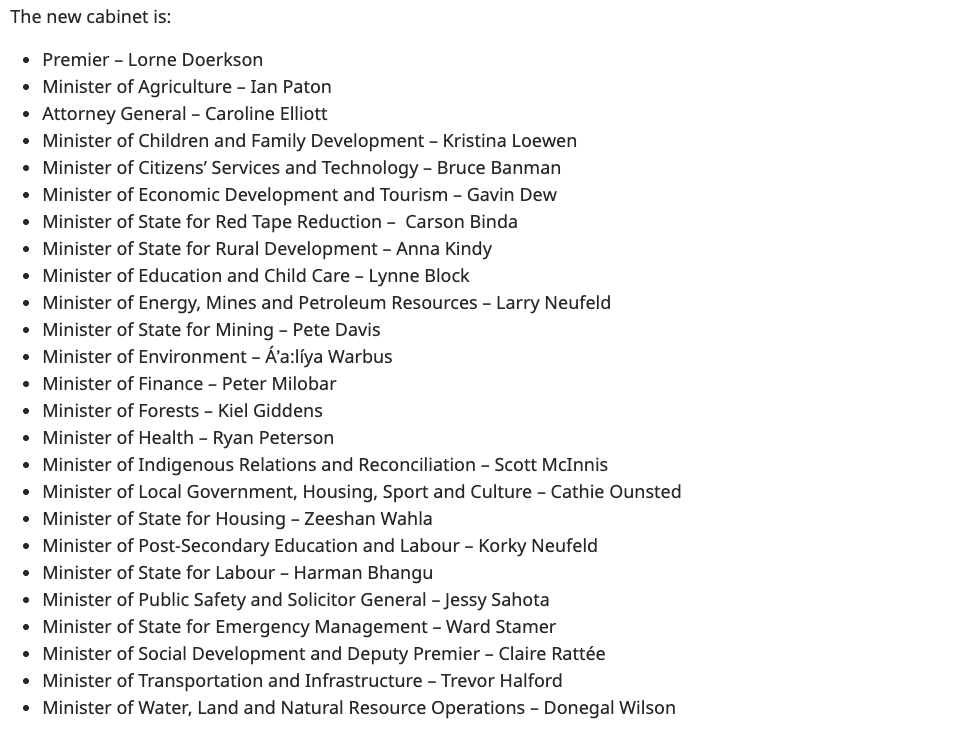
Photo courtesy: BC Gov News
The cabinet was sworn in on November 20, with Doerkson outlining an agenda focused on lowering living costs, attracting investment, improving public services and strengthening the provincial economy.
Claire Rattée was appointed deputy premier and minister of social development, while Peter Milobar will oversee the province’s finances.
Ryan Peterson takes charge of the health ministry, Caroline Elliott becomes attorney general, and Jessy Sahota assumes responsibility for public safety and the solicitor general’s office.
Other major appointments include Ian Paton as minister of agriculture, Gavin Dew as minister of economic development and tourism, and Larry Neufeld as minister of energy, mines and petroleum resources.
Kiel Giddens will lead the forests ministry, while Scott McInnis takes over Indigenous relations and reconciliation.
Education and child care will be headed by Lynne Block, with Kristina Loewen overseeing children and family development.
The cabinet also assigns responsibility for housing and infrastructure to several officials. Cathie Ounsted was named minister of local government, housing, sport and culture, supported by Zeeshan Wahla as minister of state for housing.
Trevor Halford will oversee transportation and infrastructure, while Donegal Wilson takes charge of water, land and natural resource operations.
The new cabinet includes 19 ministers, including the premier, and six ministers of state, bringing the total to 25 appointments.
Five priorities for the new government
Doerkson identified five areas that will guide his administration: affordability, economic prosperity, health care, public safety, and building a stronger province.
On affordability, the government plans to pursue tax relief, reduce household costs, improve access to housing and strengthen fiscal discipline.
Its economic agenda includes rebuilding investor confidence, encouraging responsible resource development, expanding trade and supporting job creation.
Health care is another major priority. The administration has pledged to protect universal health care while improving access to medical services, treatment and recovery programs.
Public safety commitments include strengthening policing, supporting victims of crime and preparing communities for emergencies such as wildfires and floods.
The government also plans to advance reconciliation and economic partnerships with First Nations while improving education and protecting British Columbia’s environment.
New leadership for British Columbia
Doerkson was sworn in as British Columbia’s 38th premier on November 20, marking the beginning of the province’s new Conservative administration.
The Conservatives’ return to government follows a provincial election that shifted control away from the New Democratic Party.
The change also marks the first Conservative government in British Columbia in nearly a century, with the party entering office with a substantial majority in the provincial legislature.
In addition to cabinet appointments, Doerkson named parliamentary secretaries responsible for specialized areas, including seniors, rural health, technology and innovation, tourism, infrastructure and urban policing.
These appointments are intended to support ministers in delivering the government’s priorities across different sectors.
Doerkson has also indicated that his administration intends to begin work quickly, with its first cabinet meeting scheduled for the week following the swearing-in ceremony.
The meeting will bring together the newly appointed ministers responsible for implementing the administration’s commitments on affordability, economic development, health services and public safety.