Headline
DND Secretary stands firm on West Philippine Sea rights, rejects confrontation with China

ASM, Philippine Canadian Inquirer
November 12, 2026
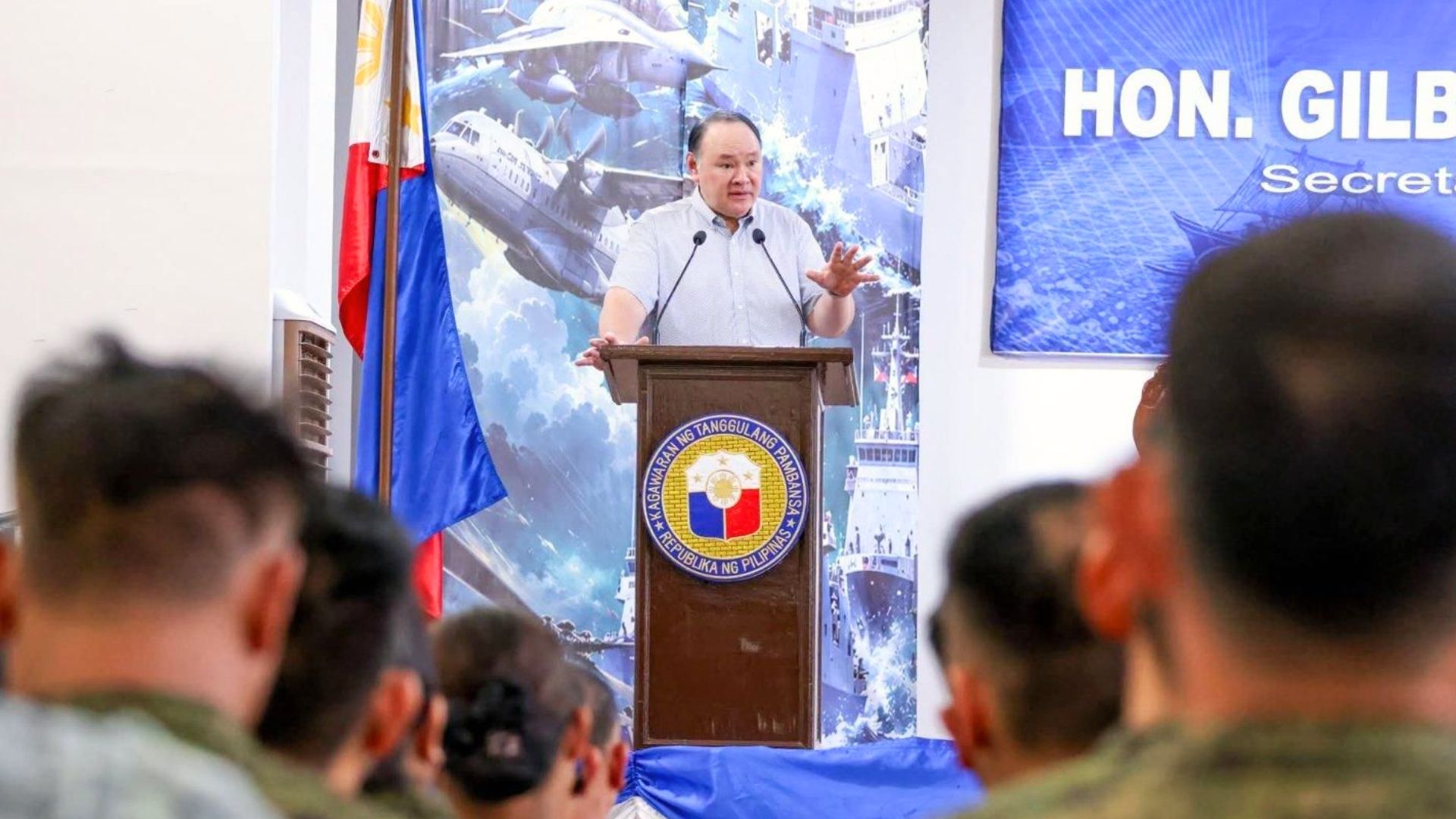
Photo courtesy: Philippine News Agency
Defense Secretary Gilberto Teodoro Jr. stressed that defending the Philippines’ rights in the West Philippine Sea does not mean seeking conflict with China. He maintained that the country must stand firm in protecting its maritime rights and the interests of future generations.
Speaking to reporters in Cebu City on November 11, Teodoro rejected suggestions that the Philippines should soften its position because of China’s greater military strength.
“Unang una, and most importantly, hindi naman tayo nakikipag-away eh, pero naninindigan naman tayo,” he said.
(First of all, and most importantly, we are not looking for a fight, but we are only making a stand.)
Teodoro said the issue goes beyond military strength. It involves upholding international law and protecting resources that future generations of Filipinos should be able to benefit from.
“Pero kung pinaglalaban natin ay batas at ang kinabukasan ng ating mga susunod na henerasyon, I think there’s no compromise,” he added.
His remarks came amid calls for the government to avoid provoking China as tensions persist in the disputed waters.
The Armed Forces of the Philippines (AFP) earlier expressed a similar position, emphasizing that defending the country’s sovereignty and maritime rights should not be mistaken for seeking confrontation.
Rear Admiral Roy Vincent Trinidad, the AFP’s spokesperson for the West Philippine Sea, said protecting these rights remains part of the military’s responsibility.
“We are not fighting any other country,” Trinidad said during a press briefing on November 10.
He explained that the Department of National Defense and the AFP have a duty to protect Philippine sovereignty, sovereign rights and maritime entitlements.
Trinidad also highlighted the importance of preserving the country’s exclusive economic zone (EEZ), including its marine resources and economic benefits for future generations.
The statements followed Vice President Sara Duterte’s warning against provoking China. She cited the complexities of diplomatic relations and the significant difference between the two countries’ military capabilities.
Despite these concerns, the AFP maintained that differences in military strength should not prevent the Philippines from asserting its lawful maritime rights.
Trinidad said the military continues to strengthen its capabilities while fulfilling its responsibility to protect the country’s interests.
The Philippines’ position is backed by the 2016 arbitral ruling under the United Nations Convention on the Law of the Sea (UNCLOS).
The tribunal rejected China’s claims to historic rights within its nine-dash line where they exceeded the maritime entitlements allowed under UNCLOS. It also upheld several Philippine maritime entitlements and found that China had violated the country’s sovereign rights in certain areas.
China has rejected the ruling and continues to assert its claims in the South China Sea.
Philippine defense officials maintain that the country can defend its maritime rights under international law without seeking military confrontation.