Headline
China accounts for 28.6% of Philippine imports in 2025, PSA reports

ASM, Philippine Canadian Inquirer
October 26, 2026
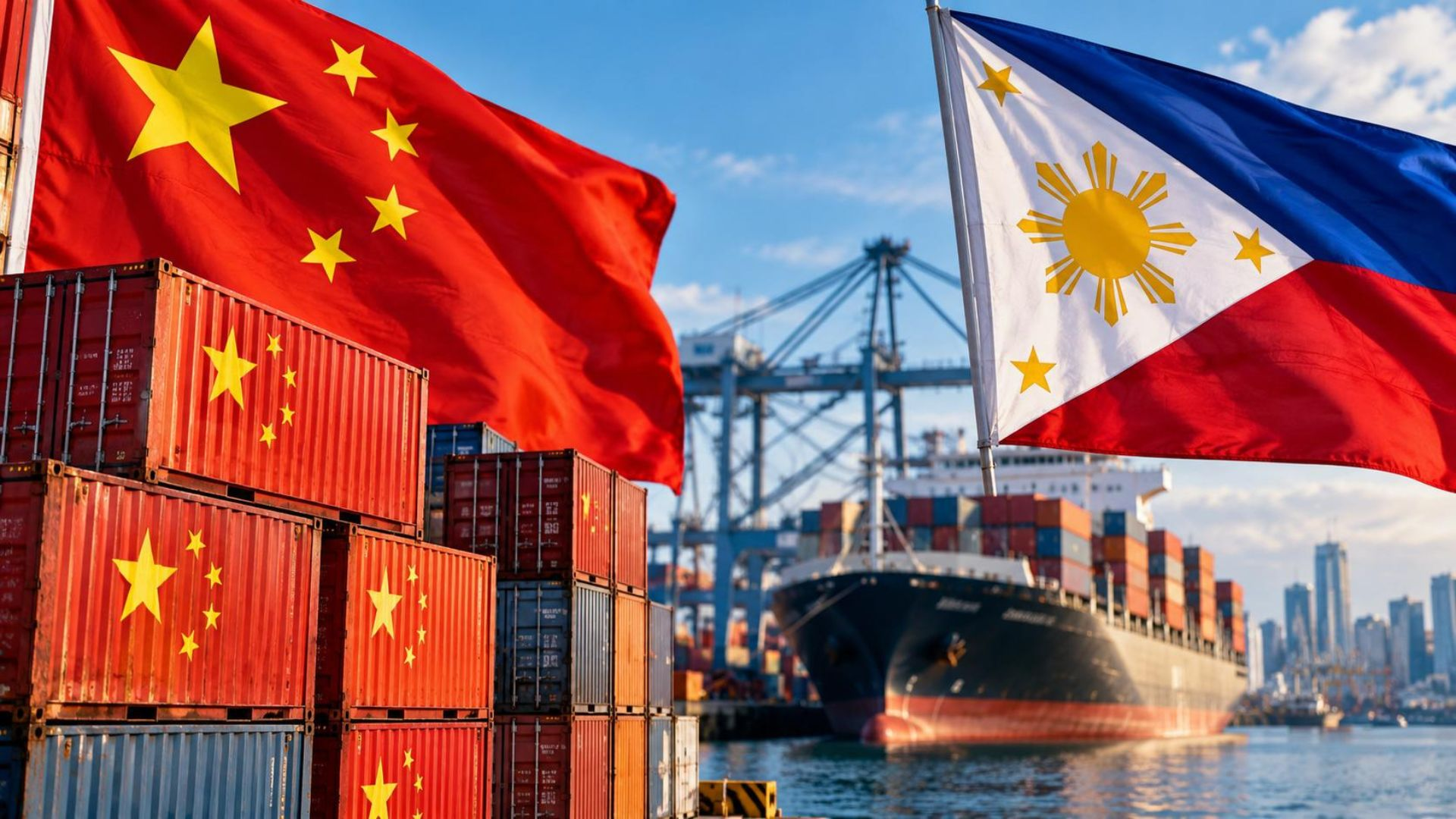
MANILA, Philippines — China remained the Philippines’ largest source of imported goods in 2025, supplying $38.44 billion worth of products, or 28.6% of the country’s total imports, according to the Philippine Statistics Authority (PSA).
The figures, released on March 26, 2026, show that more than a quarter of the Philippines’ import spending went toward Chinese goods, placing China well ahead of its other major trading partners.
Japan came in second with $10.63 billion in imports, accounting for 7.92% of the total. South Korea followed closely at $10.60 billion, or 7.90%, while Indonesia supplied $10.18 billion and the United States contributed $8.15 billion.
China’s import value was more than three times that of Japan, underscoring its substantial lead as a supplier to the Philippine market.
Overall, the Philippines imported $134.20 billion worth of goods in 2025, up 5.2% from $127.60 billion in 2024. It was the country’s highest annual import value since 2022.
Electronic products accounted for the largest share of imports across all trading partners, reaching $32.03 billion or 23.9% of the total.
Mineral fuels, lubricants, and related materials followed at $16.71 billion, while transport equipment reached $12.63 billion.
By broader classification, raw materials and intermediate goods made up the largest portion of imports at $48.45 billion, followed by capital goods at $40.67 billion and consumer goods at $27.85 billion.
However, the picture was different for Philippine exports.
The United States remained the country’s largest export destination, purchasing $13.46 billion worth of Philippine goods in 2025, equivalent to 15.9% of total export earnings.
Hong Kong ranked second at $12.33 billion, followed by Japan at $11.57 billion. China placed fourth, receiving $9.31 billion worth of Philippine exports.
The figures show a clear difference in the country’s major trading relationships, with China leading as a source of imported goods and the United States serving as its largest export market.
Despite higher import spending, Philippine exports grew at a faster pace during the year.
Total export earnings climbed 15.3% to $84.48 billion from $73.27 billion in 2024, supported by increased shipments of electronic products and other goods.
As a result, the country’s merchandise trade deficit narrowed by 8.5% to $49.72 billion. A trade deficit occurs when a country spends more on imported goods than it earns from exports.
Total merchandise trade reached $218.68 billion in 2025, an 8.9% increase from the previous year and the highest annual value recorded since the PSA’s series began in 1991.
The data highlights China’s significant role in supplying the Philippine market, even as the country’s export trade remains concentrated among several major economies.