Headline
What counts as ‘grave threats’ under Philippine law?

Abi Sarabia M., Philippine Canadian Inquirer
September 06, 2026
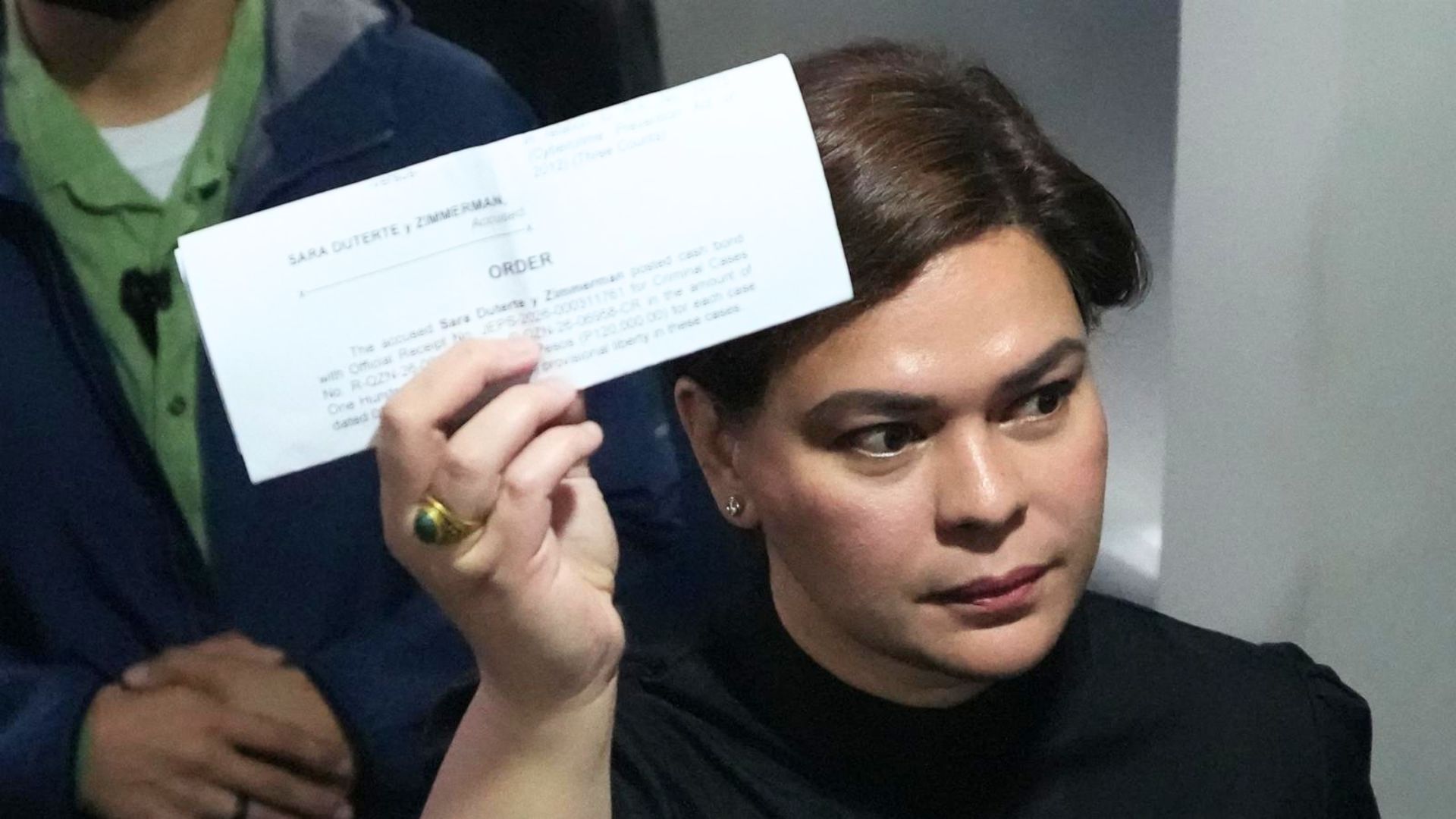
Photo courtesy: ABC News
What makes a threat a criminal offense under Philippine law?
The question has gained attention following the filing of three counts of grave threats against Vice President Sara Duterte and the issuance of an arrest warrant by a Quezon City court on September 4.
Duterte posted ₱360,000 bail – ₱120,000 for each count on September 5, a day after the Quezon City Regional Trial Court Branch 98 found probable cause to hold her for trial.
What are grave threats?
Grave threats are defined under Article 282 of the Revised Penal Code.
The law covers a person who threatens another with harm to that person’s life, honor or property, or to that of their family, when the threatened act itself would constitute a crime.
This means the threatened crime does not have to actually happen for a grave threats charge to arise. The threat itself may be punishable if prosecutors can prove the required elements.
For example, a threat to kill or seriously injure another person could potentially fall under grave threats because the act being threatened would itself constitute a crime.
However, not every angry, offensive or alarming statement automatically amounts to grave threats. Courts must examine the words used and the circumstances in which they were made.
What must prosecutors prove?
The Supreme Court has explained that grave threats require both the threatening act itself and the intention behind it.
For grave threats made without a condition, prosecutors must establish that:
- a person threatened another with harm to their person, honor or property, or that of their family;
- the threatened harm amounts to a crime; and
- the threat was made without a condition.
The prosecution must also show that the accused intended the statement to intimidate the other person or intended it to be taken seriously.
Importantly, the person receiving the threat does not necessarily have to prove that they were actually frightened.
The Supreme Court has said courts should look objectively at the circumstances, including how the words were delivered, who they were directed at, the relationship between the people involved and the surrounding context.
Can grave threats involve a condition?
Yes.
Article 282 recognizes grave threats that are made with a condition, such as demanding money or imposing another requirement, as well as threats made without a condition.
The penalties differ depending on the circumstances, including whether a condition was imposed and whether the offender achieved the intended purpose.
What if the alleged threat is made online?
Crimes under the Revised Penal Code may also fall under the Cybercrime Prevention Act of 2012 when committed through information and communications technology.
Under Section 6 of Republic Act No. 10175, a Revised Penal Code offense committed through ICT is covered by the cybercrime law, with the applicable penalty generally imposed one degree higher.
This is relevant to Duterte’s case because the charges stem from statements she made during an online press briefing in November 2024.
According to prosecutors, Duterte said she had arranged for someone to kill President Ferdinand Marcos Jr., First Lady Liza Araneta-Marcos and then-House Speaker Martin Romualdez if she herself were killed.
Duterte has maintained that her remarks were taken out of context and has challenged the case against her.
On September 4, Quezon City RTC Branch 98 found probable cause to hold Duterte for trial on all three counts and ordered the issuance of an arrest warrant. She appeared before the court the following day and posted bail.
The court’s finding of probable cause does not mean Duterte has been found guilty.
Probable cause only determines whether there is sufficient basis for the case to proceed. The prosecution must still prove the charges beyond reasonable doubt at trial.