Business and Economy
Former Toyota, Keidanren chief Hiroshi Okuda dies at 93

Abi Sarabia M., Philippine Canadian Inquirer
August 14, 2026
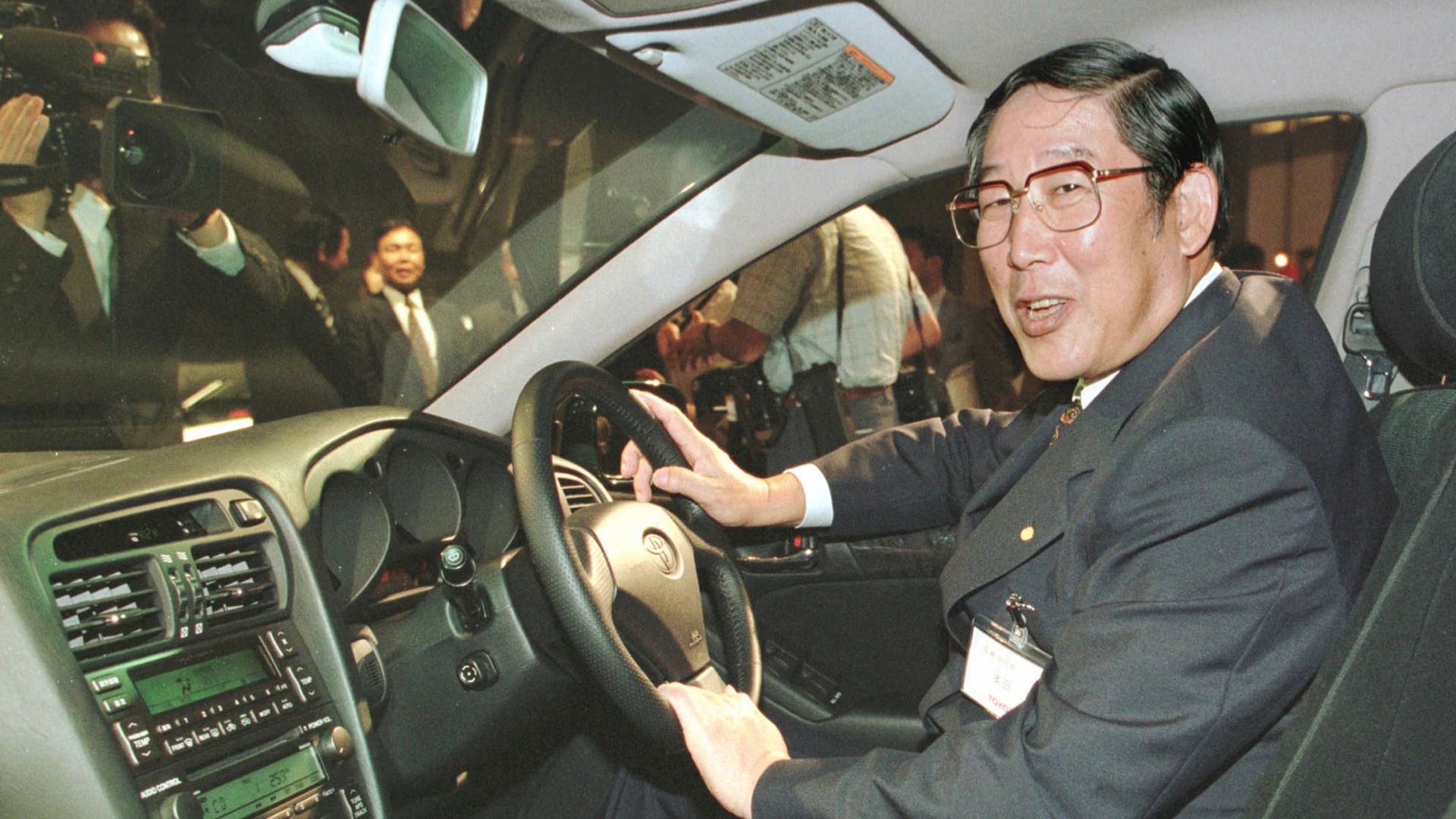
Photo courtesy: AP News
Hiroshi Okuda, best known for leading Toyota Motor Corp. and later heading the Japan Business Federation (Keidanren), has died at age 93.
Okuda was born in Tsu, Mie Prefecture, in central Japan. After earning his degree from Hitotsubashi University’s Faculty of Commerce and Management, he joined Toyota Motor Sales Co. in 1955, a company that would later merge with Toyota Motor Co. to become the Toyota Motor Corp. known today.
He rose to the presidency of the automaker in 1995, becoming the first outsider to hold the post in 28 years, breaking a run of leadership drawn from Toyota’s founding family.
His tenure as president was marked by a turnaround credo that “not changing is evil.” Under this philosophy, Toyota expanded aggressively abroad, setting up new plants across Europe and the United States. That period also saw the debut of the Prius, the hybrid model that pushed Toyota to the forefront of environmental automotive technology.
These moves are widely credited with setting up Toyota’s eventual rise to become the world’s top automaker. Okuda moved into the chairman’s role in 1999 and held it until 2006.
Also in 1999, Okuda took the helm of the Japan Federation of Employers’ Associations, or Nikkeiren. He is credited with pushing through its merger with the old Federation of Economic Organizations, which had also gone by the name Keidanren, becoming the first chairman of the newly combined organization from 2002 to 2006.
During his time at Keidanren, Okuda revived the group’s role in political fundraising, an area the organization had steered clear of since 1993, when it scrapped its system of dividing donation quotas among member firms following backlash over close political-business ties.
He introduced a new framework where companies would base their contributions on how they rated each party’s policies, acting on his long-held belief that businesses should “put up money and speak up.”
Okuda additionally sat as a private-sector representative on the Council on Economic and Fiscal Policy, a government body formed in 2001, where he pushed for deregulation-driven reforms under then-Prime Minister Junichiro Koizumi.
Later, in 2012, he took on the role of first president of the Japan Bank for International Cooperation, or JBIC, a state-backed lender that had just become an independent entity after being separated from the Japan Finance Corp.