Environment & Nature
Colombia’s death toll from magnitude 7.4 earthquake surpasses 200 as rescuers dig through rubble

Abi Sarabia M., Philippine Canadian Inquirer
August 12, 2026
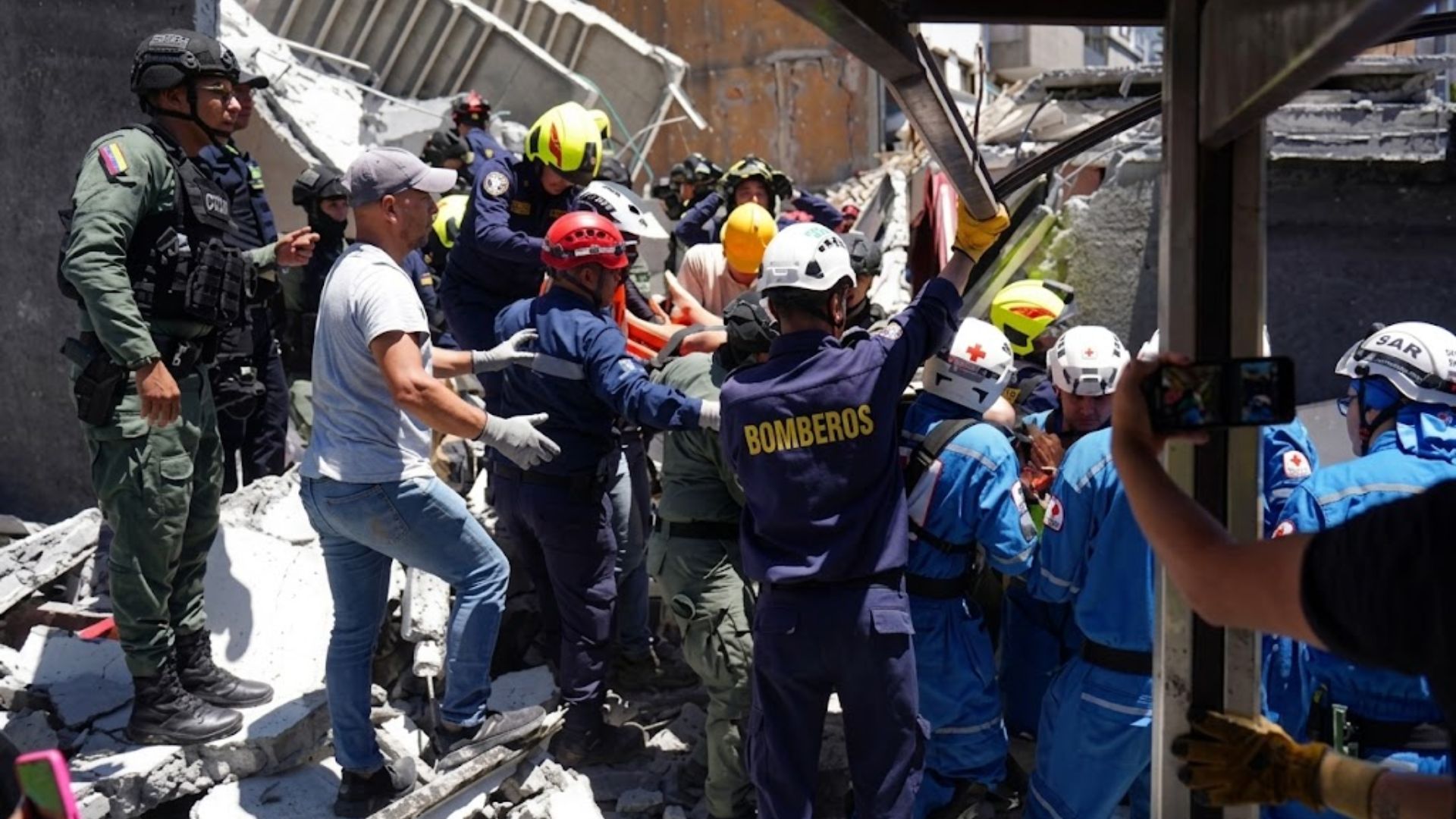
Photo courtesy: Philippine News Agency
BOGOTÁ, Colombia — Search and rescue teams worked through a second night in western Colombia on Tuesday, digging through collapsed buildings by hand in a race to find survivors after a magnitude 7.4 earthquake killed more than 200 people and left thousands more missing, in what geological authorities called the country’s strongest quake in a century.
The earthquake struck at around 7:34 a.m. local time on Monday, August 10, its epicenter in San José del Palmar in the western department of Chocó, roughly 400 kilometers (250 miles) west of the capital, Bogotá, according to Colombia’s Geological Service.
The quake, which occurred at a depth of more than 100 kilometers, was felt across all 32 of the country’s departmental capitals and in neighboring Ecuador and Panama.
By Wednesday, local officials had confirmed at least 224 deaths, according to local media reports, with the toll expected to keep climbing as rescue crews reach areas still cut off by damaged roads and downed communications.
More than 2,700 people remained unaccounted for, and roughly 700 others were injured, according to figures cited by Colombian authorities.
The cities of Cali, Pereira, Manizales, Quibdó and Armenia were among the hardest hit, all placed under the country’s highest-level “red alert” disaster status.
Officials said an estimated 5,000 homes were damaged or destroyed, and at least seven airports suspended operations as authorities assessed damage to runways and terminals.
In Cali, the country’s third-largest city, Mayor Alejandro Eder said rescue operations were underway at 24 sites, where at least 30 buildings had collapsed. Volunteers and firefighters formed human chains to clear debris by hand, periodically pausing to listen for sounds or voices from beneath the wreckage.
Eder said heavy machinery was being withheld from several sites to avoid endangering anyone who might still be alive under the rubble, appealing instead for donations of gloves, helmets, water and other protective gear for rescuers and volunteers.
At Torres del Limonar in Cali, officials estimated as many as 25 people may have been trapped when a residential building collapsed.
Rescuers in the city also pulled a baby and its mother alive from the debris, and reported hearing a woman’s voice from beneath the wreckage of what is believed to be a crushed vehicle, though she was said to be struggling to breathe.
In Pereira, Mayor Mauricio Salazar reported deaths in the city and said many more people remained trapped under what he described as a large volume of collapsed structures.
In Manizales, Mayor Jorge Eduardo Rojas said 17 buildings had collapsed entirely and 19 more were partially destroyed, including damage to the tower of the city’s cathedral. In Quibdó, in Chocó department near the epicenter, more than 1,000 homes were damaged and public services and communications were largely knocked out.
President Abelardo De La Espriella, who had been sworn into office only days before the disaster, declared a national emergency and said he was personally directing the government’s response, deploying the military, police, engineers, rescue teams and sniffer dogs to affected areas.
The United States announced $15.5 million in emergency relief, with Secretary of State Marco Rubio saying Washington was closely monitoring the situation and stood ready to support Colombia.
The European Union mobilized its Copernicus satellite service to aid rescue operations and pledged additional funding, including support channeled through the Red Cross, EU foreign policy chief Kaja Kallas said. Israel, Mexico, Ecuador, France and El Salvador also offered personnel, equipment or other assistance, while the United Nations offered its support to the government’s response.
The disaster comes less than two months after twin earthquakes struck northern Venezuela in June, killing more than 6,000 people, underscoring the region’s continued vulnerability to major seismic activity.
Colombia’s Geological Service said Monday’s quake was the most powerful to hit the country in a century, surpassing prior benchmarks for seismic disasters in a nation accustomed to earthquakes but rarely at this scale.
Rescue operations were expected to continue through the week as crews work to reach outlying and mountainous communities, some accessible only by boat or foot, where the full extent of casualties and damage remains unknown.