Headline
Nagasaki marks 81st anniversary of atomic bombing amid nuclear policy debate

Abi Sarabia M., Philippine Canadian Inquirer
August 10, 2026
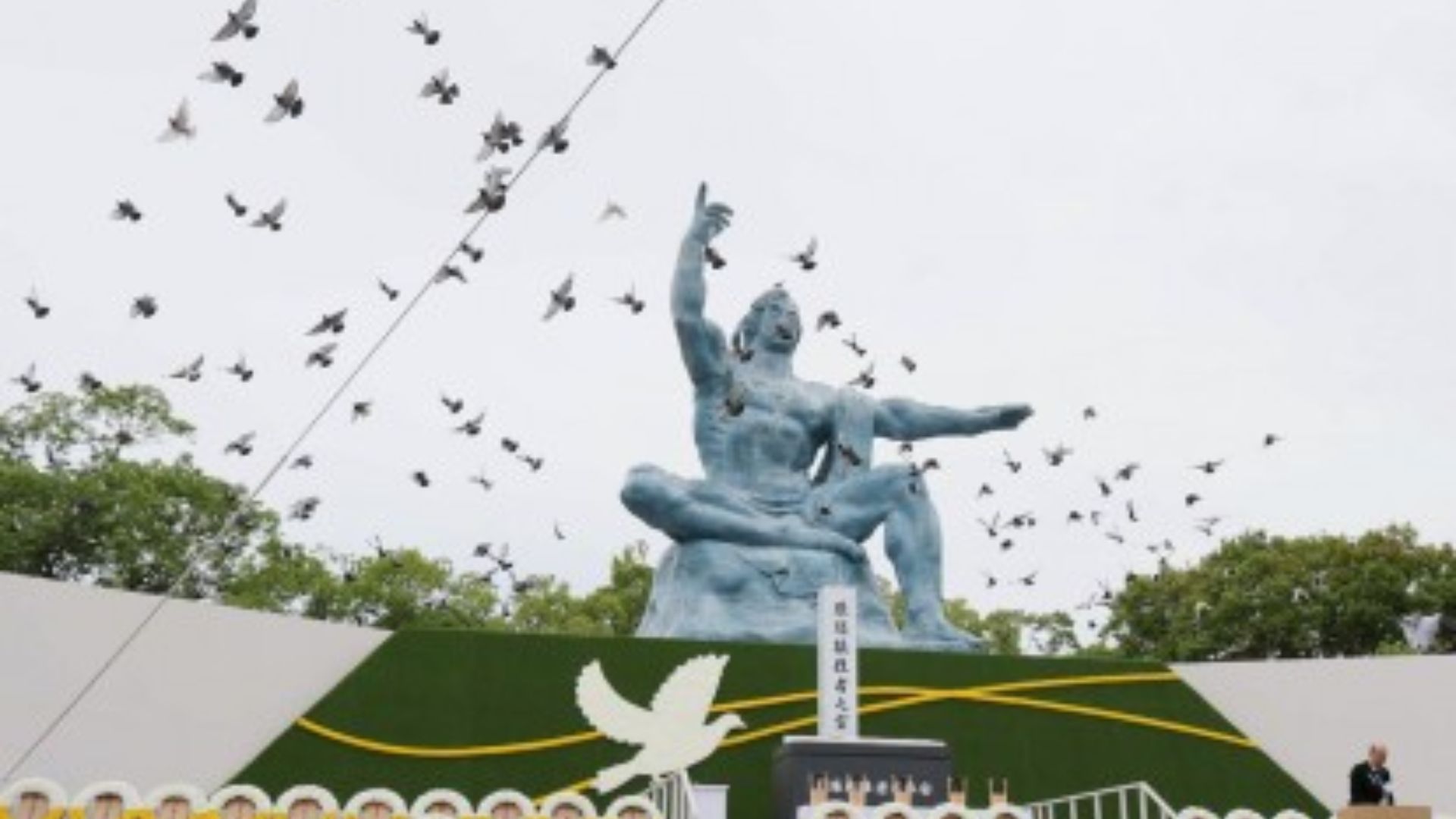
Photo courtesy: PNA
Nagasaki marked the 81st anniversary of the atomic bombing as its mayor warned that nuclear deterrence only increases global risk.
Nagasaki observed the 81st anniversary of the United States’ atomic bombing of the city on Sunday, August 9, with the city’s mayor warning that growing global support for nuclear deterrence only heightens the risk of another such attack.
More than 90 countries sent representatives to the memorial ceremony at Nagasaki’s Peace Park, where attendees observed a moment of silence at 11:02 a.m., the exact time in 1945 when a US B-29 bomber dropped the plutonium bomb known as “Fat Man” over the city. Among the nations represented at this year’s commemoration were several nuclear-armed states, including the United States, United Kingdom, France, Russia, Israel, and India.
Japanese Prime Minister Sanae Takaichi attended the ceremony and led the wreath-laying at the memorial honoring the bombing’s victims. In her remarks, she said the devastation caused by the bombings of Hiroshima and Nagasaki must never be repeated, and reiterated Japan’s commitment to a realistic and pragmatic approach toward achieving a world without nuclear weapons.
During the ceremony, bereaved relatives and others placed lists containing the names of 2,773 people whose deaths were confirmed over the past year at the memorial monument, bringing the total number of registered deaths attributed to the Nagasaki bombing to 204,708.
In his peace declaration, Nagasaki Mayor Shiro Suzuki described nuclear weapons as an absolute evil and called on the Japanese government to uphold the country’s war-renouncing constitution, attend this year’s review conference on the Treaty on the Prohibition of Nuclear Weapons, and remain committed to Japan’s three non-nuclear principles of not possessing, producing, or permitting nuclear weapons on its soil.
Suzuki also noted that while some nations argue nuclear weapons serve as an effective deterrent, the bombings of Hiroshima and Nagasaki already proved that humanity is capable of crossing that threshold.
The Nagasaki bombing came three days after the United States dropped an atomic bomb on Hiroshima on August 6, 1945, an attack that was also commemorated earlier in the week. The two bombings, which together killed well over 200,000 people by the end of 1945, preceded Japan’s surrender on August 15, 1945, bringing an end to World War II.