By Gerard Di Trolio, McMaster University; The Conversation
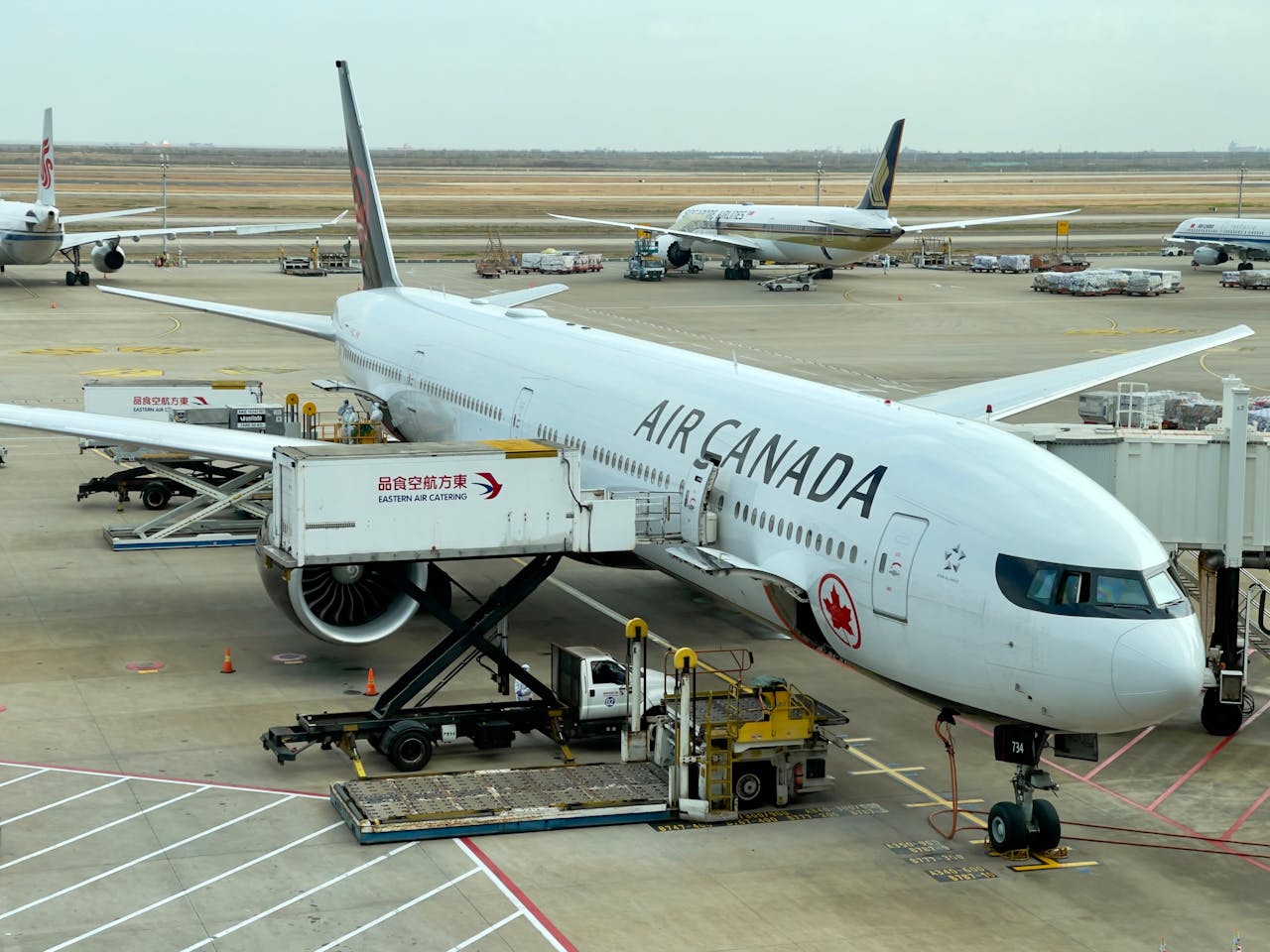
Air Canada reportedly encouraged the government to intervene, while CUPE pushed for a negotiated solution, arguing binding arbitration would ease pressure on the airline to negotiate fairly. (Pexels Photo)
Air Canada flight attendants say they will continue to defy a government back-to-work order after the federal labour relations board declared the strike “unlawful.” The walkout, which began early on Aug. 16, grounded hundreds of flights and left passengers stranded.
Less than 12 hours into the strike, the federal government intervened in the dispute between Air Canada and the union representing its flight attendants. Minister of Jobs and Families Patty Hajdu invoked Section 107 of the Canada Labour Code to impose binding arbitration and order employees back to work.
The Canadian Union of Public Employees (CUPE) condemned the move, accusing the government of “crushing flight attendants’ Charter rights.”
Air Canada reportedly encouraged the government to intervene, while CUPE pushed for a negotiated solution, arguing binding arbitration would ease pressure on the airline to negotiate fairly.
After a Sunday hearing, the Canada Industrial Relations Board released an order reiterating flight attendants should “cease all activities that declare or authorize an unlawful strike of its members” and “resume the performance of their duties.”
As an expert in unions and the politics of labour, I see this dispute as highlighting several fault lines in Canada around work, how we value it and the ways the law affects workers.
Mark Carney’s labour dilemma
Prime Minister Mark Carney currently faces the first labour crisis of his term. Carney had worked alongside labour leaders in the face of United States President Donald Trump’s tariff threats, even appointing Lana Payne, president of the Unifor trade union, to the new Canada-U.S. Relations Council.
The federal government’s decision to invoke Section 107 to send Air Canada and its flight attendants to arbitration continues a growing trend of its increasing use.
Section 107 has been part of the Canada Labour Code since 1984. It was rarely used for decades, but became more common last year when Justin Trudeau’s government invoked it several times to end work stoppages at ports, rail yards and Canada Post.
This is part of a longer history. Dating back to the 1970s, federal and provincial governments started interfering with free and fair collective bargaining through back-to-work legislation or by imposing contracts on public sector workers.
What has changed in recent decades is the federal government’s growing creep into the private sector. Under Stephen Harper’s Conservative government, there were increasing threats to use back-to-work legislation, targeting CN Rail, CP Rail and Air Canada. These interventions were justified as protecting an economy emerging from a global financial crisis. The Harper government followed through with back-to-work legislation in the Air Canada and CP Rail cases.
If the Carney government continues to use back-to-work legislation, it could alienate unions that once saw him as a potential ally. Yet the public may be more receptive to it, given the country’s economic weakness and continued Trump threats.
The Air Canada strike could effect the trajectory not only of the government, but also the labour movement as well. It’s a strike that has major consequences for all workers in Canada, and its outcome will signal to workers across the country what they can expect in these uncertain times.
Defying the law is rare
CUPE’s decision to defy the Canadian government’s use of Section 107 of the Canada Labour Code comes with big risks but also potential victories.
A union or workers defying the law is hardly unprecedented, but is increasingly rare in an era where unions have been in an overall decline in Canada and globally.
The risks are significant for workers: heavy fines, termination of employment or even jail time for flight attendants and union officials.
If CUPE is successful, it would have a galvanizing effect, sending a message to workers across the country that they can stand up not only to their bosses, but to the state, in order to improve their labour circumstances.
However, for any kind of unlawful strike to be successful, there must be an incredible amount of unity among the workers. While CUPE leadership and the Canadian labour movement are strongly supportive of continuing the strike, rank-and-file flight attendants must be willing to stand their ground.
Even in a legal strike, unions only take the step of stopping work if they have an overwhelming amount of the membership on board. That need for solidarity is even greater for illegal action.
The reason why Canada has laws allowing unions, workplace safety and strikes is because of industrial militancy that often defied the law to force governments to enact legislation allowing for unions and strikes.
The flight attendant strike could be a barometer of increased labour organizing and action experienced across Canada since the COVID-19 pandemic, and whether that momentum for the labour movement can continue.
Work and gender
Another key issue at the heart of the strike is the gender wage gap, which continues to be an issue in Canada. While it has narrowed during this century, women in Canada still earn on average 12 per cent less than men. This gap is even wider for women who are newcomers, Indigenous, transgender or living with disabilities.
This disparity is closely tied to sectors where women are overrepresented, such as flight attendants, a workforce overwhelmingly made up of women. Across the Canadian workforce, 56 per cent of women are employed in the “5 Cs”: caring, clerical, catering, cashiering and cleaning. These occupations tend to be precarious and underpaid.
While airlines are part of transportation, the work that flight attendants perform is unmistakably service-based and covers much of the 5 Cs, including emotional labour and customer care.
For Air Canada flight attendants, the situation is compounded by the fact they are paid only while the plane is in motion, meaning they often perform unpaid work.
The gender dynamics become even clearer when comparing the treatment of flight attendants with that of Air Canada pilots.
In 2024, Air Canada pilots — who are mostly men — won a 26 per cent wage increase in the first year of their new contract and a 42 per cent increase overall. Air Canada’s most recent offer to its flight attendants was only an eight per cent increase in year one and 38 per cent overall.
The airline proposed paying flight attendants 50 per cent of their hourly rate for ground work, but the union is advocating for full pay at 100 per cent.
“Air Canada’s male-dominated workforce received a significant cost-of-living wage increase. Why not the flight attendants, who are 70 per cent women?” Natasha Stea, president of the CUPE division that represents the Air Canada flight attendants, said in an Aug. 15 CUPE article.
In this context, the Air Canada strike is also a spotlight on systemic gender inequality, the undervaluing of service work and the fight for fair compensation in occupations dominated by women.
Gerard Di Trolio, PhD candidate, Labour Studies, McMaster University
This article is republished from The Conversation under a Creative Commons license. Read the original article.