

By Catherine Frost, McMaster University; The Conversation
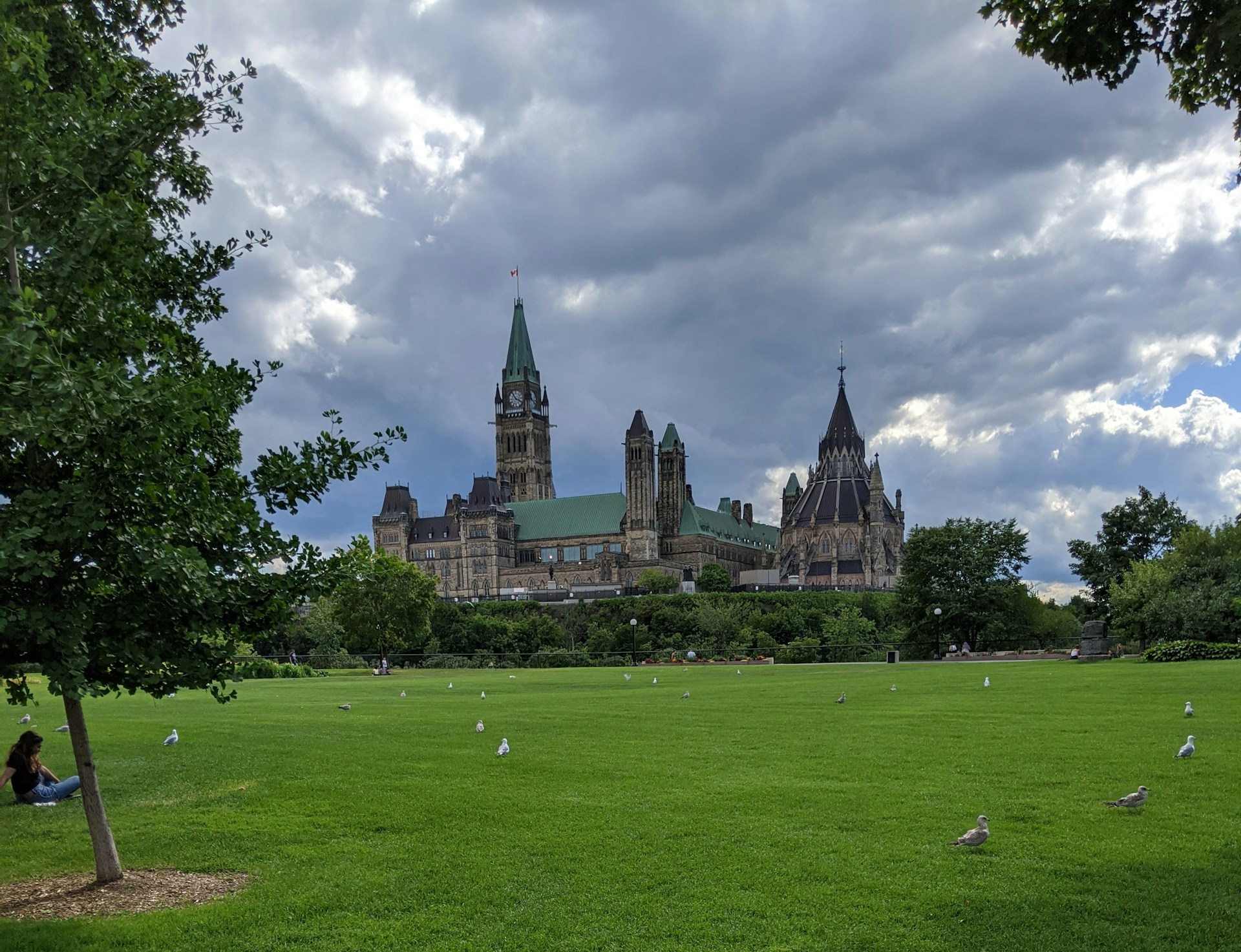
Canada’s position is premised on seeing political and military reform from the Palestinian Authority, the governing body responsible for the autonomous Palestinian territories. (File Photo: Sarah Baxter/Unsplash)
Canada and the United Kingdom have said they will recognize Palestinian statehood during the United Nations General Assembly in September, provided certain conditions are met.
Canada’s position is premised on seeing political and military reform from the Palestinian Authority, the governing body responsible for the autonomous Palestinian territories.
The U.K., responding to a severe food crisis in Gaza, said it would extend recognition unless the Israeli government agrees to a ceasefire, takes steps to “end the appalling situation in Gaza” and commits to a “long-term, sustainable peace.”
These cautious, conditional endorsements reflect the workings of a dated international system that governs the birth of states. France, by contrast, has opted to recognize Palestine without conditions. What explains these different approaches?
Officially, state recognition is governed by international law. In practice, it is subject to a complex mix of national, global and moral considerations.
This process grants existing states significant discretion in recognizing new ones, with the expectation that such decisions serve international peace. But this can result in an uneven statehood process for aspiring nations.
How states are born
The 1933 Montevideo Convention outlines the core criteria for statehood recognition: a permanent population, control over a defined territory, a functioning government and the capacity to open relations with other states.
When recognition is given on this basis, it is essentially acknowledging that these qualities are already in place. Yet these requirements are not iron clad, and some experts have argued that recognition can also be extended on humanitarian or moral grounds, such as in response to human rights violations.
In such cases, recognition becomes more of a statement that a state should have the opportunity to exist, rather than a confirmation that it already does. The classic case would be a group facing colonial domination. The American colonies appealed to this principle in the 1776 Declaration of Independence, for example.
Because individual states decide when such exceptions apply, these measures provide uncertain relief for aspiring nations.
As a final step, new states can apply for membership in the UN. This application is first considered by the UN Security Council. If nine states agree, and none of the council’s permanent members object, the application continues to the UN General Assembly for approval.
But a single veto from any of the five permanent members — China, France, Russia, the U.K. and the United States — can paralyze statehood at the start. In 2024, for example, the U.S. vetoed Palestine’s request for full UN membership.
Statehood in waiting
To date, 147 of 193 states in the United Nations recognize Palestinian statehood. Palestine has also had special observer status at the UN since 2012, and before that it had limited standing before international courts typically reserved for states.
But Palestine is not the only instance where the international system has struggled to address atypical or contested statehood.
After a wave of recognitions in post-colonial Africa and post-Second World War Europe, the recognition of new states slowed to a crawl toward the end of the 20th century. This trend suggests there is a conservative quality to the recognition system.
Wary of rewarding violent separatism, international bodies have traditionally favoured negotiated solutions for state birth, including upholding a parent-state veto over any independence efforts.
This principle was most clearly articulated by the Canadian Supreme Court in a 1998 advisory opinion. It warned that an independent Québec, without first agreeing on terms of exit with the rest of Canada, was unlikely to gain international recognition.
There is wisdom to this approach, but such rules cannot prevent political breakdown in every case. A growing number of unrecognized states have left millions stranded in political limbo.
This includes Somaliland, which split from Somalia in 1991 and has been operating as a de facto state ever since without receiving formal recognition from any other country.
Palestine is not an instance of state breakup, but rather an unresolved case of colonization and occupation. Decades of negotiations with Israel, the occupying power, have failed. Yet formal statehood has still proven elusive. A cumbersome recognition system may be helping to keep the problem alive.
Cracks in the system
Even when recognition occurs, the results can be disappointing.
South Sudan, the UN’s newest member, was universally recognized in 2011 under close UN supervision and with the consent of its parent state, Sudan. Yet it quickly descended into civil war — a conflict it has yet to fully emerged from.
Kosovo was recognized by states like the U.S. and Canada when it declared independence in 2008 following the breakup of Yugoslavia, but it still has fewer recognitions than Palestine.
A handful of states like Togo and Sierra Leone even began de-recognizing it under pressure from Kosovo’s one-time parent state, Serbia, although there is a broadly accepted principle that once a state is recognized, barring any complete disaster, it should remain recognized.
Meanwhile, rising sea levels threaten to leave some island states like Tuvalu without the territorial requirements for normal statehood. The International Court of Justice has signalled the statehood of such nations should survive, but has not said how.
These examples suggest the current state recognition system is ill equipped to face today’s changing world.
Allowing established states to set the rules for who qualifies is unlikely to solve these current problems. While setting special terms for new entrants may have value in the short term, the longer term need is for a more fair and transparent system.
Experts are working on ways to make the system more inclusive for aspiring states and unrepresented peoples, including by opening up access to diplomatic venues. If successful, these measures could change the way future states are born.
Catherine Frost, Professor of Political Science, McMaster University
This article is republished from The Conversation under a Creative Commons license. Read the original article.




















