
Canada News
Program for intimate partner violence victims in Nunavut cancelled

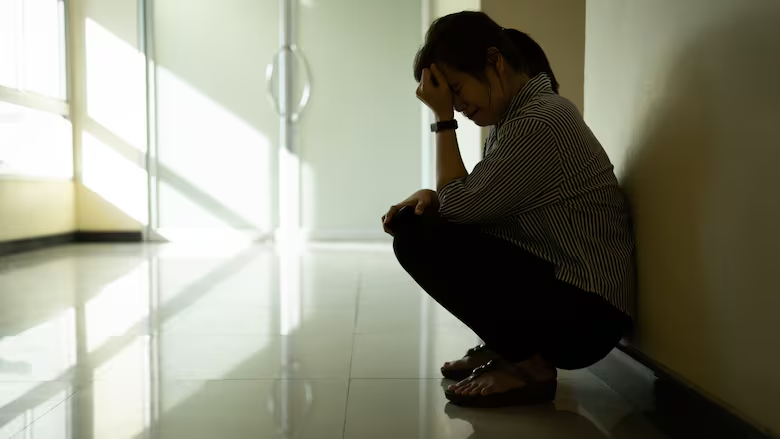
Patients from Nunavut have been able to access the Intimate Partner Violence Traumatic Brain Injury program since 2020. (Shutterstock)
“I had to look at these women and say, I can’t see you anymore,” program worker says
A medical program for victims of gender-based violence in Nunavut has ended, leaving those who attended it with few places to turn.
For the last few years, survivors in Nunavut have had the option to attend the Intimate Partner Violence Traumatic Brain Injury (IPV-TBI) program, run under the Winnipeg Regional Health Authority and the Pan Am Concussion Program.
The pilot program started in 2020, where it was first delivered in Rankin Inlet and led by Dr. Michael Ellis, a neurosurgeon with expertise in concussion and brain injury with the Pan Am Clinic in Winnipeg. It was later brought to Winnipeg and Nunavut clients were flown down for treatment.
Now, the program has suddenly stopped.
“Recently, Victim Services was informed that the Pan Am Clinic is no longer in a position to accept new IPV-TBI referrals from Nunavut, effective immediately,” Christine Aye, director of community justice with Nunavut’s justice department, told CBC News in an email.
Delma McLeod is a psychiatric nurse who provided mental heath care to patients in the program.
“What’s happening to these women that I’ve seen? These families that I’ve seen? I don’t know what’s happening,” McLeod said. “They certainly need ongoing care, and it’s just stopped.”
According to Pauktuutit Inuit Women of Canada, the rate of violence against Inuit women is 14 times higher than the national average.
Impact on victims of violent crime
Nunavut’s public prosecution office also referred its clients to the program.
Philippe Plourde, Nunavut’s chief federal prosecutor, said the program ending will have a “negative impact on the services and support offered to victims of violent crime in Nunavut.”
“This program had the potential to significantly improve the services to victims of violent crime in Nunavut, and we are aware of victims who went through the program and obtained high quality services and support,” Plourde said. “We are hoping that other programs will be created to provide the specialized medical support to victims in their path to healing.”
Patients’ medical travel was also paid for by the Nunavut government
The justice department said Nunavut Victim Services will also continue to explore options “for individuals who may be experiencing symptoms of traumatic brain injury as a result of violence.”
“We remain committed to raising awareness of this issue and advocating for the trauma-informed services that victims and survivors need and deserve,” the department wrote.
McLeod said resources for victims are limited in Nunavut, but this program provided a solution.
“I’ve seen the impacts of the intimate partner violence like depression, anxiety, post-traumatic stress disorder, which includes sleep issues, appetite issues, body aches and pains, just the list goes on and on,” McLeod said.
She said when the program started, she was seeing roughly two people a week. In recent years, that number has jumped to sometimes 25 clients in a day.
Pilot project couldn’t continue, health authority says
In a statement to CBC, the Winnipeg Regional Health Authority said the program was a pilot project, and because of space and resource limitations, it can’t continue.
“We are currently looking to find a more suitable long-term home in connection with the provincial Intimate Partner Violence program,” the Winnipeg Regional Health Authority wrote.
“We continue to explore options to provide this care in a model that is sustainable and integrated with existing services throughout the broader health system in Manitoba and Nunavut.”
McLeod said the cancellation will only make it more difficult for people to get help.
“Like everywhere these women are going, it’s being drilled in that that they’re not important,” McLeod said. “And this final blow of this program being, well, we can’t do it anymore.”
She said she hopes the program will somehow be able to continue.
“Where are these people who are shutting this thing down? Because I’d like them to see the crying faces that I have to look at. They’re like, where do I go now? What do I do now?”
“I had to look at these women and say, I can’t see you anymore.”
This article is republished from RCI.